Can You Combine Obsidian & Smoky Quartz for Grounding?
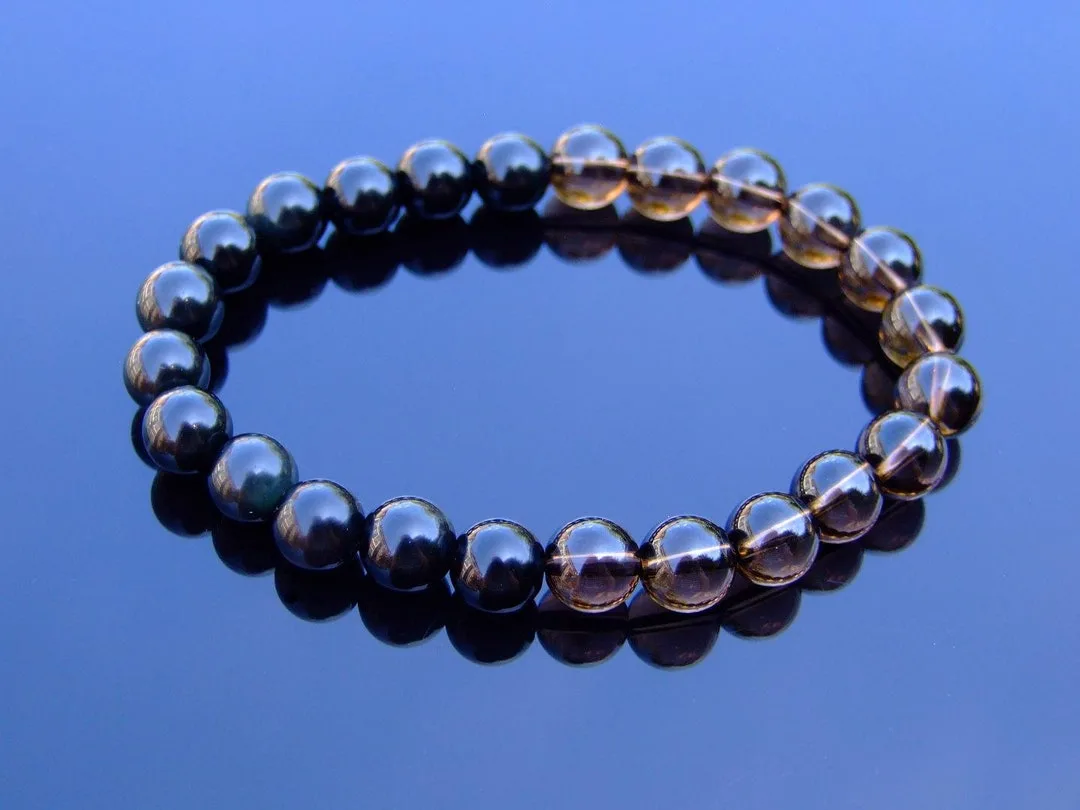
You’re wondering if obsidian and smoky quartz can be combined for grounding. The short answer is yes, physically. But scientifically?
No. These stones don’t emit energy that affects your biology. They are inert minerals.
Our research shows the benefit is psychological, not physiological. Both are silicon dioxide variants. Smoky quartz rates a 7 on the Mohs hardness scale.
Obsidian sits at 5 to 5.5. This difference matters for durability. Let’s look at why accuracy here protects your health.
Grounding with Obsidian and Smoky Quartz: Separating Energy Work from Medical Reality
Many people turn to crystals for anxiety relief. It’s a common coping mechanism. However, relying solely on stones for mental health support carries risks.
You might delay professional treatment. That’s dangerous if you suffer from PTSD or severe depression.
We need to distinguish between metaphorical grounding and clinical grounding. Clinical grounding involves sensory techniques to manage dissociation. Crystals can serve as tactile anchors in this process.
But they aren’t medical devices. As of 2026, no peer-reviewed study supports biofield manipulation via raw stones.
The danger lies in misinformation. If you believe a rock cures panic attacks, you ignore proven therapies. Always view these items as complements to care, not replacements.
Your safety depends on knowing the limits of their power.
Why Accuracy Matters When Mixing Crystals for Mental Health
Mental health is fragile. Incorrect advice causes real harm. Some vendors claim obsidian absorbs negativity.
This isn’t true. It’s marketing language. Believing it shifts responsibility away from effective treatments like CBT.
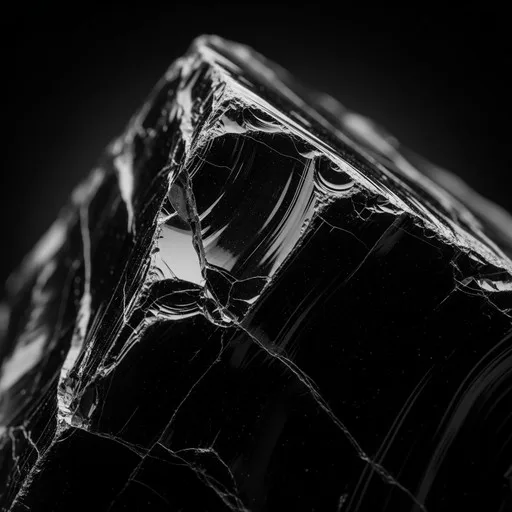
There are also physical risks. Obsidian is volcanic glass. It breaks with sharp edges.
Wearing damaged pieces near sensitive skin invites injury. Children might swallow small fragments. Parents must supervise closely.
Regulatory bodies like the FDA warn against unproven medical claims. Selling crystals as cures violates consumer protection laws. We stick to facts.
Stones offer comfort through ritual and touch. That’s valid. But calling it medicine is false.
Know the boundary to stay safe.
The Physical Reality: Chemistry, Hardness, and Durability
Both obsidian and smoky quartz are primarily silicon dioxide ($SiO_2$). Chemically, they are nearly identical. The difference is structure.
Smoky quartz is crystalline. Obsidian is amorphous glass. This structural variance dictates how they behave when worn together.
Hardness is the critical factor here. Smoky quartz scores a 7 on the Mohs scale. Obsidian ranges from 5 to 5.5.
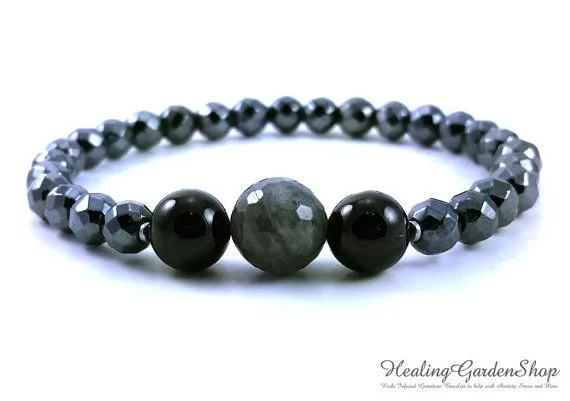
In a bracelet, the harder stone will scratch the softer one over time. Dust accumulates in the scratches. The obsidian loses its luster faster.
| Stone | Composition | Mohs Hardness | Structure |
|---|---|---|---|
| Smoky Quartz | Silicon Dioxide | 7 | Crystalline |
| Obsidian | Volcanic Glass | 5–5.5 | Amorphous |
Don’t fear radiation myths. Smoky quartz gets its color from natural irradiation of aluminum impurities. Once mined, it holds no residual radioactivity.
It is safe to handle. Just understand the wear patterns. Combining them requires design foresight to prevent damage.
How the Combination Actually Works: Tactile Anchoring and Placebo
So, do they ground you? Not energetically. They ground you psychologically.
This is known as tactile anchoring. Holding a smooth, cool stone engages your senses. It pulls your focus away from racing thoughts.
This mimics clinical grounding techniques used in therapy.
The placebo effect is powerful. If you believe the stone helps, your stress levels may drop. Ritual matters too.
Setting an intention creates a mental cue. Over time, seeing the bracelet triggers calm. This conditioning is real, even if the stone’s "energy" isn’t.
Raw stones lack piezoelectricity relevant to human biology. You won’t feel electrical charges. You’ll feel weight and texture.
Use them as mindfulness tools. Pair them with breathing exercises. The combination works because of your attention, not the mineral’s vibration.
Safe Practices for Combining These Stones in Jewelry or Altars
Design with durability in mind. Separate the stones with spacers. Metal beads or leather knots protect the obsidian from scratching.
Avoid ultrasonic cleaners. Obsidian can crack due to internal tension or hidden fractures. Hand wash only.
Inspect your jewelry regularly. Look for chips or sharp edges. Broken obsidian acts like a razor.
Store loose stones separately. Don’t toss them in a bowl where they knock against each other. This preserves their integrity.
Check metal settings for allergies. Nickel and copper cause reactions in some users. Choose hypoallergenic options like sterling silver or gold-filled wire.
Cleanse gently with mild soap and water. Dry thoroughly. Moisture trapped behind settings damages skin.
When to Seek Professional Help Instead of Relying on Crystals
Crystals are not a substitute for therapy. If you experience persistent panic attacks, seek help immediately. Stones cannot treat clinical anxiety disorders or PTSD.
Delaying care worsens outcomes significantly. Use them only as minor comfort tools alongside professional treatment.
Red flags include inability to function daily. You might feel detached from reality constantly. Or perhaps sleep is severely disrupted despite efforts.
These symptoms require medical intervention, not mineralogy. Contact a licensed therapist or psychiatrist promptly. Evidence-based treatments like CBT work reliably.
Alternative grounding methods exist with stronger backing. Weighted blankets provide deep pressure stimulation. This calms the nervous system physiologically.
Mindfulness apps guide breathing exercises effectively. These tools have measurable benefits in studies. Compare them to your current crystal usage.
Do not let spiritual beliefs override medical facts. The National Center for Complementary and Integrative Health notes limited evidence for crystal healing. They emphasize safety over efficacy claims.
Prioritize interventions with proven results. Your mental health deserves robust support. Crystals can sit on your desk while you do the real work.
Frequently Asked Questions About Obsidian and Smoky Quartz Pairings
Can I wear obsidian and smoky quartz on the same bracelet?
Yes, but use spacers between the beads. Smoky quartz is harder (Mohs 7) than obsidian (5, 5.5). Direct contact causes scratches on the softer stone.
Metal or leather separators protect the obsidian’s surface. This extends the life of your jewelry. Without separation, the obsidian will dull quickly.
Does smoky quartz neutralize negative energy scientifically?
No. There is no scientific basis for "negative energy" manipulation by stones. Smoky quartz is inert silicon dioxide.
Any perceived effect stems from placebo or psychological anchoring. Belief influences stress response, not atomic structure. Treat this as personal ritual, not physics.
Science does not support energetic cleansing claims.
Is it safe if my child swallows a piece?
Swallowing small stones poses choking hazards. Larger pieces risk intestinal blockage. Seek emergency medical attention immediately.
Do not induce vomiting unless instructed by professionals. Keep all crystals out of reach of young children. Supervise play sessions strictly.
Safety outweighs aesthetic preferences in households with kids.
How do I cleanse them without damaging the obsidian?
Use mild soap and lukewarm water only. Avoid ultrasonic cleaners entirely. Vibrations crack hidden fractures in volcanic glass.
Saltwater can damage metal settings over time. Dry thoroughly with a soft cloth. Gentle hand washing preserves structural integrity.
Harsh chemicals ruin the polish permanently.

Similar Posts