What Beliefs Characterized Manifest Destiny: Exploration
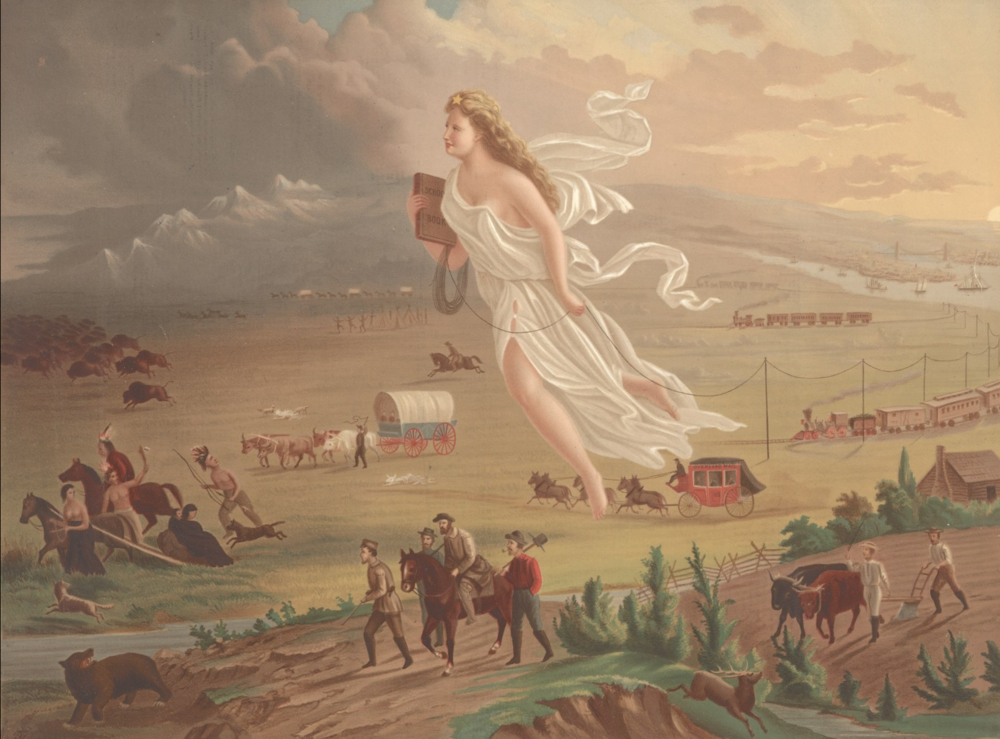
Have you ever wondered what drove Americans to stretch their country’s borders from coast to coast in the 1800s? The answer lies in a powerful set of beliefs known as Manifest Destiny.
These ideas didn’t just shape history—they fueled a nation’s ambition and changed the lives of millions. Understanding what beliefs characterized Manifest Destiny helps you see why people acted the way they did and how those actions still affect us today.
Keep reading, and you’ll discover the key reasons behind this bold movement and why it mattered so much.
Origins And Core Ideas
The origins and core ideas of Manifest Destiny reveal much about the mindset of early Americans. This belief was more than just a political slogan—it shaped the nation’s actions and justified expansion. Understanding its roots helps you see why so many people felt destined to spread across the continent.
The Concept Emerges: Early American Thought And Nationalism
Manifest Destiny began as a reflection of growing American nationalism after independence. Many believed the United States had a unique role in the world, rooted in liberty and democracy. This sense of mission pushed the idea that expanding westward was both natural and necessary.
Think about how your own sense of identity shapes your goals. For early Americans, their national identity was closely tied to land and freedom. This made the vast, unsettled lands to the west seem like a promise waiting to be fulfilled.
God’s Plan For America: Divine Right And Manifest Destiny
Many supporters of Manifest Destiny believed it was part of God’s plan. They saw America’s expansion as a divine right, a mission to spread civilization and Christianity. This belief gave moral weight to their political and military actions.
Consider how this idea affected decisions on the ground—wars, treaties, and settlement policies all carried this sense of divine approval. It raises questions about how faith and politics can intertwine to drive a nation’s agenda.
Key Beliefs And Principles
The beliefs that shaped Manifest Destiny were powerful forces driving America’s expansion across the continent. These ideas weren’t just political—they influenced how people saw themselves and their country’s role in the world. Understanding these core beliefs helps you grasp why Manifest Destiny was so passionately embraced and fiercely contested.
Expansionism And Territorial Growth: An Unstoppable Force
Expansionism was at the heart of Manifest Destiny. Many Americans believed the nation was destined to stretch from the Atlantic to the Pacific. This wasn’t just about land—it was about opportunity, resources, and security.
People saw territorial growth as natural and inevitable. The idea of “empty” lands waiting to be claimed justified rapid westward movement. Have you ever wondered how this mindset shaped modern America’s borders and culture?
The ‘white Man’s Burden’: Civilizing The ‘savage’ And ‘uncivilized’
This belief suggested that white Americans had a duty to bring civilization to Native Americans and other non-European peoples. It was a way to justify displacement and conquest. The concept assumed superiority in culture, religion, and governance.
Many settlers believed they were helping others by spreading their values and systems. But this came at a great cost to indigenous communities. How do you think this belief influenced policies and attitudes toward Native Americans?
American Exceptionalism: A Chosen Nation With A Higher Purpose
Americans saw their country as unique, chosen to lead by example and spread democracy. This sense of exceptionalism gave a moral weight to expansion. It wasn’t just about land—it was about fulfilling a higher destiny.
This belief created a strong national identity and fueled confidence in the country’s future. It made many feel that their actions were part of a grand mission. What role does this idea play in today’s American values and global outlook?
Racial And Ethnic Views
The beliefs tied to Manifest Destiny deeply involved ideas about race and ethnicity. These views shaped attitudes toward different groups in the expanding United States. People believed the nation had a special mission to spread its culture and government. This mission often meant seeing some groups as inferior or obstacles to progress.
Understanding these racial and ethnic views helps explain many conflicts and policies during westward expansion. It reveals how stereotypes and prejudice justified actions against Native Americans and Africans. These ideas were complex and often contradictory, reflecting the tensions of the time.
Native Americans: A ‘vanishing’ People Or A ‘savage’ Obstacle?
Many settlers saw Native Americans in two conflicting ways. Some thought they were a “vanishing” people, destined to disappear as settlers moved west. This view made it seem natural to take their lands. Others saw Native Americans as “savages” blocking progress. This belief justified violent removal and war.
These ideas ignored Native Americans’ rights and cultures. The government often used them to support forced relocations. Native Americans were pushed off their lands to make way for settlers and railroads. This caused great suffering and loss for many tribes.
Slavery And The Role Of Africans: A Complex And Contradictory View
The issue of slavery complicated Manifest Destiny beliefs. Some Americans wanted new territories to allow slavery. Others wanted to stop its spread. This created deep divisions in the country.
African Americans were seen differently depending on the region. In the South, slavery was defended as part of the economy and way of life. In the North, many opposed slavery and fought for abolition. These conflicting views made expansion politically tense.
The debate over slavery affected which new states could join the Union. It shaped laws and even led to violence. The role of Africans in this era shows how race and power struggles were tied to Manifest Destiny’s goals.

Credit: www.facebook.com
Geopolitics And International Relations
The idea of Manifest Destiny was deeply tied to the geopolitics and international relations of the 19th century. It wasn’t just about expanding land for the sake of growth; it was about asserting power and influence on a global stage. Understanding this helps you see how the United States positioned itself amid other world powers and territorial claims.
Border Disputes And Conflicts: A Contest For Territory And Resources
Border disputes were at the heart of Manifest Destiny. The U.S. clashed with Britain over the Oregon Territory, both nations eager to claim its rich resources and strategic location. These disputes weren’t mere arguments on a map—they reflected a fierce competition for economic advantage and national security.
Think about the Texas-Mexico conflict. Texas declared independence and later joined the U.S., sparking the Mexican-American War. This war resulted in the U.S. acquiring vast territories in the Southwest. You can see how these conflicts were about more than borders—they were about control over natural wealth and future opportunities.
The Monroe Doctrine: Protecting American Interests And Preventing European Intervention
The Monroe Doctrine shaped how America viewed its role in the Western Hemisphere. It warned European powers to stay out of the Americas, signaling a new era of U.S. self-confidence and regional dominance. This policy wasn’t just a statement—it was a strategic move to protect American interests and support Manifest Destiny’s goals.
By asserting this doctrine, the U.S. set clear boundaries for foreign interference. It helped prevent European countries from reclaiming colonies or influencing new territories. How do you think this early foreign policy still affects America’s stance on international relations today?
Manifest Destiny In Practice
The idea of Manifest Destiny was not just a belief but a call to action that reshaped the United States. It pushed the nation to expand its borders aggressively, driven by the conviction that Americans were destined to spread democracy and civilization across the continent. Understanding how Manifest Destiny played out in real events shows you the powerful impact of ideas on history and your own role in shaping change.
Westward Expansion: The Louisiana Purchase, Texas Annexation, And The Mexican-american War
The Louisiana Purchase doubled the size of the U.S. overnight, opening vast lands for settlement and economic opportunity. Imagine the excitement and challenges settlers faced moving into unknown territories with new laws and cultures. This purchase set a precedent for expanding America’s reach beyond its original borders.
Texas annexation added another complex layer. Texas had won independence from Mexico and sought to join the U.S., but this move sparked tension with Mexico, leading to war. The Mexican-American War was brutal yet pivotal, resulting in the U.S. gaining modern-day California, Arizona, and New Mexico.
These events show how Manifest Destiny wasn’t just about land—it involved conflict, negotiation, and tough decisions. Have you ever faced a situation where pursuing growth meant dealing with uncomfortable challenges? That’s exactly what the nation experienced during this period.
The Impact Of Manifest Destiny: A Nation Built On Expansion And Conquest
Manifest Destiny shaped the U.S. into a continental power, but this growth came at a cost. Native American tribes were displaced, cultures disrupted, and the issue of slavery’s expansion intensified, leading toward civil war. This history asks you to consider the consequences of expansion—what are you willing to sacrifice for progress?
On a practical level, Manifest Destiny spurred economic growth through new resources, farming land, and trade routes. Towns and cities sprang up, railroads stretched across the continent, and the idea of “American exceptionalism” took hold. These developments made the U.S. a stronger, more connected nation.
Thinking about this, how do you balance ambition with responsibility in your own life? The story of Manifest Destiny reminds you that growth is powerful but must be handled thoughtfully to avoid lasting harm.

Credit: www.sciencedirect.com

Credit: esajournals.onlinelibrary.wiley.com
Frequently Asked Questions
What Core Beliefs Defined Manifest Destiny?
Manifest Destiny was defined by the belief in the U. S. divine right to expand across North America. It included ideas of American cultural and political superiority, and the mission to spread democracy and civilization westward.
How Did Manifest Destiny Justify Westward Expansion?
Manifest Destiny justified expansion as a national duty to spread freedom and progress. It framed territorial growth as inevitable and beneficial for the country’s economic and social development.
Why Was Manifest Destiny Linked To American Exceptionalism?
Manifest Destiny was tied to American exceptionalism by promoting the idea that the U. S. had a unique mission. This belief held that America’s values and institutions were superior and meant to lead the continent.
Did Manifest Destiny Influence U.s. Foreign Policy?
Yes, Manifest Destiny shaped U. S. foreign policy by encouraging territorial acquisition. It led to actions like the Texas annexation and the Mexican-American War, expanding U. S. borders significantly.
Conclusion
Manifest Destiny shaped America’s growth and identity deeply. It showed belief in expansion and fate. Many thought the nation had a special right to spread. This belief led to new lands and conflicts. It also shaped politics and culture. Understanding these ideas helps us see America’s past clearly.
The legacy of Manifest Destiny still affects the country today. Its story is a key part of American history.

Similar Posts