Have you ever wondered what the Communist Manifesto really is and why it still sparks debate today? This powerful pamphlet changed the way people think about society, work, and power.
Understanding it can give you a fresh perspective on history and current events. Keep reading, and you’ll discover the key ideas behind this famous document and why it matters to you now.
Origins Of The Manifesto
The origins of the Communist Manifesto reveal the roots of one of history’s most influential political texts. Written during a time of social unrest and rapid change, the manifesto sought to explain the struggles faced by working people. It also aimed to inspire action against economic inequality and class division.
Authors And Context
The Communist Manifesto was written by Karl Marx and Friedrich Engels. Both were thinkers and activists deeply concerned with workers’ rights. Marx was a philosopher and economist. Engels was a businessman and social scientist. Together, they combined their ideas to create a clear message.
The manifesto was published in 1848, a year full of political revolutions across Europe. Many people protested for better working conditions and political freedom. This environment shaped the manifesto’s strong call for change.
Historical Background
The early 19th century saw great changes in industry and society. Factories grew, and cities became crowded. Many workers lived in poverty and faced harsh conditions. Wealth and power were held by a small elite.
Ideas about democracy, rights, and equality spread widely. Workers began to organize and demand fair treatment. The Communist Manifesto captured this spirit and the growing conflict between classes.
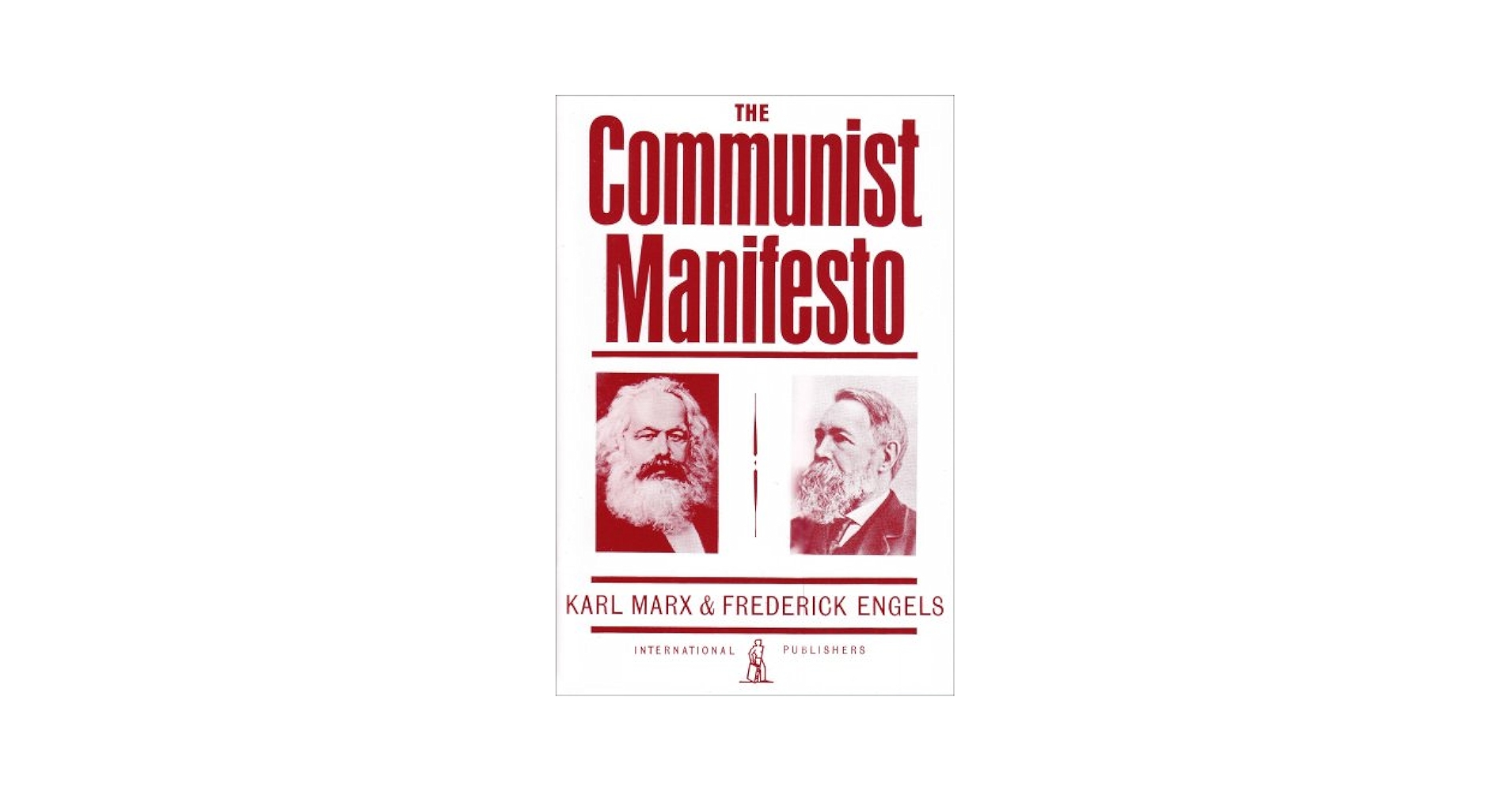
Credit: www.amazon.com
Core Ideas
The Communist Manifesto presents ideas that shaped modern political thought. It explains how society is divided and what must change. These core ideas highlight conflicts and solutions for a fairer world.
Class Struggle
Society splits into classes with opposing interests. The rich own land and factories. The poor work for them. This conflict drives history and change. The Manifesto stresses this struggle as central.
Role Of The Proletariat
The proletariat means the working class. They produce goods but earn little. The Manifesto calls for workers to unite. Their power can overthrow the rich class. This change can create equality and fairness.
Abolition Of Private Property
Private property means owning land and factories. The Manifesto says this creates inequality. It suggests ending private ownership of production. Goods and resources should belong to all people. This aims to stop exploitation and poverty.
Initial Reception
The initial reception of the Communist Manifestowas a mix of curiosity, skepticism, and concern. Published in 1848, it arrived during a time of political unrest and social change across Europe. Understanding how different groups reacted helps you see the manifesto’s early impact and ongoing relevance.
Early Reactions In Europe
Many European governments viewed the manifesto as a threat. They feared its call for revolution and the overthrow of capitalist systems.
Newspapers and intellectual circles debated its ideas fiercely. Some dismissed it as radical nonsense, while others saw it as a bold critique of social inequality.
Think about how your own community reacts to new, challenging ideas. Do they spark debate or get ignored? This can shape the pace of change significantly.
Spread Among Workers
The manifesto quickly gained attention among workers and labor groups. Its clear message about class struggle and worker unity resonated deeply.
Trade unions and early socialist organizations began sharing and discussing its contents. It became a tool for organizing and raising awareness about workers’ rights.
Have you ever shared a powerful idea that helped bring people together? The manifesto’s spread shows the power of clear, shared goals to mobilize action.

Credit: www.pathfinderpress.com
Influence On Revolutions
The Communist Manifestois more than just a political pamphlet; it sparked waves of change across the world by inspiring people to question authority and fight for equality. Its ideas about class struggle and the rights of workers challenged long-standing social orders. You might wonder how a short text managed to influence real uprisings and reshape nations.
Understanding its impact on revolutions helps you see the power of ideas in action. It also shows how collective frustration can turn into organized movements. Let’s look at two major historical moments where the Manifesto played a key role.
1848 Revolutions
The year 1848 was a turning point in European history, marked by widespread revolts across many countries. The Communist Manifesto was published just months before these uprisings, providing a clear call to action for workers and peasants. Its message energized people who felt trapped by poverty and oppression.
In cities like Paris, Vienna, and Berlin, protesters demanded political reforms and better working conditions. The Manifesto’s emphasis on uniting the proletariat gave these scattered groups a shared identity and goal. Have you ever noticed how a simple idea can unite diverse groups toward a common purpose?
While most of these revolutions were eventually suppressed, the ideas they spread did not disappear. Instead, they laid the groundwork for future social and political changes. The 1848 revolutions proved that the Manifesto’s concepts could ignite real, if sometimes short-lived, upheaval.
Russian Revolution
The Russian Revolution of 1917 stands as one of the most significant events influenced by the Communist Manifesto. Lenin and the Bolsheviks adapted its ideas to challenge the autocratic Tsarist regime and push for a government led by workers and peasants.
The Manifesto’s focus on overthrowing the bourgeoisie and establishing a classless society inspired the revolutionaries to take bold action. This time, the uprising was successful, resulting in the creation of the Soviet Union. It’s a powerful example of how theory can become practice when people are determined.
Think about your own beliefs—how often do you see ideas shape actions so profoundly? The Russian Revolution shows that when you combine a clear vision with organized effort, change becomes possible on a massive scale.
Impact On Modern Politics
The Communist Manifesto has shaped modern politics in deep ways. It introduced ideas about class struggle and workers’ rights. These ideas sparked political change across many countries. The manifesto inspired movements that challenged old power structures. It pushed for equality and fair treatment of laborers. Its influence continues to affect political parties and policies today.
Communist Movements Worldwide
The manifesto inspired communist movements globally. Many countries saw uprisings and revolutions based on its ideas. Leaders used its message to rally workers and peasants. Communist parties formed to fight for social change. These movements aimed to end class exploitation. They sought to create societies where wealth was shared equally.
Examples include:
- The Russian Revolution, which led to the Soviet Union
- The Chinese Communist Revolution under Mao Zedong
- Various movements in Latin America and Eastern Europe
These movements shaped global politics during the 20th century.
Socialist And Labor Parties
The manifesto also influenced socialist and labor parties worldwide. These parties pushed for workers’ rights and social welfare. They focused on improving conditions without full communist revolution. Many democratic countries have strong socialist or labor parties today.
Key goals of these parties include:
- Fair wages and better working conditions
- Universal healthcare and education
- Protection of workers’ unions
- Reduction of income inequality
These parties often play major roles in government and lawmaking. They keep the ideas of the manifesto alive in modern politics.

Credit: www.amazon.com
Critiques And Controversies
The Communist Manifesto sparked many debates and strong opinions. Critics question its ideas and the effects of its implementation. Some see it as a powerful call for equality. Others view it as a cause of economic and political problems. These critiques focus on key issues that reveal the manifesto’s controversial nature.
Economic Arguments
Critics argue the manifesto oversimplifies economics. It assumes all social problems come from class struggle. Many say this view ignores other factors like culture and technology. The manifesto calls for abolishing private property. This idea worries economists who support free markets. They claim this could reduce incentives to work and innovate.
Communism’s promise to share wealth equally faces practical challenges. Critics point to countries where central planning led to shortages. They say these plans often fail to meet people’s needs. Economic freedom is seen as essential by many to create growth and wealth. Critics argue the manifesto’s economic ideas can limit personal choice and prosperity.
Political Repression
The manifesto advocates for a proletarian state to control society. Critics warn this can lead to authoritarian rule. Historical communist regimes often used force to maintain control. Political opponents were frequently silenced or imprisoned. Critics say this repression contradicts the manifesto’s goal of freedom for workers.
Some argue the manifesto underestimates the risk of power concentration. Without checks and balances, leaders may abuse power. The promise of a classless society has sometimes led to new elites. Political repression and lack of democracy are common criticisms. These issues raise questions about the manifesto’s real-world impact on human rights.
Legacy Today
The Communist Manifesto, written in 1848, still shapes discussions today. Its ideas influence politics, economics, and social thought worldwide. The manifesto’s call for worker rights and social equality resonates in many societies. Its legacy sparks debates on capitalism and socialism.
Many countries have been inspired by its vision. Some tried to build societies based on its principles. Others critique its ideas for their outcomes. The manifesto remains a key text in understanding modern history and ideologies.
Academic Perspectives
Scholars study the Communist Manifesto as a historic and political text. They analyze its impact on global revolutions and movements. Academics debate its relevance in modern times and economies. Some see it as a warning against inequality. Others view it as a guide for social change.
Universities include the manifesto in political science and history courses. It helps students understand class struggles and economic theories. Research often compares its predictions with current world events. The manifesto’s ideas spark discussions on justice and power.
Cultural References
The Communist Manifesto appears in films, books, and art. It symbolizes rebellion and the fight for fairness. Many artists use its themes to question authority and wealth. The manifesto’s phrases and concepts are common in popular culture.
Music and theater sometimes explore its ideas about society. Writers reference it to highlight social problems. The manifesto influences activists and groups pushing for change. Its presence in culture keeps its message alive and relevant.
Frequently Asked Questions
What Is The Communist Manifesto About?
The Communist Manifesto is a political pamphlet by Karl Marx and Friedrich Engels. It outlines the theory of class struggle and promotes communism as a solution to capitalist exploitation.
Who Wrote The Communist Manifesto And When?
Karl Marx and Friedrich Engels co-authored the Communist Manifesto in 1848. It was published to inspire the working class to unite and challenge capitalist societies.
Why Is The Communist Manifesto Important Today?
The manifesto remains influential in political theory and social movements. It highlights ongoing class conflicts and inspires debates on equality and workers’ rights worldwide.
What Are The Main Ideas Of The Communist Manifesto?
The manifesto argues that history is a struggle between classes. It calls for the abolition of private property and the establishment of a classless society.
Conclusion
The Communist Manifesto remains a key text in world history. It explains ideas about class and society clearly. Many people have debated its meaning and impact. The manifesto calls for change in how wealth is shared. Its influence is seen in politics and culture today.
Understanding it helps us learn about past and present struggles. The ideas still inspire discussions about fairness and power. This short book opened many eyes to social issues. Its message continues to spark thought and debate worldwide.