When Was the Communist Manifesto First Published: Unveiling History
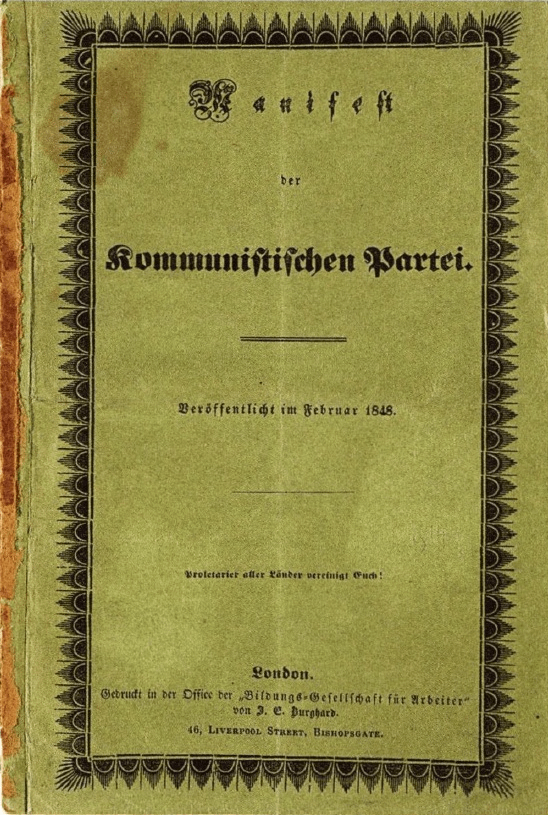
Have you ever wondered when the Communist Manifesto first appeared and why it still matters today? This short but powerful pamphlet changed the course of history and shaped political ideas around the world.
Understanding its origin can give you a clearer picture of how modern societies evolved. Keep reading to discover the exact date it was published and why that moment was so important for your world.
A Milestone In History
The Communist Manifesto stands as a powerful document that changed political thought and social movements worldwide. Its publication marked a clear shift in how people viewed society, class, and power. Understanding when and why it was first published helps you grasp its lasting impact on history and current affairs.
The Publication Date: A Turning Point
The Communist Manifesto was first published in February 1848. This was not just any moment in time; it arrived just before a wave of revolutions swept across Europe. The timing gave the manifesto a unique place as a call to action during a period of great unrest.
Why does this matter to you? Because the ideas introduced then still influence political debates and social policies today. Knowing the exact moment helps you see the manifesto as more than old text — it’s a starting point for ongoing struggles over equality and justice.
Background And Influences: Setting The Stage
The manifesto didn’t appear out of nowhere. It was written by Karl Marx and Friedrich Engels, who were deeply influenced by the social and economic changes of their time. The Industrial Revolution had transformed economies, creating vast wealth for some and terrible poverty for many.
Marx and Engels saw these inequalities firsthand and wanted to address them. Their work was shaped by existing socialist ideas, but they pushed further to argue for a complete restructuring of society. When you read the manifesto, you’re engaging with a response to very real problems that people faced then—and that many still face now.
Think about your own community or workplace. Are there divisions or unfairness that remind you of what Marx and Engels described? This connection between past and present is why the Communist Manifesto remains a milestone in history, not just a chapter in a textbook.

Credit: www.abebooks.com
The Authors And Their Vision
The Communist Manifesto was shaped by two key thinkers with a bold vision. Their ideas challenged the social and economic order of their time. They aimed to inspire change and offer a new way to understand society.
Karl Marx And Friedrich Engels: The Masterminds Behind The Manifesto
Karl Marx and Friedrich Engels wrote the Communist Manifesto in 1848. Marx was a philosopher and economist. Engels was a writer and social scientist. Together, they shared a strong belief in the power of the working class.
Marx and Engels studied history and society deeply. They saw how industrial capitalism created inequality. They wanted to expose this unfair system. Their partnership combined Marx’s theory with Engels’s practical experience.
The Communist Ideology: A Call To Action
The Manifesto calls workers to unite and fight for change. It describes history as a struggle between classes. The rich exploit the poor, it says. The working class must rise to end this injustice.
The vision in the Manifesto is simple but powerful:
- End class differences
- Establish a society where wealth is shared
- Overthrow capitalist systems
- Create equality and freedom for all
This was more than a book. It was a call to action that aimed to reshape society.
The Road To Publication
The journey to the publication of the Communist Manifesto was complex and marked by significant events. Its creation involved collaboration, planning, and overcoming obstacles. The manifesto was not just written but shaped by political and social forces of the time. Understanding this road helps us see the manifesto’s impact on history.
The London Conference: A Catalyst For Change
In 1847, a crucial conference took place in London. This meeting brought together various socialist groups. Karl Marx and Friedrich Engels attended as representatives of the Communist League. The conference aimed to unify different ideas into a clear political program.
This gathering sparked intense discussions. Marx and Engels argued for a radical approach to class struggle. Their ideas gained strong support during the conference. It became the birthplace of the Communist Manifesto’s core concepts.
The Publication Process: Challenges And Triumphs
After the conference, Marx and Engels worked quickly to write the manifesto. They faced many challenges, including limited resources and political risks. Printing such a revolutionary text was dangerous. Publishers feared government censorship and backlash.
Despite these problems, the manifesto was published in early 1848. It was printed in German and distributed secretly. The quick spread of the manifesto surprised many. It inspired workers and activists across Europe to unite for change.

Credit: www.liveauctioneers.com
Impact And Legacy
The Communist Manifesto has left a strong mark on history. Its ideas spread far beyond its original context. It shaped politics, societies, and movements worldwide. The impact of this work is still felt today.
A Global Phenomenon: The Manifesto’s Reach And Influence
The Manifesto quickly crossed borders after its first publication in 1848. It became a key text for workers and revolutionaries everywhere. People in Europe, Asia, Africa, and the Americas read and debated its ideas.
It inspired many political parties and labor unions. The Manifesto’s call for workers’ rights and social change resonated with millions. It also influenced thinkers, activists, and leaders across the world.
Shaping The Course Of History: The Manifesto’s Lasting Legacy
The Communist Manifesto helped spark major political events. Revolutions and reforms drew from its vision of equality and justice. Countries adopted new systems based on its principles.
Its legacy includes:
- The rise of socialist and communist states.
- New ideas about class struggle and economics.
- Ongoing debates about fairness and power in society.
Even after more than 170 years, the Manifesto remains a reference point. It challenges people to think about change and social fairness. Its influence continues in politics and culture worldwide.
The Aftermath And Reactions
The publication of the Communist Manifesto in 1848 triggered waves of discussion and strong reactions across Europe and beyond. Its bold ideas challenged existing political and economic systems, stirring both support and fierce criticism. Understanding these reactions can help you grasp why the document remains so influential today.
Initial Reactions: Criticism And Controversy
The Communist Manifesto was met with immediate controversy. Governments and ruling classes viewed it as a threat to the social order, often banning or censoring the pamphlet.
Many critics accused Karl Marx and Friedrich Engels of promoting chaos and violence. Newspapers and political figures labeled the manifesto as extremist, arguing it would destroy property rights and personal freedoms.
Yet, some workers and intellectuals embraced its message. It gave voice to the frustrations of the working class, exposing inequalities that many had long ignored.
- Authorities feared it could inspire revolutions.
- Some readers found the call for class struggle alarming.
- Others praised its clear critique of capitalism.
The Manifesto’s Enduring Relevance: A Continuing Debate
More than 170 years later, the Communist Manifesto still sparks debate. Its ideas continue to influence political movements, academic discussions, and social activism.
Do you think its analysis of class conflict applies to today’s world? Many argue that economic inequality and workers’ rights remain central issues, proving the manifesto’s lasting impact.
Others challenge its predictions, pointing to changes in capitalism and global politics. The ongoing dialogue shows the manifesto is not just history—it’s a living document prompting you to question your society and your role within it.

Credit: www.ebay.com
Frequently Asked Questions
When Was The Communist Manifesto First Published?
The Communist Manifesto was first published on February 21, 1848. It was written by Karl Marx and Friedrich Engels. This political pamphlet outlined the principles of communism and called for the working class to unite.
Who Authored The Communist Manifesto?
Karl Marx and Friedrich Engels co-authored the Communist Manifesto. They wrote it to present the goals and theories of communism. Their collaboration shaped modern socialist thought.
Why Is The 1848 Publication Date Important?
The 1848 publication coincided with widespread European revolutions. The manifesto influenced political movements and workers’ rights campaigns. Its timing amplified its impact on social change.
What Was The Original Language Of Publication?
The Communist Manifesto was originally published in German. It was later translated into many languages. This helped spread communist ideas worldwide quickly.
Conclusion
The Communist Manifesto was first published in 1848. It changed how people saw politics and society. This short book explained ideas about workers and classes clearly. Many groups still study its words today. Its impact on history is strong and lasting.
Understanding its start helps us grasp modern history better. The manifesto remains a key text for those who want to learn about social change. Its message still sparks debate worldwide. Simple, powerful ideas, shared long ago.

Similar Posts