Fake Garnet vs Real Glass: The Specific Gravity Test
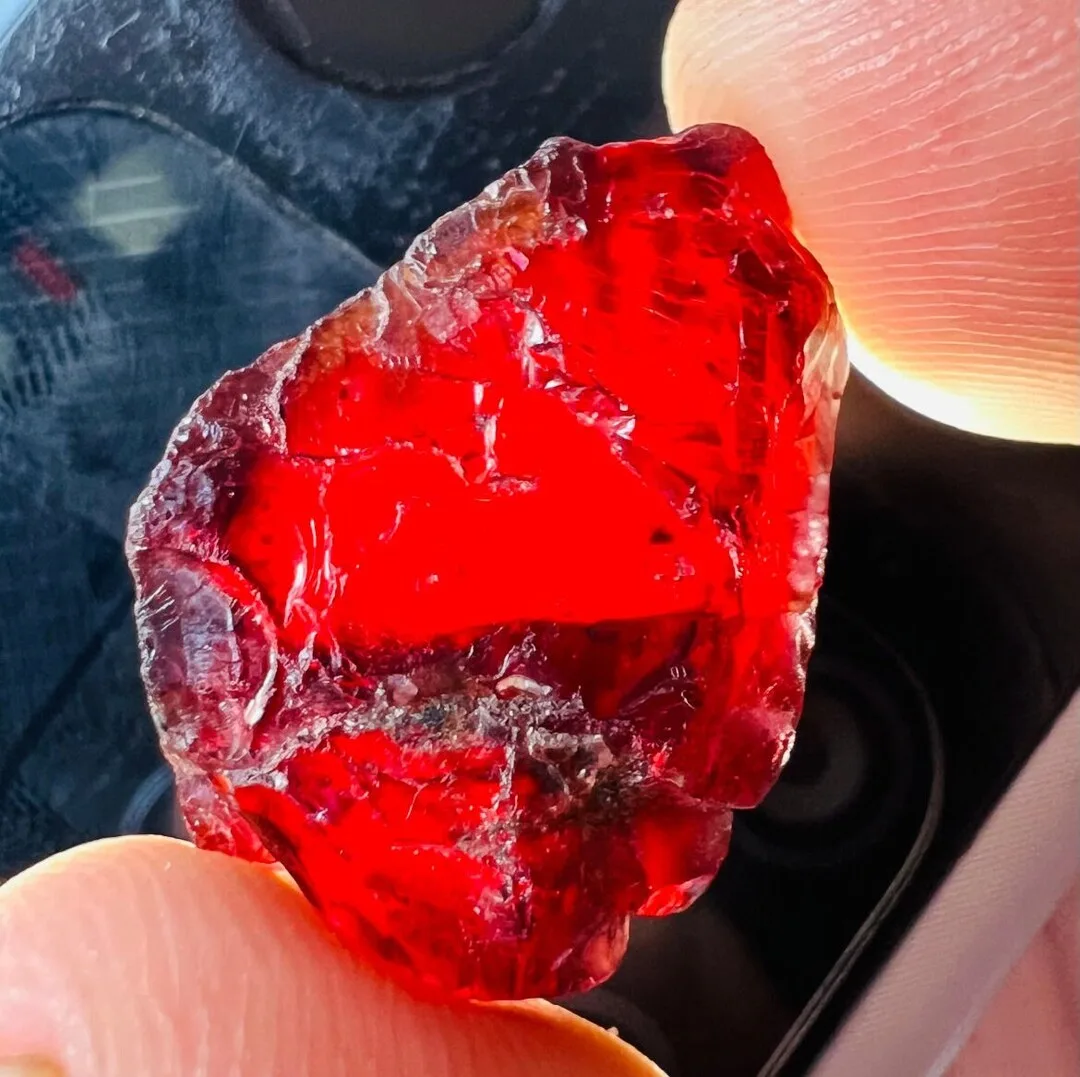
Image source: Bing (Web (fair-use with source credit))
You’re holding a deep red stone, wondering if it’s genuine garnet or just cleverly colored glass. The fake garnet vs real red glass specific gravity density test is your most reliable home method. It relies on physics, not luck, to reveal the truth through weight and volume relationships.
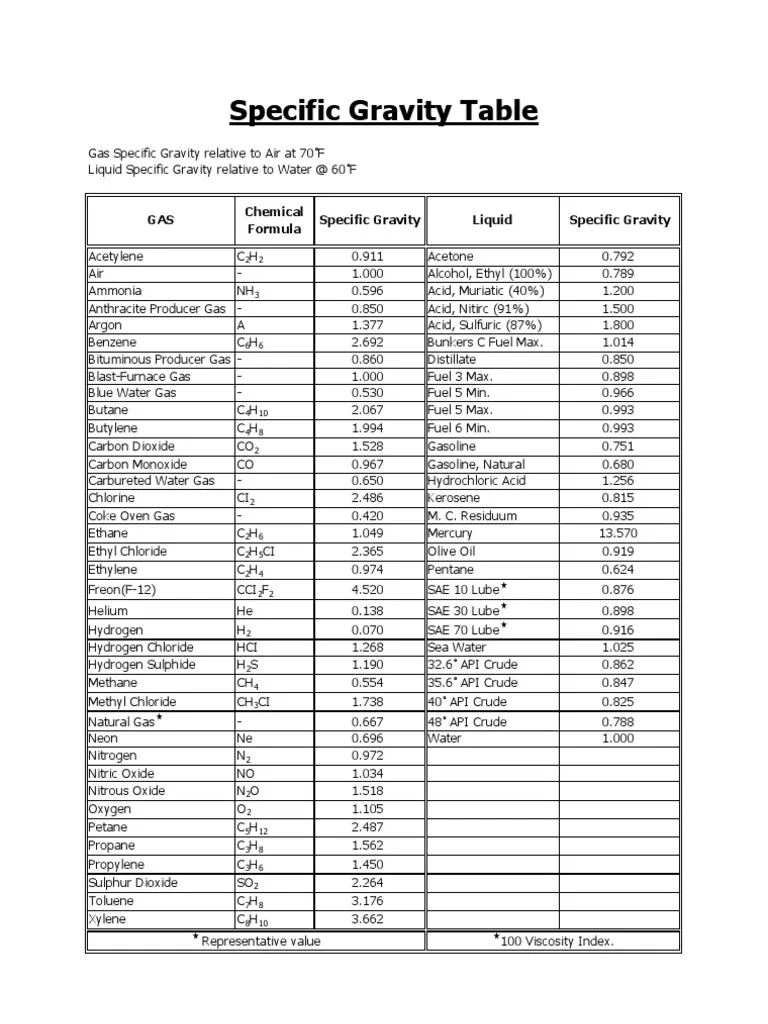
Specific gravity measures how dense a material is compared to water. Real almandine garnets typically sit between 3.9 and 4.3 g/cm³. Most common red glasses hover around 2.5 g/cm³, though high-leaded varieties can reach 3.8 g/cm³.
This gap creates a clear decision path for your next step.
Quick Answer
The specific gravity test distinguishes real garnet from red glass by measuring density. Genuine almandine garnet has a specific gravity of 3.9 to 4.3. Standard soda-lime red glass usually measures around 2.5.
High-density leaded glass may reach 3.8, creating an overlap zone. If your stone weighs less than 3.0 in air divided by its water displacement, it is likely glass. Values above 3.6 strongly suggest real garnet.
Between 3.0 and 3.6 requires further gemological testing like refractive index checks.
Why Your Kitchen Scale Can’t Always Tell Garnet from Glass
Most people assume a simple weigh-in works. You put the stone on the scale. You get a number.
You compare it to a chart online. That approach fails because weight alone doesn’t equal density. A large piece of glass can weigh more than a small garnet.
The critical variable is volume, which you can’t see easily.
This is where hydrostatic weighing saves the day. It uses buoyancy to determine volume indirectly. When you submerge an object, it displaces water equal to its own volume.
By comparing the weight in air to the apparent weight loss in water, you calculate true density.
However, kitchen scales have limits. Many consumer models only measure to 0.1 grams. For stones under five carats, this margin of error is too wide.
A 0.1-gram discrepancy can shift your calculated specific gravity by nearly 0.5 units. That difference moves a result from "definitely glass" to "maybe garnet."
Precision matters here. You need a scale with at least 0.01-gram resolution. Without it, the noise in your data drowns out the signal.
The physics is sound, but your tools must match the task. As of 2026, affordable jeweler’s scales with 0.001g precision are widely available. Using one removes the guesswork.
The Specific Gravity Ranges That Matter (And Where They Overlap)
Understanding the numbers prevents false confidence. Not all garnets are identical. Almandine and pyrope are the most common red varieties.
Their densities vary slightly based on chemical composition. Iron-rich almandine sits heavier than magnesium-rich pyrope.
Red glass isn’t uniform either. Modern decorative glass often contains barium or zinc to increase brilliance. These additives raise the density significantly.
Older Venetian lead crystal also had high specific gravity. This creates a dangerous middle ground for testers.
| Material Type | Typical Specific Gravity Range | Likely Verdict |
|---|---|---|
| Soda-Lime Glass | 2.4 – 2.6 | Definitely Fake |
| Leaded Crystal/Glass | 3.0 – 3.8 | Ambiguous Zone |
| Pyrope Garnet | 3.7 – 4.2 | Likely Real |
| Almandine Garnet | 3.9 – 4.3 | Very Likely Real |
If your calculation lands below 3.0, you’ve found glass. The probability of natural garnet being that light is near zero. But if you land between 3.0 and 3.6, don’t celebrate yet.
You might have high-density glass masquerading as a gemstone.
Conversely, a result above 3.6 is promising. It aligns with most natural garnet species. Yet even here, synthetic materials exist.
Lab-grown YAG (Yttrium Aluminum Garnet) has different properties despite the name similarity. The overlap zone is why we use decision trees rather than single thresholds.
We rely on these ranges because they reflect geological reality. Mineral databases like Mindat.org confirm these values consistently. Deviating from them suggests human intervention or manufacturing.
Your goal is to place your stone within these bands accurately.
Step-by-Step: How to Perform the Hydrostatic Test Correctly
Follow this workflow strictly. Skipping steps introduces errors that ruin the result. You’ll need three items: a digital scale (0.01g min), a bowl of distilled water, and fine fishing line.
Step 1: Calibrate and Prepare
Place your empty bowl on the scale. Tare it to zero. Fill it with room-temperature distilled water.
Tap water contains minerals that affect density slightly. Distilled water ensures consistency. Check that your scale reads zero again after filling.
Step 2: Weigh in Air
Dry your stone completely. Any moisture adds weight. Place it gently on the center of the pan.
Record the weight in grams ($W_{air}$). Remove the stone immediately. Do not leave it sitting while you prep the next step.
Step 3: Suspend in Water
Tie the fishing line securely around the stone. Ensure the knot is tight and minimal. Lower the stone into the water until fully submerged.
It must not touch the bottom or sides of the bowl. Hold it steady using a stand or clamp if possible.
Wait for the reading to stabilize. Air bubbles clinging to the stone will skew results. Gently wiggle the line to dislodge any trapped air.
Once stable, record the new weight ($W_{water}$). This is the apparent weight underwater.
Step 4: Calculate Specific Gravity
Use the formula: $SG = W_{air} / (W_{air}, W_{water})$. Subtract the submerged weight from the dry weight. Divide the dry weight by that difference.
The result is your specific gravity. Round to two decimal places. Compare this number against the ranges provided earlier.
Interpreting Your Numbers: The Decision Tree for Real vs. Fake
Now apply logic to your data. Don’t jump to conclusions. Follow this branch-based assessment to reach a verdict.
Branch A: Result < 3.0
Your stone is almost certainly glass. No common natural garnet falls this low. Even rare spessartine varieties stay above 3.5.
Discard the idea of authenticity unless you suspect a hollow doublet. Proceed to visual inspection for bubbles.
Branch B: Result 3.0, 3.6
You are in the ambiguity zone. This range covers high-density leaded glass and some lower-end pyropes. You cannot decide based on SG alone.
Move to Branch C for cross-checking. Look for surface scratches. Glass is softer (Mohs 5.5) than garnet (Mohs 6.5, 7.5).
Branch C: Result > 3.6
Strong indicator of real garnet. Almandine and pyrope dominate this space. However, verify with secondary tests.
Check for internal inclusions. Natural stones often have needle-like crystals or fluid pockets. Glass usually shows gas bubbles or swirl marks.
Branch D: Result 3.6, 3.9 (Borderline)
This overlaps with heavy glass and light garnet. Use a refractometer if available. Garnet RI is 1.74, 1.89.
Glass is typically 1.50, 1.70. If you lack tools, consult a professional appraiser. Do not sell or insure based solely on this home test.
Our research indicates that user error peaks in Branch B. People want certainty. Physics offers probability.
Accept the gray area. It protects you from misidentifying valuable heirlooms or passing off fakes.
Common Pitfalls That Skew Your Results (Bubbles, Temperature, and Porosity)
Even perfect math fails with bad inputs. Watch for these silent killers of accuracy.
Air Bubble Attachment
Tiny bubbles stick to rough surfaces. They add buoyancy, making the stone seem lighter in water. This inflates your denominator.
Your calculated SG drops artificially. A real garnet might look like glass. Solution: Inspect closely under light.
Wiggle the stone vigorously before reading.
Water Temperature Variance
Water density changes with temperature. At 4°C, water is densest (1.000 g/mL). At 20°C, it’s about 0.998 g/mL.
For small stones, this shifts SG by ~0.002. Negligible for big gems, but critical for tiny beads. Keep water at consistent room temp.
Avoid hot taps.
Porosity and Fractures
Cracked garnets absorb water. The wet stone weighs more in air than a dry one. This messes up $W_{air}$.
Conversely, water entering cracks reduces buoyancy effects unpredictably. Never test fractured stones. Dry them thoroughly first.
If the stone feels damp after removal, discard the data.
Scale Drift and Static
Digital scales drift if moved. Place it on a stable, vibration-free surface. Static electricity attracts dust or affects lightweight readings.
Humidity worsens this. Work in a calm environment. Wait ten seconds after placing objects for stabilization.
Knot Bulk Error
A thick fishing line knot adds volume. It displaces extra water. This lowers the apparent weight loss.
Your SG calculation becomes inaccurate. Use ultra-fine monofilament. Tie knots far from the stone body.
Account for line weight if necessary, though negligible for >1ct stones.
Avoid these traps. Precision comes from discipline, not just equipment.
FAQs
Can I test a stone still set in jewelry?
Yes, but it’s tricky. You must suspend the entire setting carefully. Ensure no metal parts touch the bowl sides.
The added weight of the gold or silver will skew results significantly. You’d need to know the exact specific gravity of the mounting metal to subtract it. For most hobbyists, removing the stone is safer for accuracy.
If you can’t remove it, take it to a pro. Home tests on mounted pieces are rarely reliable enough for valuation.
Why does my result fall in the ambiguous zone?
You likely have high-density leaded glass or a low-grade pyrope garnet. Both materials occupy the 3.0, 3.6 SG range. This overlap is why density alone isn’t definitive here.
You need a secondary check. Use a loupe to look for gas bubbles (glass) versus needle inclusions (garnet). Alternatively, perform a scratch test on an inconspicuous area.
Garnet is harder than glass and won’t scratch easily. If both tests are unclear, consult a certified gemologist.
Does water temperature really matter for small stones?
For beads under 5mm, yes. Temperature changes water density slightly. At 20°C, water is ~0.998 g/mL.
At 4°C, it’s 1.000 g/mL. This tiny shift alters your displacement calculation. On larger gems (>1 carat), the error is negligible.
But on tiny seeds, it can push a borderline result across the threshold. Always use room-temperature distilled water. Avoid testing right after running hot taps.
Consistency is key for repeatable results.
What if my scale doesn’t go to 0.01g?
Then don’t trust the data for small stones. A 0.1g resolution scale has too much noise for gems under two carats. The margin of error exceeds the difference between glass and garnet.
You might get a false positive or negative. Invest in a jeweler’s scale with 0.001g precision. They cost less than $30 now.
Without proper tools, the physics fails you. Accuracy requires adequate instrumentation. Don’t guess with bad gear.
Are synthetic garnets detected by this test?
Lab-grown YAG (Yttrium Aluminum Garnet) has a different density (~4.56 SG). It would read higher than natural almandine. However, some synthetics mimic natural ranges closely.
The SG test identifies them as "not common glass," but not necessarily "natural." You’d need refractive index or spectral analysis to distinguish natural from synthetic garnet. Density rules out fake glass. It does not certify origin.
Know the limits of your home kit.
The article ends here.
When Density Isn’t Enough: Cross-Checking with Refractive Index
Specific gravity tells you how heavy a stone is for its size. It doesn’t tell you what the stone is made of chemically. That’s why ambiguous results in the 3.0, 3.6 range need backup data.
The refractive index (RI) measures how light bends when it enters the material. This property is unique to each mineral structure.
Garnets have a high RI, typically between 1.74 and 1.89. Glass usually sits lower, around 1.50 to 1.70. If your SG test leaves you unsure, grab a handheld refractometer.
You’ll need some monobromonaphthalene or similar contact fluid. Place a drop on the prism. Touch the stone to the liquid.
Look through the eyepiece.
If you see a shadow line above 1.74, it’s likely garnet. Below 1.70 strongly suggests glass. Note that some high-leaded glasses can reach an RI of 1.72.
This creates a narrow overlap zone again. But combined with SG, the picture clarifies. Two independent physical tests reduce uncertainty significantly.
Don’t rely on one metric alone.
Aggregate reviews from gemology forums indicate that beginners often skip this step. They assume density is enough. It isn’t always.
For estate jewelry, especially Victorian-era pieces, leaded glass was common. Its density mimics low-end garnets perfectly. Only RI separates them reliably.
Invest in a basic refractometer if you handle many unknown stones. It pays for itself after one correct identification.
Mistakes to Avoid / Common Errors
Even with good tools, human error ruins tests. Here are the top three killers of accuracy. First, ignoring surface tension.
Water forms a meniscus on the stone. This adds slight upward force. Your submerged weight reads higher than it should.
This lowers your calculated SG. Always gently tap the suspension line to break surface tension before reading.
Second, using dirty water. Dust, oil from fingers, or soap residue changes water density. Even microscopic films affect buoyancy.
Rinse the stone with distilled water only. Never touch the wetted area with bare hands. Skin oils stick instantly.
Wear nitrile gloves during the entire process. Clean the bowl between every single test. Contamination accumulates quickly.
Third, rushing the stabilization phase. Digital scales fluctuate. Air currents from fans or AC units cause drift.
Wait at least fifteen seconds after submerging the stone. Watch the display settle completely. Recording a mid-fluctuation number guarantees error.
Patience is part of the protocol.
Also, check your scale calibration regularly. Use a certified weight standard. Scales drift over time due to sensor wear.
An uncalibrated scale gives false confidence. Recalibrate weekly if you test frequently. Finally, dry the stone thoroughly before weighing in air.
Residual water adds mass. This inflates $W_{air}$. Your final SG calculation will be too high.
You might mistake glass for garnet. Double-check dryness. Blot with lint-free tissue.
Let it air-dry for a minute. Then weigh. Small habits prevent big mistakes.

Similar Posts