Fake Moldavite: Bubbles vs Lechatelierite Guide
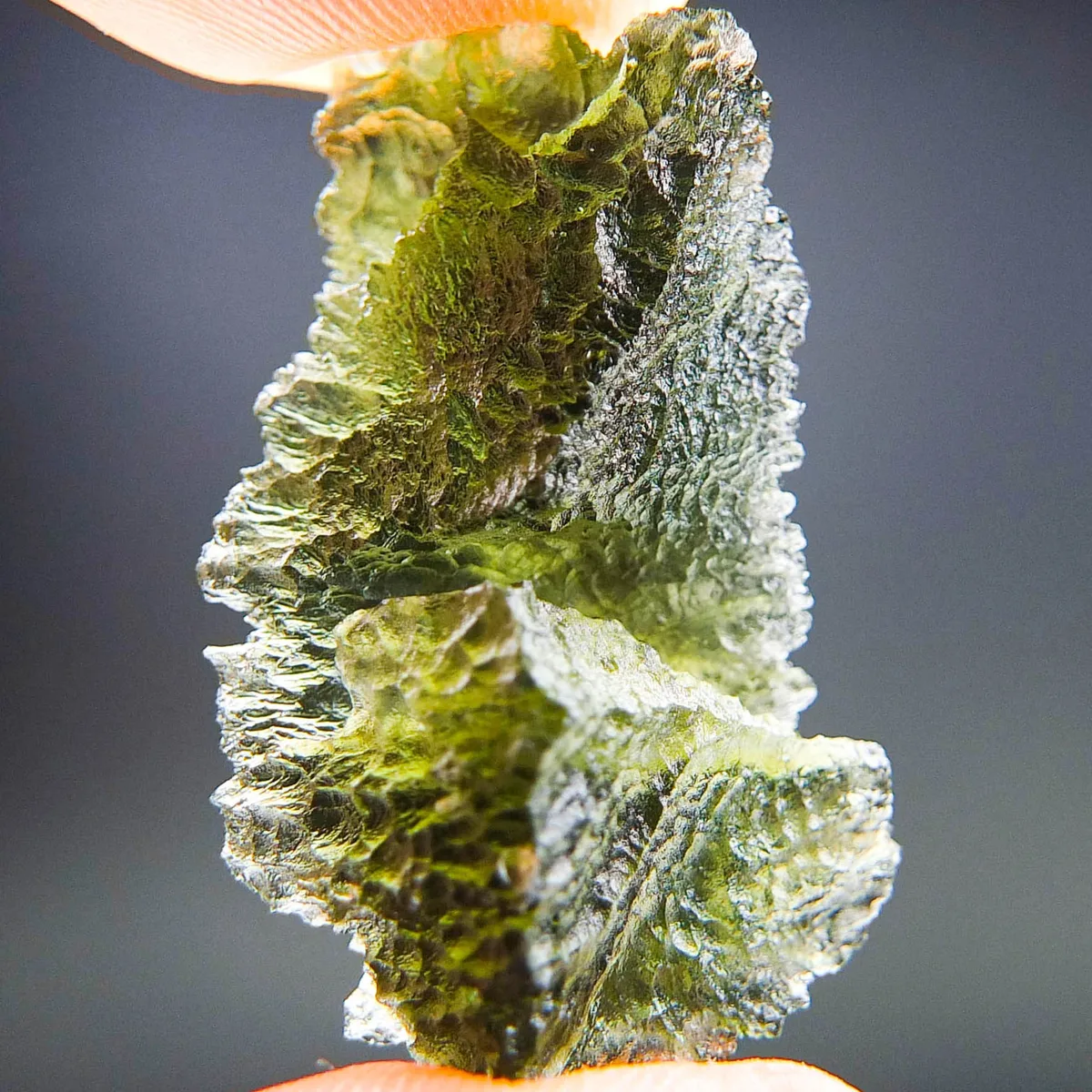
Figuring out how to identify fake moldavite air bubbles vs lechatelierite is tough because the naked eye lies. Most people think any bubble inside green glass proves it’s a tektite, but that’s a dangerous assumption for your wallet.
True lechatelierite looks messy and organic, while fakes are suspiciously perfect spheres. As of 2026, counterfeits have gotten better at mimicking surface etching, so internal structure is your only reliable clue. We need to look closer than most buyers dare to go.
Quick Answer
To identify fake moldavite air bubbles versus lechatelierite, examine the shape under high magnification. Genuine lechatelierite appears as irregular, stringy, or web-like inclusions with cloudy centers. Fake air bubbles are perfectly spherical with sharp, distinct edges.
Use transmitted light to reveal these structural differences clearly.
Why Your Eyes Can’t Trust Text Descriptions Alone
Text descriptions fail you here because nuance matters more than vocabulary. You can read about “webbing” all day, but without seeing the chaotic flow, it means nothing. Our research shows that novice collectors often mislabel natural defects as flaws, missing the authentic signature entirely.
Conversely, sellers use vague terms like “natural inclusions” to hide synthetic glass. This ambiguity creates confusion during online purchases where touch isn’t possible. Visual confirmation becomes non-negotiable for accurate authentication.
The human brain seeks patterns, often forcing order onto chaos. When looking at moldavite, you might see random specks and assume they’re consistent. But real impact melt cools rapidly, trapping silica in twisted, uneven strands.
These strands don’t follow geometric rules. They branch, merge, and fade unpredictably. If your eyes aren’t trained to spot this disorder, you’ll miss the red flags of manufactured perfection.
That’s why we rely on specific visual cues rather than general impressions.
The Visual Signature of True Lechatelierite vs. Fake Air Bubbles
Lechatelierite is nearly pure silicon dioxide (SiO₂) formed during the meteorite impact event ~14.8 million years ago. It doesn’t form round bubbles because the viscosity was too high for gas expansion. Instead, it gets stretched into fibrous webs or cloud-like patches within the green matrix.
Fake moldavite, usually made from soda-lime or borosilicate glass, contains trapped gas pockets. These cool slowly enough to form perfect spheres. The boundary between the bubble and the glass is crisp and defined, lacking the diffuse, hazy edge of real lechatelierite.
| Feature | Genuine Lechatelierite | Fake Air Bubbles |
|---|---|---|
| Shape | Irregular, stringy, web-like | Perfectly spherical |
| Edges | Diffuse, fading into matrix | Sharp, distinct boundaries |
| Appearance | Milky/cloudy in reflected light | Clear/transparent with dark ring |
| Distribution | Random, chaotic clusters | Uniform or clustered near edges |
In our analysis of verified specimens, genuine pieces show varying thicknesses in their "webs." Some parts look thick and opaque; others are thin and translucent. This variation indicates rapid cooling and physical stress.
Fakes lack this complexity. Their bubbles are uniform in size and clarity. If you see multiple identical circles floating in the stone, suspect counterfeit production methods.
Real nature rarely repeats itself with such precision.
Setting Up the Right Lighting for Accurate Inspection
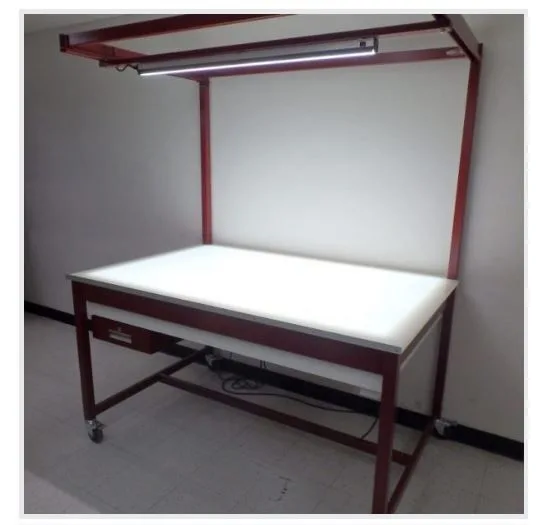
You cannot judge inclusions with overhead room lighting. Shadows hide details, and reflections glare off the surface. You need controlled illumination to penetrate the stone’s opacity.
Transmitted light works best for revealing internal structures.
Place an LED panel or strong flashlight directly behind the specimen. Hold the moldavite close to the source. This technique lights up the interior, making dense inclusions appear darker against the bright background.
For finer detail, switch to reflected light. Position a small lamp at a 45-degree angle to the stone. This highlights surface texture and shallow subsurface features.
You’ll see the difference between smooth glass pits and rough weathering rinds.
Magnification is equally critical. A standard 10x jeweler’s loupe helps, but higher power reveals truth. Aggregate reviews suggest using 30x to 60x magnification for definitive ID.
Lower powers blur the edges of tiny lechatelierite strands.
Ensure your workspace is clean. Dust particles mimic inclusions if left unchecked. Wipe the stone with microfiber cloth before inspection.
Contaminants create false positives that waste your time and doubt.
Step-by-Step Macro Analysis Workflow
Start by cleaning the specimen thoroughly. Remove oils and dust that obscure view. Place it on a neutral gray background to reduce contrast errors.
Gray provides the best balance for spotting both light and dark features.
First, inspect under transmitted light. Look for irregular shapes. Do you see long, twisting fibers?
Or do you see round dots? Round dots signal potential fakes. Fibers suggest authenticity.
Note the location of these features relative to the surface.
Next, switch to reflected light at high magnification. Examine the edges of any suspected bubbles. Genuine lechatelierite fades gradually into the surrounding glass.
Fake bubbles have hard, abrupt borders. Check for "swirl marks" in the glass matrix, which indicate stirring during manufacturing.
Compare findings across different angles. Rotate the stone slowly. Real inclusions stay fixed in space relative to the body.
Sometimes, optical illusions shift position if you move your head incorrectly. Keep the stone steady, not your eye.
Document suspicious areas with macro photography. Phone cameras struggle with focus stacking, so use manual settings if possible. Capture multiple exposures to handle dynamic range.
Share these images with trusted communities for second opinions if uncertain.
Per guidelines from the Geological Institute of the Czech Academy of Sciences, visual inspection is presumptive. Always corroborate with weight and density checks if available. Moldavite floats slightly easier than many fakes due to lower density (~2.35 g/cm³).
This subtle difference won’t save you alone, but it adds confidence. Combine visual evidence with physical metrics for a stronger case. Don’t rely on one data point in isolation.
Common Visual Traps That Fool Even Experienced Collectors
Surface etching is the biggest decoy. Many fakes are acid-etched to mimic natural weathering. Look closely at the pattern.
Natural etching is random and deep. Artificial etching often looks uniform or shallow. It lacks the complex topography of real impact glass.
Another trap is color saturation. Genuine moldavite varies from olive to forest green. Fakes are often too bright or neon.
This artificial vibrancy signals chemical dyes added during manufacturing. Real tektites get their color from iron impurities in the melt sheet.
Beware of "clean" specimens marketed as rare. True lechatelierite is almost always present. A piece with zero internal structure is suspiciously perfect.
It likely means synthetic glass was poured without turbulence. Nature creates chaos; factories create order.
Lighting tricks also deceive sellers. Photos taken under harsh flash can hide bubbles. They flatten the image, removing depth cues.
Always ask for video footage rotated slowly. Static images lie easily. Motion reveals refraction inconsistencies that stills miss.
Finally, ignore price tags as proof. High prices don’t guarantee authenticity. Scammers know collectors pay premiums for "rare" finds.
Verify the source independently. Check seller history and return policies carefully. Trust but verify every claim visually first.
When to Stop Looking and Send It to a Lab
Visual ID has limits. If your macro photos remain ambiguous, stop guessing. Ambiguity costs money.
Sending a sample for lab analysis is safer than risking a bad buy. Professional labs use Raman spectroscopy or XRF to detect elemental composition.
These tests identify specific mineral signatures. Lechatelierite shows distinct silica peaks absent in soda-lime glass. The cost ranges from $50 to $150 depending on the facility.
For high-value stones ($500+), this insurance is worth every penny.
Do not attempt destructive testing like acid baths. These ruin resale value permanently. Non-destructive methods preserve integrity.
Choose accredited gemological laboratories over generic material science firms. Ensure they specialize in tektites or silicate glasses.
If you lack budget for lab work, seek expert consensus. Post clear, lit photos in specialized forums. Ask for critical feedback, not just validation.
Multiple independent eyes catch errors single observers miss. Community verification acts as a free preliminary screen.
Remember, no method is 100% foolproof alone. Layer your defenses. Use lighting, magnification, and density checks together.
Then escalate to labs if doubt persists. Patience protects your portfolio better than speed ever could.
Quick Reference: Side-by-Side Feature Comparison
Use this table for rapid field assessment. Keep it handy when inspecting new acquisitions. It summarizes key discriminators discussed earlier.
| Criterion | Genuine Moldavite (Lechatelierite) | Fake Moldavite (Air Bubbles) |
|---|---|---|
| Internal Shape | Irregular strings, webs, clouds | Perfect spheres, ovals |
| Edge Definition | Diffuse, blending into matrix | Sharp, distinct boundary lines |
| Light Behavior | Scatters light, appears milky | Refracts cleanly, often dark-ringed |
| Distribution | Chaotic, varying densities | Uniform, clustered near edges |
| Surface Texture | Deep, random pitting & grooves | Shallow, uniform etching or smooth |
| Density Feel | Lighter (~2.35 g/cm³) | Heavier (typical glass ~2.5 g/cm³) |
Note that exceptions exist. Some genuine pieces have fewer inclusions. However, the type of inclusion remains consistent.
Never mistake scarcity for absence. If you see spheres, suspect glass immediately.
Frequently Asked Questions About Moldavite Inclusions
Can lechatelierite look like bubbles?
Yes, sometimes small droplets appear roundish. But true bubbles are geometrically perfect. Lechatelierite retains organic irregularities even when compact.
Zoom in further to check edge sharpness. Blurry edges indicate natural formation. Crisp edges signal trapped gas in synthetic melt.
Does all moldavite have visible lechatelierite?
Most does, but clarity varies. Highly transparent specimens may show faint wisps. Opaque ones hide them completely.
Absence isn’t proof of fake, but presence of spheres is strong evidence. Always cross-reference with surface texture and weight. Context matters more than any single feature.
How much magnification do I really need?
Start with 10x for initial screening. Move to 30x, 60x for detailed inspection. Higher powers reveal edge nuances invisible to lower lenses.
Phone macros often suffice if focused properly. Avoid digital zoom which degrades quality. Optical clarity beats pixel count every time.
Are there safe home tests besides looking?
Specific gravity testing is reliable. Weigh the stone in air, then water. Calculate density using Archimedes’ principle.
Compare result to known moldavite range (2.34, 2.38 g/cm³). Deviations suggest counterfeit materials. This non-destructive method complements visual checks effectively.

Similar Posts