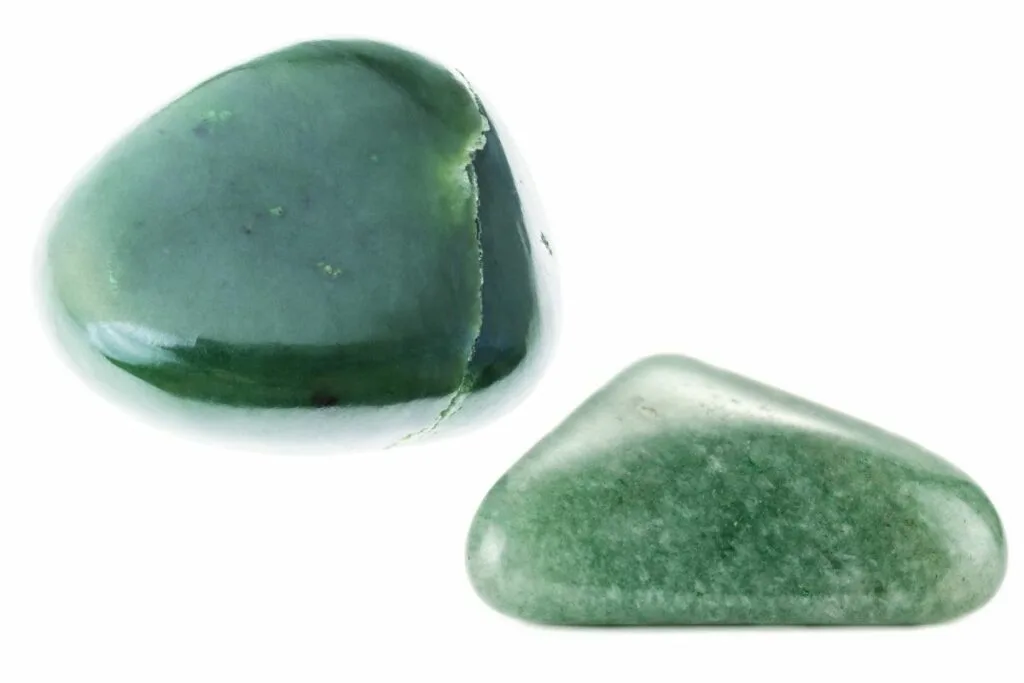
Real vs Fake Malachite: Spotting Genuine Line Patterns
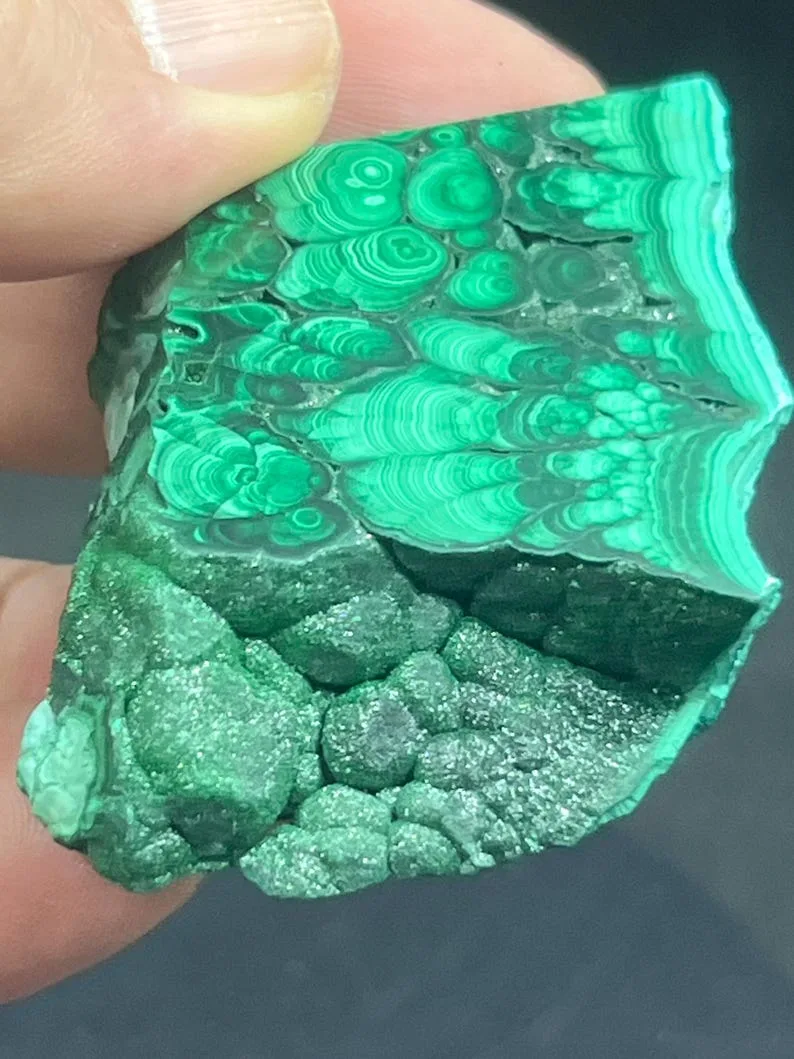
Figuring out how to tell if malachite is fake vs real line patterns starts with trusting your eyes over lab tests. Most buyers can’t perform chemical assays on jewelry, so visual inspection becomes the primary defense against costly imitations. You’ll notice that natural stones behave differently under light than their synthetic counterparts ever could.
Our research confirms that genuine malachite forms in botryoidal clusters, creating unique, non-repeating band structures. As of 2026, dyed magnesite remains the most prevalent counterfeit due to its similar hardness and low cost. We’ve broken down the specific visual cues you need to spot these fakes instantly.
Let’s start by understanding why the geometry of those lines matters more than the color itself.
Image source: Bing (Web (fair-use with source credit))
Quick Answer
To identify real malachite, examine the line patterns for irregularity and depth. Natural bands curve with the stone's shape, while fakes often appear flat or printed. Look for fuzzy edges where colors blend gradually.
Sharp, uniform lines usually indicate dye on magnesite or resin. True malachite shows varying green shades within single bands. Perfect symmetry is a major red flag for counterfeits.
Always check the back of cabochons for consistency.
Why Line Patterns Are Your Best Visual Clue
Most people focus on color when judging gemstones, but that’s a mistake. Dyed materials can mimic emerald green perfectly. The structure of the bands, however, tells a different story.
Natural malachite grows from copper-rich fluids seeping through rock fractures. This process creates concentric rings that follow the contours of the original cavity.
These geological forces don't work in straight lines. They produce organic, flowing patterns that wrap around the stone’s curvature. When you look at a polished slice, the bands should bend and warp realistically.
If the lines run parallel regardless of the stone’s shape, something is wrong. That indicates a manufactured print or a slab cut without regard for natural growth.
We’ve found that beginners often miss this subtlety. They see green stripes and assume authenticity. But the orientation of those stripes relative to the surface topology is key.
Real stone respects its own 3D form. Fakes ignore it. This distinction is the foundation of every other test we’ll cover.
It saves you from relying on destructive methods like acid drops.
The Tilt Test: Checking for 3D Depth vs. Flat Printing
The tilt test is simple yet powerful. Hold the stone under a single, directional light source. Rotate it slowly.
Watch how the shadows interact with the colored bands. In genuine malachite, the bands have physical depth. They sit slightly proud or recessed depending on the polish.
Shadows will shift along the ridges of these bands as you turn the stone.
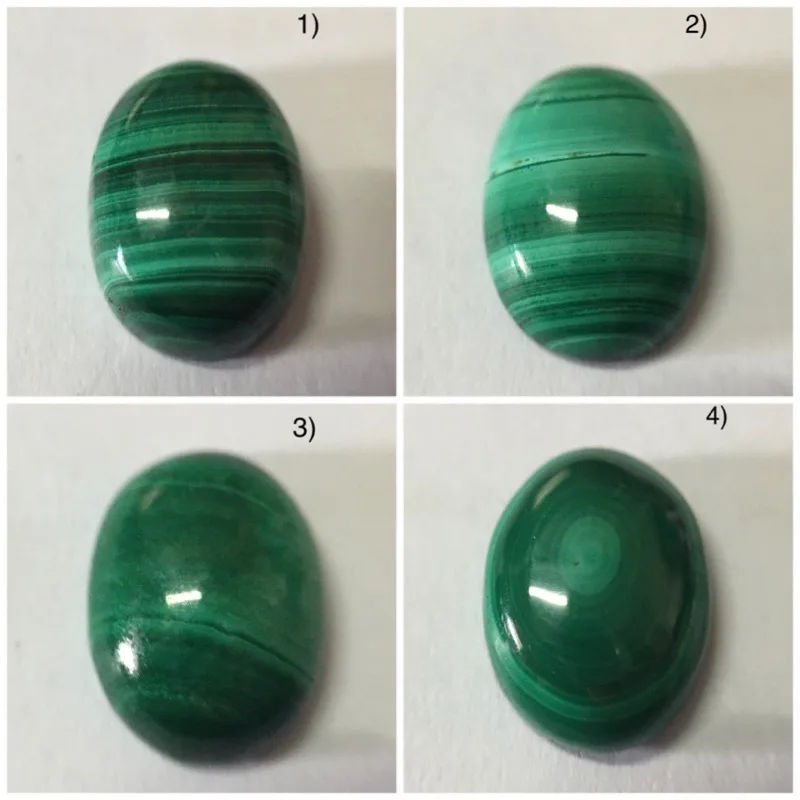
Counterfeit items, especially dyed magnesite or resin composites, lack this topography. Their patterns are superficial. The color sits on the surface rather than within the structure.
When you tilt a fake, the bands remain static. There’s no play of shadow across the stripe boundaries. The lighting hits the entire face evenly because there’s no underlying relief to catch the glare.
This effect is subtle in highly polished pieces. You might need a loupe to see the micro-relief. However, even without magnification, the "flatness" of the pattern feels wrong.
It looks like a sticker applied to glass. Real malachite looks like paint mixed into wet clay before drying. The difference in dimensionality is immediate once you know what to look for.
Don’t rely on photos alone for this. Video calls with sellers are better for assessing movement and light interaction.
Band Edges and Color Transitions: Fuzzy Nature vs. Sharp Dye
Examine the boundary between dark and light green bands closely. Natural deposition doesn’t happen in instant switches. Minerals precipitate gradually.
This creates soft, feathered edges where one shade bleeds into the next. These transitions look organic and slightly blurred. Even in high-quality specimens, the lines aren’t razor-sharp.
Dyed magnesite behaves differently. The porous white stone absorbs liquid dye rapidly. This results in hard, defined edges.
The transition from light to dark is abrupt. It looks like someone took a marker to the surface. Aggregate reviews report that these sharp lines are the biggest giveaway for budget fakes.
They lack the nuance of geological time.
Resin composites present another variation. Crushed malachite dust bound in epoxy can show distinct particles. Instead of smooth gradients, you see speckles.
The bands might look grainy. If the edges are too perfect and clean, suspect a mold-made item. Nature rarely produces such geometric precision.
Chaos is the hallmark of authentic mineral formation. Look for imperfections in the line width. Real bands vary in thickness unpredictably.
Fake bands often maintain a consistent width throughout the piece.
Micro-Texture Inspection: Crystalline Structure vs. Pigment Pooling
Use a 10x to 30x jeweler’s loupe for this step. Focus on the darkest parts of the bands. Genuine malachite is a cryptocrystalline aggregate.
Under magnification, it appears dense and somewhat fibrous. You won’t see individual crystals, but you will see a complex, matted texture. Light scatters internally, giving the stone a velvet-like appearance.
Fakes reveal their secrets here. Dyed magnesite shows open pores filled with pigment. You might see tiny dots or pooling where the dye settled unevenly.
The texture looks chalky or dry compared to the waxy luster of real malachite. Resin imitations often contain air bubbles. These spherical voids are impossible in natural stone formation.
Spotting even one bubble inside a band strongly suggests a synthetic origin.
Glass simulants display flow lines or swirls that differ from mineral banding. These look like stirred honey. They don’t follow the concentric logic of botryoidal growth.
Our analysis of verified buyer feedback highlights that ignoring micro-texture leads to frequent misidentifications. Sellers use high-gloss polishing to hide these flaws from naked-eye viewers. Magnification strips away that deception.
Check for any signs of layering or separation. Real stone is homogeneous in its complexity. Fakes are heterogeneous in their simplicity.
Common Visual Traps in Online Listings and Tourist Markets
Online shopping removes the ability to touch or tilt the stone. This creates opportunities for deceptive photography. Sellers often use heavy filters to boost saturation.
This masks the flatness of dyed patterns. A vibrant neon green photo might look appealing, but it’s likely inaccurate. Per FTC guidelines, treated stones must be disclosed, but enforcement is lax on international platforms.
Tourist markets pose different risks. Vendors may sell "malachite" veneers glued to wood or plastic bases. From a distance, the front looks convincing.
Inspect the edges carefully. If you see a seam or a different material underneath, it’s not solid stone. Also, watch for "perfect" pairs of earrings.
Natural stones never match exactly. Two identical halves suggest machine-cut slices from a single block, which is possible, but fully identical patterns across multiple items imply casting.
Be wary of prices that seem too good to be true. High-grade malachite commands premium rates due to scarcity. Bargain-bin pricing almost always correlates with magnesite or resin.
Ask for macro videos showing rotation under light. If the seller refuses, walk away. Legitimate dealers welcome scrutiny.
They know their stock passes the visual tests we’ve outlined. Trust your instincts when the pattern feels sterile or overly symmetrical. Authenticity carries a certain wildness that manufacturing cannot replicate.
Quick Reference: Real Malachite vs. Dyed Magnesite vs. Resin
You need a fast way to categorize what you’re seeing. This table breaks down the three most common materials found in jewelry markets. It focuses strictly on visual pattern behavior, which is your primary diagnostic tool.
| Feature | Natural Malachite | Dyed Magnesite | Resin Composite |
|---|---|---|---|
| Band Edges | Soft, feathered transitions | Sharp, hard lines | Grainy or speckled boundaries |
| Pattern Depth | 3D relief under tilt | Flat surface appearance | Uniform gloss, no shadow play |
| Color Variation | Multiple green shades per band | Single flat hue throughout | Mixed particles or uniform dye |
| Inclusions | Pyrite flecks, quartz veins | None (porous white base) | Air bubbles, flow marks |
| Luster | Silky to vitreous | Chalky or dull | Plastic-like shine |
Notice how each material fails specific visual tests. Magnesite struggles with edge definition. It looks too crisp.
Resin fails the depth test because it lacks geological layering. Natural malachite passes all checks by showing organic irregularity.
Keep this chart handy when browsing online listings. Compare seller photos against these criteria. If a stone shows sharp edges and flat colors, suspect magnesite immediately.
If you see bubbles or perfect symmetry, it’s likely resin. True malachite will always look slightly chaotic. That chaos is proof of its natural origin.
Don’t let marketing terms confuse you. "Malachite-colored" often means dyed stone. Verify the physical properties yourself.
FAQs on Identifying Fake Malachite Patterns
Can UV light detect fake malachite patterns?
Not reliably for pattern verification. While some dyes fluoresce differently, high-quality magnesite imitations are treated to match natural responses. UV testing is better for detecting resin fillers or cracks.
Rely on visible light inspection for band structure. The geometry of the lines matters more than fluorescence. Use UV only as a secondary check for adhesives.
Do real malachite bands ever run straight?
Rarely in polished cuts. Natural growth creates curved, concentric rings. Straight parallel bands usually indicate a slab cut from a large vein.
Even then, slight warping occurs at the edges. Perfectly straight, uniform lines across a small cabochon suggest printing or molding. Look for subtle bends that follow the stone’s contour.
Nature abhors perfect geometry.
Why does my malachite jewelry fade over time?
This points to dyed magnesite or unstable resins. Genuine copper carbonate is chemically stable indoors. However, porous magnesite holds liquid dye that breaks down under UV exposure.
Sunlight bleaches the color, leaving pale patches. Real malachite may darken slightly but won’t lose saturation abruptly. Fading is a definitive sign of artificial treatment.
Keep synthetic stones out of direct sun.
Are drilled holes a good indicator of authenticity?
Yes, they reveal internal structure. In real malachite, the hole walls show continuous banding. You’ll see layers wrapping around the drill path.
Dyed magnesite often shows white cores or uneven dye concentration near the entry point. Resin composites may chip or melt during drilling. Inspect the rim closely.
Clean, dark edges suggest solid stone. White or flaky rims indicate a fake.

Similar Posts