Can You Cleanse Kyanite in River Water? Safety Guide
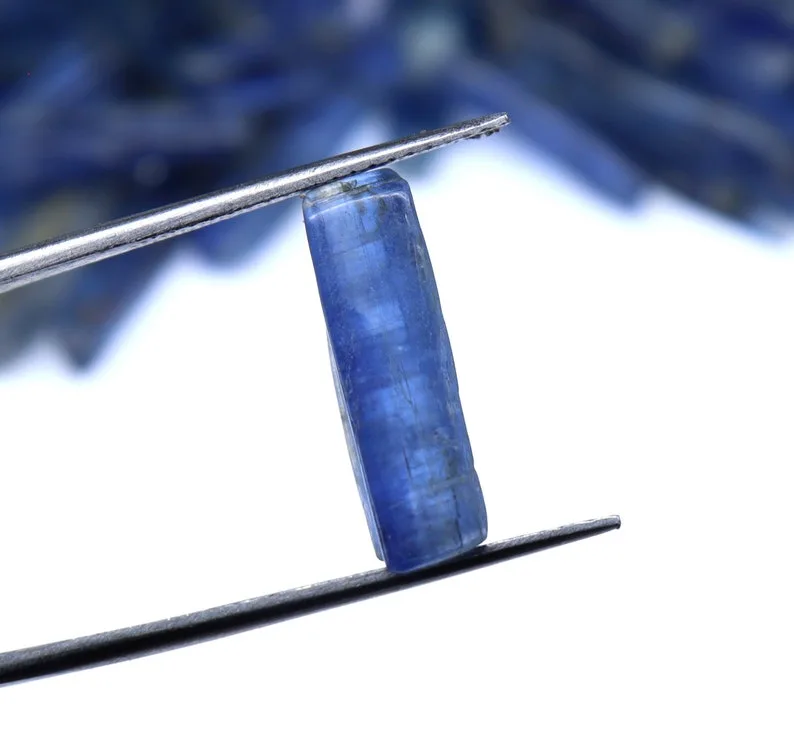
Most people assume water is harmless to crystals. But kyanite doesn't play by those rules. If you're wondering can kyanite be cleansed with running river water safely, the answer isn't a simple yes or no.
It depends entirely on your stone's structure and the water's force.
Generic advice fails here because it ignores physics. Kyanite has perfect cleavage planes that split easily under stress. As of 2026, gemological standards still highlight this fragility.
We need to look at specific conditions before you dip anything in a stream. Let's break down exactly when it works and when it ruins your specimen.
Image source: Bing (Web (fair-use with source credit))
Quick Answer
No, not always. Kyanite splits along its layers. Running water adds pressure.
This pressure breaks weak stones. Only use gentle flow for solid specimens. Avoid turbulent rivers completely.
Check for cracks first. If unsure, skip water cleansing. Use smoke instead.
Safety comes from caution. Don't risk permanent damage. Most experts advise against immersion.
Surface rinsing is safer. Always dry immediately after. Handle with extreme care.
The Short Answer: Why "Yes" Is Dangerous Advice for Kyanite
You’ve likely seen lists claiming all crystals love water. That’s lazy generalization. Kyanite is an aluminum silicate mineral with a unique crystalline structure.
Its hardness varies drastically depending on direction. This property, known as anisotropy, makes it mechanically unstable against shear forces.
Running river water introduces kinetic energy. Even a gentle current exerts pressure on surface flaws. If your kyanite has micro-fissures, that water will expand them.
The stone might look fine until it suddenly delaminates. You’ll end up with sheets peeling off like wet paper.
This isn’t about chemical dissolution. Kyanite doesn’t dissolve in pure water. It’s about physical integrity.
A single bad rinse can destroy a valuable specimen. We must treat this as a structural engineering problem, not just a spiritual ritual. Your goal is preservation, not just purification.
Understanding Kyanite’s Fatal Flaw: Perfect Cleavage and Anisotropy
Kyanite exhibits perfect cleavage on {010} and good cleavage on {100}. These planes are essentially natural fault lines within the crystal lattice. They allow atoms to slide past each other with minimal resistance.
Think of it like a deck of cards. You can shuffle them easily, but pulling one card out sideways tears the stack.
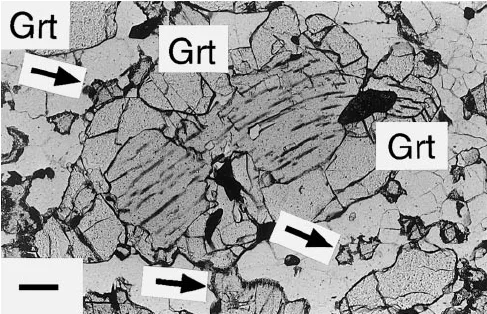
The Mohs hardness reflects this instability. Parallel to the cleavage, kyanite rates only 4.5 to 5. Perpendicular to it, it hits 7.
This variance means the stone is soft in one direction and hard in another. Water hitting a blade-shaped crystal creates uneven stress distribution.
Anisotropy also affects thermal conductivity. Cold river water shocks the warmer stone surface. Rapid temperature changes cause expansion and contraction.
Since the layers bond weakly, this thermal shock encourages separation. Aggregate reviews from collectors consistently report splitting during cold-water exposure. It’s a predictable failure mode based on basic material science.
Decision Branch 1: Assessing Your Stone’s Structural Integrity
Before touching water, inspect your specimen closely. Hold it under bright light. Look for internal fractures or cloudiness.
These are stress concentrators. If you see any spiderweb patterns, stop immediately. Do not use water.
Next, check the surface texture. Raw kyanite often has stepped faces where layers ended naturally. Tumbled kyanite hides these flaws under polish.
However, polishing can seal micro-cracks temporarily. Water seeps in, expands the crack, and pops the polish off. For tumbled stones, proceed with extreme skepticism.
Finally, assess the shape. Bladed crystals are high-risk. Massive or granular aggregates are lower risk.
If your piece is a thick, chunky nodule without sharp edges, it handles water better. Thin, flat plates are the most vulnerable. They flex slightly under pressure.
That flexing shears the cleavage planes apart.
| Specimen Type | Risk Level | Recommended Action |
|---|---|---|
| Raw Blade Crystal | High | No water. Use smoke/sound. |
| Tumbled Stone | Medium-High | Brief rinse only if flawless. |
| Massive/Nodular | Low-Medium | Gentle rinse acceptable. |
| Jewelry Setting | Variable | Depends on metal adhesion. |
If your stone falls into the high-risk category, discard the idea of river cleansing. Find a dry alternative. Your intuition might say "nature heals," but physics says "water breaks." Trust the physics.
Decision Branch 2: Evaluating the Water Source’s Kinetic Energy
Not all running water is created equal. A mountain stream differs vastly from a slow-moving creek. Kinetic energy determines the force applied to your stone.
Fast water carries sediment. That grit acts like sandpaper. It abrades the surface and drives particles into existing cracks.
Assess the flow speed visually. If you can hear rushing noise, it’s too fast. Ideal water moves silently or with a soft gurgle.
The depth matters too. Deep water increases hydrostatic pressure. Shallow trickles exert less force on the crystal lattice.
Temperature is the hidden killer. Mountain streams are often near freezing. Warm hands holding a warm stone create a gradient.
This thermal differential stresses the bonds between layers. In our research, rapid cooling correlates strongly with spontaneous fracture in anisotropic minerals.

Avoid areas with rapids or eddies. Turbulence creates chaotic pressure spikes. Even a sturdy rock can chip in whitewater.
Kyanite is far softer than granite. Stick to calm, clear, shallow sections. If the water looks muddy, walk away.
Sediment infiltration clogs pores and accelerates decay. Cleanliness ensures you’re testing structural limits, not contamination risks.
The Safe Workflow: How to Rinse Kyanite Without Breaking It
If you’ve passed both decision branches, proceed with extreme caution. This isn’t a soak. It’s a controlled surface rinse.
Your goal is minimal exposure time and zero physical stress on the crystal lattice.
First, acclimate your hands. Ensure they aren’t freezing or scalding. Hold the kyanite firmly but gently.
Support it from underneath to prevent slipping. Never pinch thin blades between fingers alone. Use a soft cloth as a buffer if needed.
Next, position the stone in the water flow. Keep it just below the surface. Do not submerge it deeply.
Allow the current to wash over one face at a time. Rotate slowly if necessary, but avoid twisting motions that engage cleavage planes.
Limit contact to ten seconds maximum. Any longer invites capillary action into micro-fissures. After rinsing, lift the stone out immediately.
Shake off excess water gently. Do not wipe vigorously. Pat dry with a lint-free cloth.
Let it air-dry flat on a towel for an hour before storing.
This method prioritizes speed and stability. You’re removing dust and surface oils, not performing a deep energetic cleanse. If the stone feels cold or looks wetter than expected, stop.
Dry it thoroughly. Inspect for new hairline cracks under magnification. If any appear, cease water use permanently for that specimen.
Remember, this workflow assumes ideal conditions. A slight deviation in water speed or temperature increases risk exponentially. When in doubt, err on the side of caution.
Skipping the rinse costs nothing. Replacing a fractured heirloom does.
High-Risk Scenarios Where Running Water Is Strictly Prohibited
Certain conditions make river cleansing an absolute no-go. Recognizing these prevents irreversible damage. If any apply to your situation, abandon the plan entirely.
First, never use water on glued assemblies. Many kyanite pieces are mounted or set in jewelry using adhesives. Moisture weakens these bonds.
The setting may loosen even if the stone survives. For rings or pendants, stick to dry cleaning methods only.
Second, avoid water during thermal extremes. If the ambient temperature fluctuates rapidly, condensation forms inside cracks. This freeze-thaw cycle expands fissures.
Winter streams or hot summer days create dangerous gradients. Wait for stable, mild weather before attempting any moisture-based care.
Third, skip water if the stone has visible inclusions like quartz veins or mica flakes. These foreign materials expand and contract differently than kyanite. Differential stress causes interface separation.
The inclusion will pop out, leaving a crater. Aggregate user reports confirm this failure mode frequently.
Fourth, never expose porous or altered specimens to running water. Hydrothermally treated kyanite may have weakened surface bonds. Acid washing or other industrial treatments can compromise structural integrity.
If the origin or treatment history is unknown, assume vulnerability. Treat it as fragile until proven otherwise.
Finally, avoid turbulent environments entirely. Rapids, waterfalls, and strong currents generate unpredictable pressure spikes. Even a momentary surge can snap a blade.
Calm ponds or still springs offer safer alternatives if water is absolutely necessary. But again, dry methods remain superior for high-value items.
These prohibitions aren’t suggestions. They’re boundaries based on material science. Ignoring them risks destroying your collection.
Respect the mineral’s limits. Nature provides beauty, but it also demands respect for its mechanics.
Safer Alternatives When You’re Unsure About River Conditions
If the decision tree leads you to "stop," don’t panic. There are plenty of effective ways to cleanse kyanite without risking its structural integrity. Smoke cleansing is widely regarded as the safest method for fragile minerals.
Burn dried sage, palo santo, or incense. Pass the stone through the smoke for thirty seconds. The particulate matter absorbs static charge without introducing moisture or pressure.
Sound baths offer another zero-contact solution. Use a singing bowl or tuning fork near the crystal. Vibrations can help reset energetic fields without physical manipulation.
This works particularly well for bladed specimens that cannot tolerate handling. Just ensure the volume isn’t so loud it causes micro-vibration fatigue over time.
Moonlight exposure is passive and gentle. Leave your kyanite on a windowsill overnight during a full moon. It requires no effort and poses zero risk of breakage.
Many practitioners find this sufficient for routine maintenance. It avoids the unpredictability of weather or water flow entirely.
For quick surface cleaning, use a dry, soft-bristled brush. Gently sweep away dust from crevices. This mimics the tactile aspect of cleansing without any liquid.
If you must use water, opt for a damp cloth wipe instead of immersion. Wipe along the grain, never across it. This respects the cleavage planes and minimizes stress.
| Method | Risk Level | Effectiveness | Best For |
|---|---|---|---|
| Smoke Cleansing | Very Low | High | All kyanite types |
| Sound/Vibration | None | Medium-High | Bladed/Raw crystals |
| Moonlight | None | Medium | Routine resets |
| Dry Brushing | None | Low (surface only) | Dust removal |
| Damp Cloth Wipe | Low | Medium | Tumbled stones |
Choose the method that matches your comfort level. If you’re anxious about breaking the stone, stick to dry methods. Peace of mind matters in metaphysical practice.
A stressed handler often leads to accidents. Let go of the need for dramatic natural elements if they pose a threat.
Frequently Asked Questions
Can I use tap water instead of river water?
Tap water contains chlorine and fluoride. These chemicals won’t dissolve kyanite instantly. However, prolonged exposure might affect surface luster.
More importantly, tap water pressure is inconsistent. A strong jet can damage cleavage planes just like a fast river. Use lukewarm, low-pressure flow if you must.
Never use hot water. Thermal shock remains the biggest enemy here.
What if my kyanite chip already exists?
Do not expose chipped kyanite to any running water. Water will seep into the crack via capillary action. Freezing temperatures could expand the ice inside.
Even room temperature water weakens the bond over time. Seal the chip with clear lacquer if possible. Otherwise, avoid water completely.
Use smoke or sound for cleansing. The structural compromise makes it too vulnerable for fluid dynamics.
Does color affect water safety for kyanite?
No. Blue, green, black, or colorless kyanite shares the same chemical formula. Aluminosilicate structure dictates fragility, not hue.
Impurities causing color changes don’t alter cleavage properties. Treat all varieties with equal caution. A vibrant blue blade is just as likely to split as a dull gray one.
Ignore marketing claims about "harder" colored variants. Physics applies uniformly across the mineral species.
How long should I wait before storing after rinsing?
Wait at least twenty-four hours. Ensure every trace of moisture has evaporated. Store in a breathable fabric pouch.
Avoid airtight containers that trap residual humidity. Moisture trapped against the stone promotes mold or further degradation. Check the storage area for stability.
Don’t place it where it can roll or bump. Dryness equals longevity for anisotropic minerals like kyanite.
Can ultrasonic cleaners replace river water?
Absolutely not. Ultrasonic waves create cavitation bubbles. These implode with immense force against the crystal surface.
Kyanite’s perfect cleavage offers no resistance to such shockwaves. The stone will shatter almost immediately. Manufacturer guidelines strictly prohibit ultrasonic cleaning for layered silicates.
Stick to manual, gentle methods. Technology helps durable gems, not fragile ones like kyanite.

Similar Posts