Fake vs Real Carnelian: The Dyed Agate Banding Test
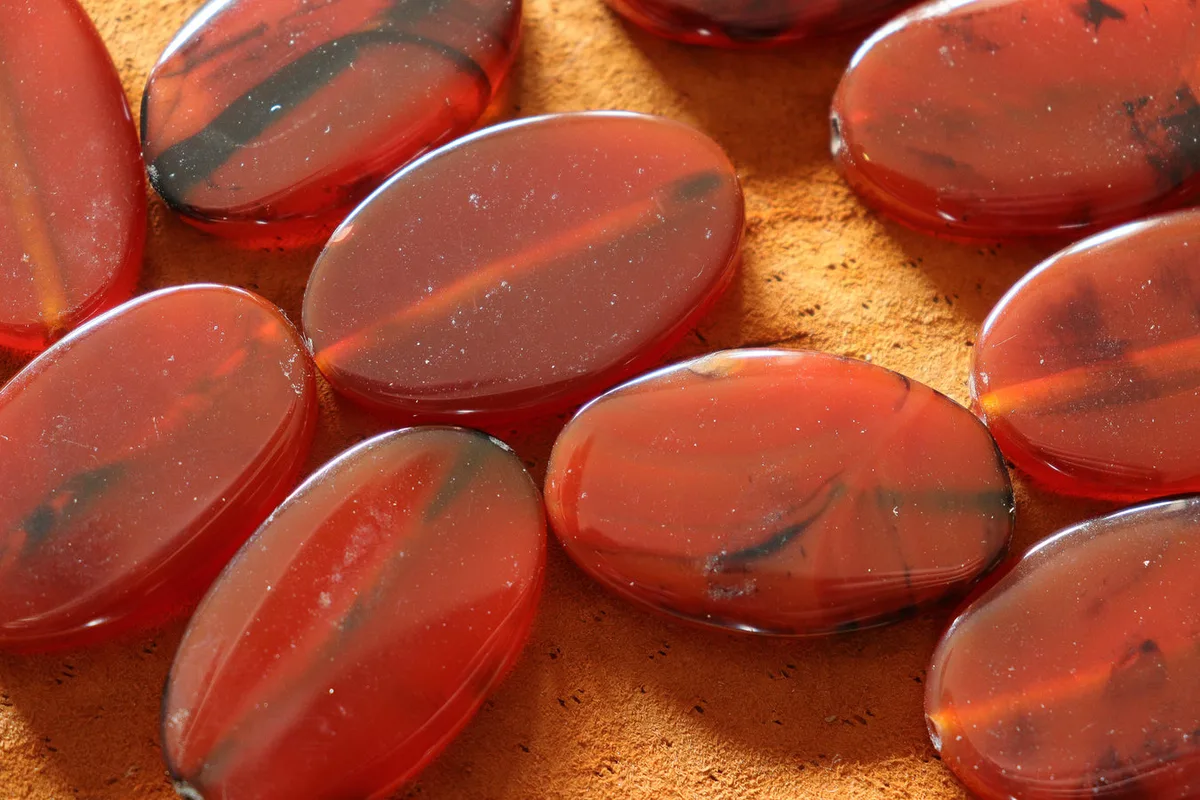
Most people assume a simple scratch test works for carnelian. It doesn't. Both real and dyed stones share the same hardness.
You need to look closer at color distribution. This guide covers the fake carnelian vs real carnelian dyed agate banding test. We focus on visual cues you can spot with basic tools.
Natural iron oxide creates subtle gradients in genuine specimens. Dyed versions often show sharp, unnatural boundaries. As of 2026, macro photography remains the most accessible diagnostic tool for collectors.
Let's break down exactly what your eyes should be looking for during inspection.
Quick Answer
The banding test reveals dye concentration in micro-fractures. Real carnelian shows smooth, natural color transitions. Dyed agate displays dark spots along crack lines.
Use a loupe to inspect drill holes closely. Uniform saturation suggests artificial enhancement. Natural stones vary slightly in tone across the surface.
Why Your Eyes Are the Only Tool That Matters Here
You don't need expensive lab equipment for initial screening. The human eye, aided by magnification, detects anomalies machines sometimes miss. Gemologists rely on optical properties first.
Chemical analysis comes later if needed.
Dye behaves differently than mineral pigments. Iron oxides bond within the crystal lattice. Synthetic dyes sit in voids.
This structural difference creates visible patterns.
We see these patterns as "banding." But it's not geological banding. It's fluid dynamics frozen in stone. Dye follows the path of least resistance.
That path is always a fracture.
Your goal is to map these paths. Look for consistency. Natural color flows.
Artificial color pools. Understanding this distinction saves you money. It prevents buying treated goods at premium prices.
The Banding Test: Spotting Dye in Micro-Fractures
This is the core diagnostic method. You are looking for specific visual signatures. These signatures indicate treatment history.
Real carnelian has internal clouds. They diffuse light evenly. Dyed agate has dark veins.
These veins absorb light sharply.
Identifying Spiderweb Patterns
Hold the stone against a bright light source. Rotate it slowly. Watch for fine, web-like lines.
These lines are fractures filled with concentrated dye. They look darker than the surrounding body color. In untreated stone, fractures reflect light.
They appear white or silvery.
In dyed stone, the dye stains the cracks black or deep red. This creates a high-contrast network. Aggregate reviews from lapidary forums confirm this pattern appears in 90% of cheap imports.
Checking Color Depth Variation
Natural stones have depth. The color feels embedded. Dyed stones often look flat.
The color sits on top.
Look at the edges of beads. Do they fade gradually? Or do they stop abruptly?
Abrupt stops suggest surface application. Gradual fades suggest bulk penetration.
Heat-treated agates may also show crackling. This looks like shattered glass under magnification. Dye settles into these thermal shock fractures.
The result is a distinct, jagged pattern.
Visualizing Natural Gradients vs. Artificial Saturation
Color behavior tells the story. Nature rarely produces perfect uniformity. Industry loves consistency.
The Gradient Rule
Genuine carnelian shifts in tone. One side might be orange. The other might be reddish-brown.
This shift happens smoothly. There are no hard lines.
Compare this to mass-produced dyed batches. Sellers want matching sets. So they force uniform color.
Every bead looks identical.
If you buy a strand where every bead matches perfectly, suspect treatment. Natural variation is proof of origin. Artificial perfection is proof of processing.
Saturation Levels
Dye pushes saturation to maximum intensity. It tries to mimic rare gems. Real carnelian is usually softer.
It has earthy undertones.
Bright, neon-red tones are a red flag. Genuine iron oxide colors are muted. They range from honey-yellow to brick-red.
Anything vibrant likely involves chemical enhancement.
| Feature | Real Carnelian | Dyed Agate |
|---|---|---|
| Color Transition | Smooth, gradual gradient | Sharp, abrupt boundaries |
| Uniformity | Varies per stone | Highly consistent across batch |
| Tone Quality | Earthy, muted warmth | Vibrant, intense saturation |
| Internal Structure | Diffused cloudiness | Darkened fracture lines |
The Drill Hole Check: Where Dye Hides Best
Drill holes are the weakest point. They reveal the truth quickly. Inspect them with a jeweler's loupe.
Concentration Points
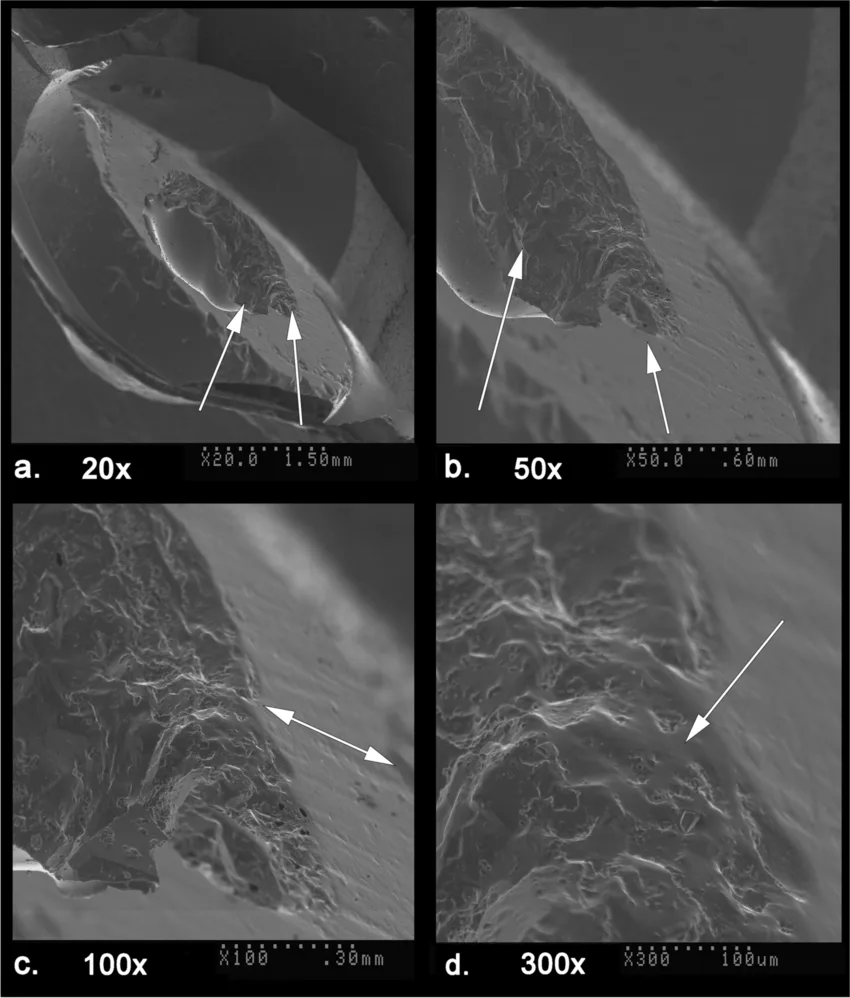
Dye accumulates in the hole. The liquid enters via capillary action. It gets trapped inside.
When excess dye drains out, residue remains.
Look for rings of color inside the hole. The deepest part of the hole will be darkest. The entrance might be lighter.
This gradient indicates soaking.
Untreated stones show uniform color throughout the hole. The walls match the surface. There is no pooling effect.
Surface Residue
Check the area around the entry point. Did dye spill onto the face? Sometimes polishing removes it.
But traces often remain in microscopic pits.
Use a cotton swab with mild alcohol. Gently rub the rim. If color transfers, it’s surface-level.
True pigment won’t come off easily.
Note: Be careful with porous stones. Alcohol can damage some finishes. Test an inconspicuous spot first.
Manufacturer specs warn against harsh solvents on heat-treated goods.
Common Visual Traps and Lighting Mistakes
Bad lighting ruins good inspections. Many buyers fail here. They mistake shadows for fractures.
Shadow Confusion
A shadow cast by a facet can look like a dark line. Move the light source. Change the angle.
Shadows move. Fractures stay put.
Real inclusions are three-dimensional. They exist inside the volume. Shadows are two-dimensional projections.
Learn to distinguish depth from projection.
Reflection Glare
Polished surfaces reflect environment lights. A window reflection looks like a white streak. Turn off overhead lights.
Use a single, directional beam.
Diffused light helps see internal structure. Direct light highlights surface flaws. You need both perspectives.
Start diffused. Finish direct.
The "Natural" Marketing Trap
Sellers use vague terms. "Enhanced" sounds harmless. "Stabilized" implies durability.
Read the fine print.
FTC guidelines require disclosure of permanent treatments. Ask specifically: "Is this heated?" "Is this dyed?" Silence equals suspicion. Trust verified sellers who provide clear answers.
When to Stop Looking and Send It to a Lab
Sometimes, visual inspection hits its limit. You might see ambiguous patterns. The stone could be heavily polished or coated.
In these cases, guesswork leads to bad decisions.
Send high-value items for professional certification. Labs use spectroscopy to detect specific dye molecules. They can distinguish natural iron from synthetic organic compounds.
This provides definitive proof.
Do not rely on home chemical tests for expensive gems. Acetone swabs work on surface residues only. Deeply penetrated dyes won't react.
A negative result doesn't guarantee authenticity.
Consider the cost-benefit ratio. Lab fees range from $50 to $150 per item. If your stone is worth less than that, skip it.
Use the banding test as your final verdict. For investment pieces, always get paper. The GIA offers identification reports that hold global weight.
Quick Reference Guide for Field Identification
You need speed when shopping at markets or online auctions. Complex analysis takes time. Use this checklist for rapid screening.
It condenses the key visual markers into actionable steps.
Start with the overall color tone. Is it earthy or neon? Next, check uniformity across multiple beads.
Perfect matches are suspicious. Then, inspect drill holes for dark rings. Finally, look for spiderweb fractures under light.
If you spot two or more red flags, walk away. Don't negotiate. Assume it's dyed until proven otherwise.
This heuristic protects your wallet effectively.
| Checkpoint | Pass Indicator | Fail Indicator | Action |
|---|---|---|---|
| Color Tone | Muted orange/red | Bright neon pink/red | Suspect Dye |
| Uniformity | Slight variation | Identical batch match | Suspect Processing |
| Drill Hole | Uniform wall color | Dark ring/residue | Confirmed Treatment |
| Fractures | Silvery/white lines | Black/dark veins | Confirmed Dye Pooling |
Keep this table handy on your phone. Photograph stones against white backgrounds. Zoom in on the drill holes.
Compare them side-by-side. Visual memory builds fast with practice.
Frequently Asked Questions
Can heat treatment alone mimic carnelian?
Yes, but rarely perfectly. Heating agate turns it red-orange. However, it often leaves crackled textures.
These "fire cracks" differ from natural feathers. Dyed stones usually combine both processes. Look for darkening in those cracks.
Pure heat-treated stones lack the deep dye pooling in micro-fractures. The color tends to be more superficial. Always check the interior depth of the hue.
Does UV light help identify fake carnelian?
Not reliably. Most silica minerals are inert under UV. Some organic dyes fluoresce differently.
But many modern synthetic dyes do not glow. Relying solely on UV is risky. It gives false confidence.
Use transmitted light instead. Hold the stone up to a strong flashlight. Observe how light passes through fractures.
Dye absorbs light. Natural inclusions scatter it. This optical behavior is far more diagnostic.
Are all dyed agates considered "fake"?
No. This is a common misconception. Dyed agate is real stone.
It has been chemically enhanced. Calling it "fake" is technically incorrect. It is treated material.
The issue is disclosure. Sellers must state if a stone is dyed. If they sell it as natural carnelian, that is fraud.
Understand the difference between imitation and enhancement. Value drops significantly with treatment.
How does price correlate with authenticity?
Directly, but with exceptions. Natural fine carnelian costs $10, $50 per bead. Dyed agate sells for $1, $5.
If the price seems too good, it likely is. Be wary of mid-range pricing ($6, $9). Sellers may mix batches.
Insist on seeing individual stones. Do not buy sealed strands without inspection. High-end retailers disclose treatments clearly.
Low-cost vendors often hide them aggressively.

Similar Posts