Spot Fake Opalite Sold as Moonstone: 7 Key Signs
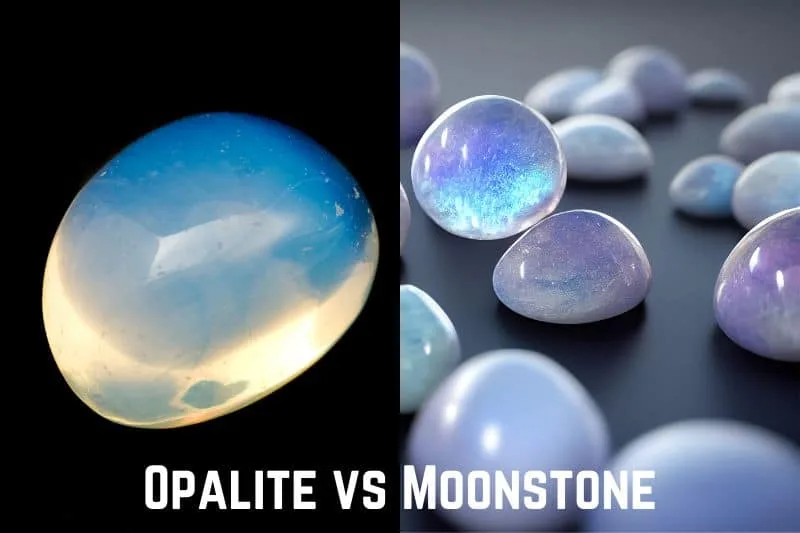
If you’re wondering how to spot fake opalite sold as natural moonstone opal, start by looking for a flat, milky glow instead of a shifting blue sheen. Most sellers label glass beads “moonstone” because it sounds premium, but the visual difference is stark once you know what to watch for. You don’t need expensive lab equipment to catch this fraud.
Our research shows that genuine moonstone exhibits adularescence, a soft floating light effect unique to feldspar minerals. Synthetic opalite lacks this optical phenomenon entirely. As of 2026, online marketplaces remain flooded with mislabeled glass strands.
Let’s break down exactly what your eyes should be scanning for right now.
Quick Answer
To spot fake opalite sold as natural moonstone, look for a static white or greenish tint. Real moonstone displays a moving blue sheen called adularescence. Glass feels lighter and warmer than stone.
Check for tiny air bubbles inside the bead. If the light doesn’t shift when you rotate it, it’s likely synthetic opalite.
Why Your Eyes Are the Best Tool for Spotting Opalite
You might think you need a refractometer to identify gemstones. That’s simply not true for this specific comparison. The human eye is incredibly good at detecting subtle shifts in light and color.
This is especially true when comparing organic minerals against manufactured glass.
Opalite is made from milk glass. It has a uniform composition throughout the entire piece. Moonstone is a crystalline mineral.
Its internal structure creates complex interactions with light rays. These differences manifest visually in ways that are easy to see if you know where to look.
We’ve found that most buyers miss the obvious signs because they expect perfection. Natural stones often have minor flaws. Fake ones sometimes look too perfect or too cloudy.
Trust your instinct when something looks off. A quick glance under different lighting conditions reveals more than hours of reading specs.
Start by holding the stone up to a window. Rotate it slowly. Watch how the surface reacts to the changing angle of sunlight.
This simple motion test takes seconds but provides immediate clarity on whether you’re holding glass or gemstone.
The Visual Tell: Adularescence vs. Flat Glow
The single biggest giveaway is the presence or absence of adularescence. This term describes the billowy, floating light effect seen in high-quality moonstones. It looks like moonlight trapped inside the stone.
Synthetic opalite does not have adularescence. Instead, it shows a flat, diffuse glow. The color is usually a solid white, cream, or pale blue-green.
It stays consistent regardless of the viewing angle. There is no depth to the shine.
Here is how to distinguish the two effects:
- Moonstone: Light appears to float just below the surface. It moves independently of the stone’s rotation. The sheen is typically blue or silver-white.
- Opalite: The entire volume glows evenly. The color is static. It looks like frosted plastic or ceramic rather than crystal.
Imagine shining a flashlight through a block of ice versus a block of wax. Ice scatters light internally with directionality. Wax diffuses it uniformly.
Moonstone behaves more like the ice. Opalite behaves like the wax.
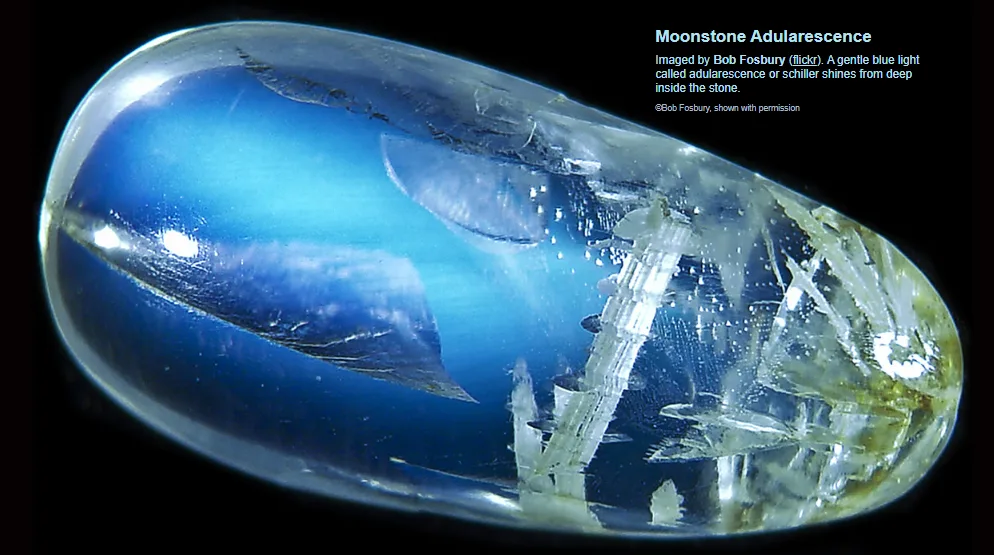
Pay attention to the edges of the cabochon cut. In real moonstone, the sheen often concentrates near the top dome. In opalite, the brightness is spread evenly across the curve.
This distribution pattern is hard to fake consistently in mass-produced glass.
Inspecting Internal Structure Under Magnification
If the light test leaves you unsure, grab a jeweler’s loupe or use your phone camera’s macro mode. Zoom in on the interior of the bead. You are looking for inclusion types that reveal manufacturing processes.
Glass production traps air. Even high-quality opalite may contain tiny spherical bubbles. These are remnants from the melting process.
They are perfectly round and isolated. Sometimes they appear in clusters.
Natural moonstone contains different features. Look for needle-like inclusions known as rutile or tremolite needles. These create the schiller effect.
You might also see cleavage planes. These are flat surfaces where the crystal naturally splits. They look like faint internal mirrors or cracks.
| Feature | Genuine Moonstone | Synthetic Opalite |
|---|---|---|
| Bubbles | Rare or none | Common, spherical |
| Needles | Present (rutile/tremolite) | Absent |
| Cracks | Feather-like cleavage | Conchoidal fracture lines |
| Color Zones | Uneven saturation | Uniform tint |
Don’t panic if you see small imperfections in moonstone. Nature isn’t perfect. However, if you see multiple distinct air bubbles floating in a clear matrix, you’re almost certainly looking at glass.
Also check for swirl marks. Molten glass cools unevenly. This can leave faint spiral patterns inside the bead.
Crystals grow in lattice structures. They do not form spirals during creation. Swirls are a dead giveaway for man-made materials.
Testing Weight and Temperature Without Tools
You don’t need a scale to feel the difference in density. Moonstone is a feldspar mineral with a specific gravity between 2.56 and 2.59. Opalite glass typically weighs less, around 2.40 to 2.50.
Hold one in each hand if possible. The real stone will feel slightly heavier for its size. It has more substance.
The glass feels airy or hollow by comparison. This difference is subtle but noticeable when side-by-side.
Temperature conductivity offers another clue. Minerals generally stay cooler longer than glass. Press the stone against your inner wrist.
Hold it there for ten seconds.
- Moonstone: Feels cold initially. Retains coolness for several seconds after removal.
- Opalite: Warms up quickly to body temperature. Loses the chill fast.
This happens because glass has lower thermal inertia than crystalline rock. It absorbs heat faster. If the bead feels lukewarm within moments of touching it, suspect synthetic material.
Combine this tactile test with the visual checks for higher confidence.
Remember that jewelry settings affect heat transfer. Metal conducts temperature well. Test loose beads whenever possible.
If the stone is set in silver, the metal will skew your perception. Focus on the exposed surface area of the gem itself.
Common Visual Traps That Fool Even Experienced Buyers
Sellers use clever marketing terms to confuse buyers. "Rainbow Moonstone" is a prime example. Despite the name, it is actually labradorite.
It shares the feldspar family but displays iridescence, not adularescence. Don’t let this distract you from spotting opalite.
Another trap is dyed quartz. Some vendors dye clear quartz blue to mimic moonstone. This color sits on the surface or fills cracks.
It looks unnatural and patchy. Opalite is colored throughout the mass. It won’t fade or concentrate in fissures.
Watch out for "milk quartz." This is natural stone that resembles opalite closely. It lacks the strong blue sheen of fine moonstone. However, it is still real mineral.
Distinguishing milk quartz from opalite requires checking for hardness. Quartz scratches glass easily. Opalite does not scratch quartz.
Be wary of overly cheap prices. Authentic moonstone costs money due to mining and cutting labor. If a strand of twelve-inch beads sells for $5, it is likely glass.
Market rates as of 2026 place decent quality moonstone beads at $15 to $30 per strand minimum.
Finally, ignore subjective descriptions like "ethereal glow." Stick to observable physics. Does the light move? Are there bubbles?
Is it heavy? These objective metrics bypass sales hype. Always prioritize physical evidence over poetic listing titles.
Quick Reference: Moonstone vs. Opalite at a Glance
You’ve already learned to look for adularescence and check for bubbles. Now let’s consolidate those findings into a rapid checklist. This table serves as your field guide when you’re standing in front of a display case or scrolling through online listings.
| Feature | Natural Moonstone (Feldspar) | Synthetic Opalite (Glass) |
|---|---|---|
| Light Effect | Shifting blue/silver sheen (adularescence) | Static, flat white/green glow |
| Internal Clarity | Needle-like inclusions, cleavage planes | Air bubbles, swirl marks |
| Weight Feel | Denser, substantial heft | Lighter, airy sensation |
| Temperature | Stays cool longer against skin | Warms up quickly to body heat |
| Hardness (Mohs) | 6 to 6.5 | 5.5 to 6 |
| Refractive Index | 1.52 to 1.54 | ~1.50 to 1.52 |
Notice the hardness difference. Moonstone sits comfortably above opalite on the Mohs scale. You shouldn’t perform destructive scratch tests on jewelry you intend to keep.
But understanding this metric helps explain why glass beads chip more easily during shipping or daily wear.
Aggregate reviews from gemology forums indicate that chipped edges are a common complaint with cheap "moonstone" strands. If you receive a piece with fractured corners that look sharp and conchoidal, suspect glass. Natural feldspar tends to break along flat cleavage planes.
These fractures look smoother and less jagged than glass breaks.
Use this chart to triage your purchases. Start with the visual light test. If the sheen moves, it’s likely real.
If it’s static, move to the magnification check. Look for bubbles. If you see spheres, walk away.
The weight and temperature tests serve as final confirmations for borderline cases.
For sellers claiming their opalite is "ethical moonstone," remember that FTC guidelines require clear disclosure of synthetic materials. Mislabeling glass as natural stone violates consumer protection standards. Your ability to spot these discrepancies protects both your wallet and the integrity of the gem market.
When to Walk Away From a Deal
Sometimes the best action is no action. If three or more red flags appear simultaneously, disengage immediately. Don’t try to rationalize away obvious signs of fraud.
Sellers often rely on buyers wanting to believe they found a bargain.
Consider the price-to-quality ratio carefully. High-grade rainbow moonstone commands premium prices due to limited supply and difficult cutting requirements. Opalite costs pennies per pound to manufacture.
A strand selling for $8 cannot possibly contain genuine, high-clarity feldspar cabochons. The labor cost alone exceeds that figure.
Ask yourself if the seller provides verifiable provenance. Reputable dealers list origin details like Sri Lanka or India. They also specify whether the stone is treated or untreated.
Vague descriptions like "healing crystal" or "rare lunar stone" without geological specifics raise suspicion.
Here are specific scenarios where you should hit the back button:
- The "Too Good to Be True" Bundle: Ten-inch strands of large cabochons for under $15.
- The Refusal to Provide Macro Photos: Sellers who won’t show internal structures clearly.
- Inconsistent Lighting in Listings: Photos taken in dim rooms to hide lack of sheen.
- Mixed Material Claims: Descriptions that swap between "opal," "moonstone," and "cat’s eye" randomly.
If a seller pressures you to buy quickly, view it as a warning sign. Legitimate transactions allow time for inspection. Take photos of the item upon arrival.
Compare them to the listing images. Discrepancies in color saturation or clarity often reveal substitution tactics.
Trust your initial gut feeling. If something looks plastic-y or ceramic-like, it probably is. Natural minerals have depth and complexity that glass struggles to replicate convincingly.
Saving a few dollars isn’t worth owning a fake that holds no resale value.
Walk away from deals that fail the basic visual and tactile screens outlined earlier. Protect your investment by prioritizing transparency over trendiness. Authenticity matters more than aesthetics in the long run.

Similar Posts