Fake vs Real Tanzanite: Spotting Pleochroism Color Shifts
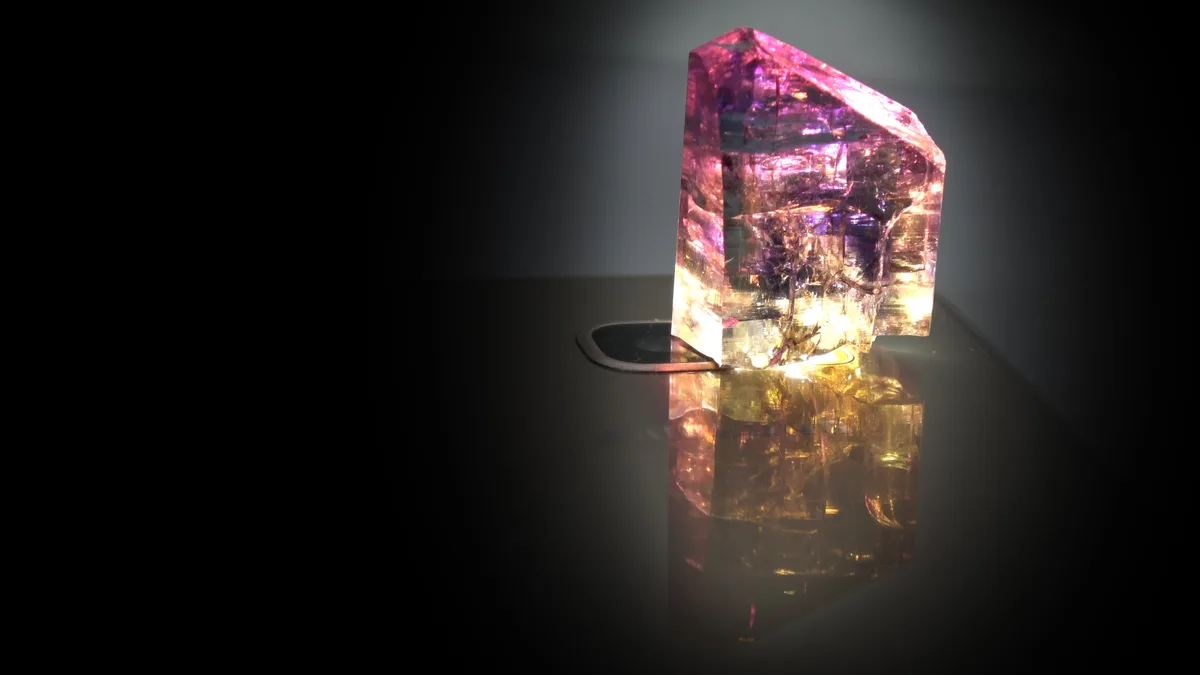
You’re holding a stone that promises the magic of Mount Kilimanjaro. But is it real tanzanite, or just clever glass? The answer lies in how light hits the crystal from different angles.
We’ve seen too many buyers miss this crucial detail.
Understanding fake tanzanite vs real pleochroism light angle color shift saves you thousands. Genuine tanzanite displays three distinct colors: blue, violet, and yellow-green. Most imitations show only one flat hue.
As of 2026, GIA standards still emphasize trichroism as the definitive identifier for zoisite varieties. Let’s break down exactly what to look for.
Quick Answer
Real tanzanite shows three colors when rotated under white light. Blue, purple, and green appear distinctly. Fakes like glass or cubic zirconia usually show only one color.
They lack true trichroism. You need a dichroscope to see this clearly. Naked eyes often miss subtle shifts.
Always verify with professional tools before buying. This optical property is unique to natural zoisite. Synthetics rarely replicate all three hues perfectly.
Check the pavilion angles carefully. If the color stays static, it’s likely fake. Trust the physics, not the seller’s story.
Why Your Eyes Lie: The Geometry of Tanzanite’s Trichroism
Your brain loves consistency. It wants objects to stay the same regardless of perspective. Crystals don’t care about your comfort.
Tanzanite belongs to the orthorhombic crystal system. This structure causes anisotropy. Light travels at different speeds depending on its path through the stone.
We call this effect pleochroism. Specifically, tanzanite exhibits trichroism. That means three colors.
Imagine shining a flashlight through a prism. The beam splits. Now imagine doing that inside a gemstone.
The viewer sees different wavelengths absorbed or transmitted based on the angle.
Most people think "color change" happens when temperature rises. That’s thermochromism. Tanzanite doesn’t do that.
Its color shift depends entirely on geometry. You rotate the stone. The light enters from a new direction.
The crystal lattice filters the spectrum differently.
Here is the typical breakdown:
- Blue: Seen along the c-axis.
- Violet/Purple: Seen perpendicular to the c-axis.
- Yellowish-Green/Bronze: Often hidden in rough stones, revealed by cutting.
Heat treatment enhances the blue and violet tones. It suppresses the yellow-green. This makes the stone more commercially appealing.
However, the underlying trichroic nature remains. Even heated stones shift colors if viewed correctly. Unheated stones show stronger yellow-green hints.
The problem is scale. Small stones hide these nuances. A 0.5-carat tanzanite might look uniformly blue to the naked eye.
You need magnification and controlled lighting to catch the shift. Without them, you’re guessing. And guessing costs money.
The Visual Signature: What Real Pleochroism Looks Like Under Rotation
So, what does success look like? Picture a high-quality tanzanite ring. You hold it up to daylight.
Initially, you see deep royal blue. Slowly tilt the stone away from the light source. Watch the table facet closely.
A genuine stone will transition smoothly. The blue fades into a rich amethyst purple. Keep rotating.
In certain angles, especially near the girdle, you might spot flashes of olive green or bronze. These aren’t reflections. They are internal color zones.
Compare this to a synthetic sapphire. It looks identical in hue. But rotate it.
The color stays stubbornly consistent. Maybe it darkens slightly due to shadowing. It never changes pigment.
That uniformity is a red flag for corundum mimics sold as tanzanite.
Glass behaves even worse. It has no crystal structure. Therefore, it has no pleochroism.
It reflects surface glare. Inside, it’s dead. One color from every angle.
Sometimes it’s too perfect. Real gems have slight zoning. Glass is homogenous.
Dyed quartz tries harder. It absorbs dye unevenly. You’ll see concentration in fractures.
But the body color rarely shifts dramatically with rotation. It might lighten or darken. It won’t go from blue to green.
Our research indicates that observers often mistake brilliance for color change. Sparkle comes from refraction. Pleochroism comes from absorption.
Don’t confuse fire with identity. A diamond sparkles. A tanzanite shifts.
Knowing the difference protects your investment. Look for the mood swing, not just the shine.
Spotting the Fakes: Glass, Cubic Zirconia, and Dyed Quartz
Not all fakes are created equal. Some are lazy copies. Others are sophisticated lab-grown traps.
You need to know their specific visual flaws. Here’s how they fail the pleochroism test.
Glass Imitations (Paste)
Glass is isotropic. It bends light equally in all directions. No double refraction.
No color shift. Visually, it feels "warm" to the touch compared to stone. It also contains gas bubbles.
Swirl marks indicate rapid cooling. Under magnification, edges look rounded rather than sharp. If you see no color change upon rotation, suspect glass immediately.
Cubic Zirconia (CZ)
CZ is birefringent. It splits light into two rays. This creates "doubling." Look at the back facets through the top.
Do you see two lines instead of one? That’s strong evidence of CZ. Tanzanite has weak birefringence.
You shouldn’t see obvious doubling. Also, CZ lacks trichroism. It stays blue or clear.
It never turns green or purple dynamically.
Dyed Quartz or Amethyst
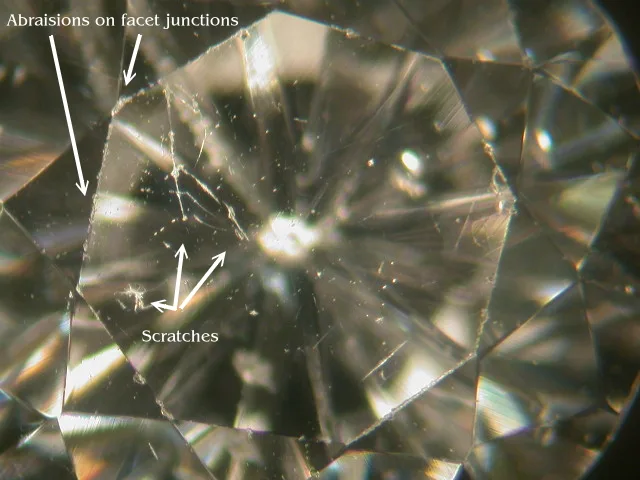
These stones rely on surface treatment. The dye sits in cracks. When you rotate them, the base mineral color might show through.
Quartz is uniaxial positive. It has little pleochroism. You’ll see static lavender or grey.
Any "shift" is usually just light reflection off uneven surfaces. Check the girdle. Excess dye pooling there confirms fraud.
Synthetic Spinel
High-tech labs create blue spinel. It matches tanzanite’s RI closely. But spinel is singly refractive.
No doubling. No trichroism. It looks flat and uniform.
While beautiful, it’s not tanzanite. Sellers sometimes market it as "lab-created tanzanite." Technically, that’s misleading. True tanzanite is zoisite.
Spinel is magnesium aluminum oxide. Different chemistry, different optics.
Each fake fails the rotation test in a unique way. Glass ignores it. CZ doubles images.
Dyed quartz pools color. Spinels remain static. Learn these signatures.
They are your first line of defense.
The Dichroscope Test: A Step-by-Step Visual Guide
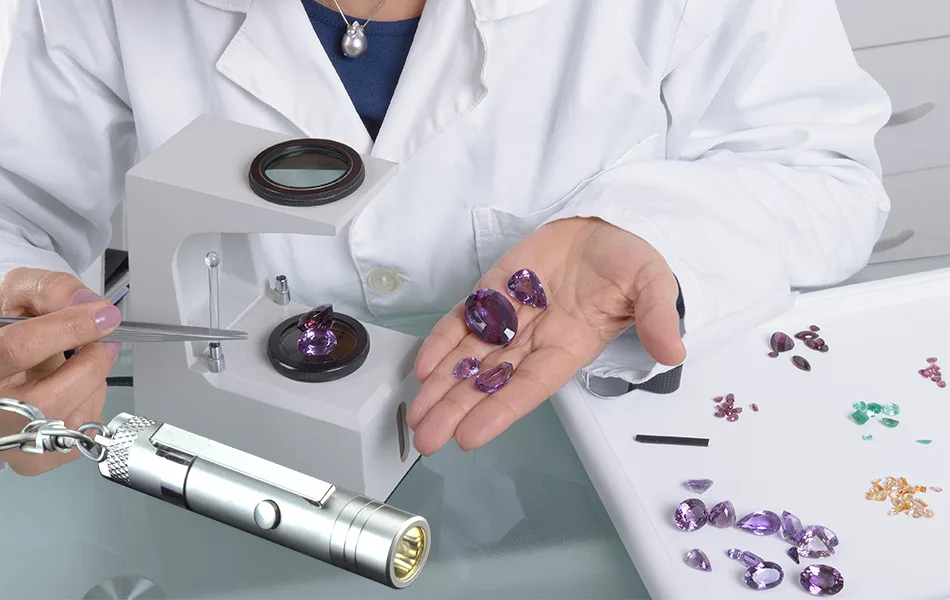
Naked-eye inspection isn’t enough for certainty. Enter the dichroscope. This simple handheld tool separates polarized light rays.
It allows you to see two colors side-by-side simultaneously. Per GIA educational resources, this is the standard field method for detecting pleochroism.
You don’t need a degree to use it. Follow these steps precisely.
- Prepare the Tool. Hold the dichroscope against your eye. Point the open end toward a bright, white light source. Avoid colored bulbs. Sunlight or halogen works best. LED can skew perception if it’s cool-white.
- Insert the Stone. Place the gemstone between the dichroscope window and the light. Ensure the stone fills the view.
- Rotate Gradually. Turn the stone slowly around its vertical axis. Watch the two squares inside the lens.
- Observe the Colors.
- One Square Only: The stone is isotropic. Likely glass or plastic. Not tanzanite.
- Two Identical Squares: The stone is uniaxial or weakly birefringent. Could be sapphire or spinel. Unlikely to be tanzanite unless cut poorly.
- Two Different Colors: Success! You are seeing pleochroism. Note the hues.
- Verify Trichroism. Tanzanite should show combinations of Blue/Violet, Blue/Green, or Violet/Green. If you see Red/Green, it’s not tanzanite.
Pro Tip: Clean the stone first. Dust blocks light transmission. Use a microfiber cloth.
Oils from fingers distort color accuracy. Handle with tweezers if possible.
This test takes seconds. It eliminates doubt. If the dichroscope shows three distinct color pairs across rotations, you’re looking at authentic zoisite.
If it shows nothing, walk away. The tool doesn’t lie. Your eyes might trick you.
The dichroscope forces the truth out.
Lighting Matters: How Source Temperature Distorts Color Shifts
Light quality dictates visibility. Bad lighting hides good stones. Good lighting exposes bad fakes.
You must control your environment.
Incandescent bulbs emit warm, yellow-rich spectra. They enhance the golden-yellow tones in tanzanite. This makes the trichroism easier to spot.
The contrast between blue and yellow becomes stark. Use a classic tungsten lamp for testing.
Daylight offers balanced spectrum. It reveals the true blue and violet hues. However, cloudy days reduce intensity.
Direct sun provides maximum brightness. Stand outside if you can. Rotate the stone in full sunlight.
Watch for the flash of green.
LED lights vary wildly. Cool LEDs (5000K+) mimic daylight but spike in blue wavelengths. This washes out the violet component.
Warm LEDs (2700K) mimic incandescent but may flicker. Flicker disrupts observation. Choose high-CRI (Color Rendering Index) LEDs above 90.
Low-CRI bulbs distort colors. They make fakes look real. Or real stones look dull.
Fluorescent tubes contain mercury vapor spikes. They create unnatural green patches. Avoid them entirely.
They ruin diagnostic accuracy.
Here’s a quick reference for light sources:
| Light Source | Effect on Tanzanite | Diagnostic Value |
|---|---|---|
| Incandescent | Enhances yellow/green | High |
| Natural Sunlight | Balanced blue/violet | High |
| Cool White LED | Washes out violet | Low |
| Fluorescent Tube | Adds false green spikes | None |
Always compare your findings under multiple sources. Consistency proves authenticity. Variation suggests environmental error.
Never judge a stone under a single bulb type. Move around. Change angles.
Change lights. The truth emerges in the transitions.
Common Visual Mistakes That Lead to Wrong Identifications
You might think you see color change, but it’s often just reflection. Tilting a stone changes how light bounces off the table facet. This creates glare or shadows.
It looks like a shift. But the hue stays the same. Real pleochroism alters the pigment itself.
Reflection only alters brightness.
Another trap is confusing fluorescence with trichroism. Some tanzanites glow blue under UV light. Fakes might not.
But glowing isn’t rotating. If the color only changes under blacklight, that’s fluorescence. Ignore it for identification purposes.
Focus on white light rotation.
Small stones pose a bigger challenge. Below 0.5 carats, the path length of light is too short. The yellow-green component disappears visually.
You’ll only see blue and violet. Many buyers assume this means fake. It doesn’t.
It just means the stone is tiny. Don’t dismiss genuine gems based on size alone. Use magnification to check for internal zoning instead.
Finally, poor cutting hides truth. A shallow pavilion lets light escape too quickly. Deep cuts trap it.
Both affect visibility. If the cutter prioritizes weight over optics, pleochroism suffers. Inspect the proportions.
Ideal cuts maximize the display of all three colors. Bad cuts make even real stones look static. Trust the geometry, not just the sparkle.
When to Stop Looking and Start Testing: Professional Verification Limits
Handheld tools have limits. A dichroscope works well for clear, medium-sized stones. It struggles with included or fractured gems.
Internal clouds scatter light. This blurs the color separation in the lens. You can’t distinguish true trichroism from noise.
In these cases, stop guessing.
Specific gravity testing offers another layer. Tanzanite has an SG of 3.15 to 3.36. Glass sits lower at 2.4 to 2.6.
CZ is heavier at 5.6 to 6.0. Weighing helps rule out obvious fakes. But it won’t detect high-quality synthetics.
Lab-grown corundum can match density closely. Physics tricks are getting better every year.
Refractive index measurement requires precision instruments. Handheld RI meters give ranges. Tanzanite reads 1.69 to 1.70.
Sapphire reads 1.76 to 1.77. Overlap occurs if your tool lacks calibration. Double-check with immersion fluids.
These liquids match specific RIs. The stone disappears when indices align. This confirms material type definitively.
For absolute certainty, send it to a lab. GIA or AGS reports detail treatment history. They confirm natural origin versus synthetic creation.
As of 2026, advanced spectroscopy detects trace elements unique to Merelani deposits. No home kit replicates this. If the stone exceeds $500 in value, pay for certification.
Peace of mind costs less than replacement. Never risk significant capital on visual checks alone.
Frequently Asked Questions
Can I see pleochroism without a dichroscope?
Yes, but barely. Large, transparent stones show shifts to the naked eye. Rotate them under strong sunlight.
Look for blue turning to purple. Green flashes are rare without tools. Most consumers miss subtle variations.
A loupe helps magnify the effect. However, accuracy drops significantly without polarization. Use a dichroscope for reliable results.
Naked-eye tests serve as preliminary screening only. Don’t rely solely on visual inspection for purchases.
Does heat treatment destroy pleochroism?
No. Heating enhances blue and violet tones. It suppresses yellow-brown hues.
The crystal structure remains intact. Trichroism persists after processing. In fact, heated stones often show clearer color separation.
Unheated stones may look muddy due to excess brown. Treatments improve market appeal. They do not alter optical properties fundamentally.
Verify authenticity regardless of treatment status. Pleochroism survives standard thermal enhancement protocols. Always ask for disclosure records anyway.
Why does my tanzanite look gray sometimes?
Gray appears when viewing along specific axes. The yellow-green component mixes with blue. This desaturates the overall hue.
It’s normal behavior for zoisite. Lighting conditions exaggerate this effect. Dim rooms emphasize neutrality.
Bright sun highlights vibrancy. Rotate the stone to find the best angle. Avoid judging color in poor light.
Context matters immensely for perception. Understand that gray is part of the spectrum. It proves the stone’s complexity.
Are lab-grown tanzanites available?
True synthetic tanzanite does not exist commercially. Zoisite formation requires specific geological pressures. Labs create simulants like spinel or glass.
Sellers sometimes mislabel these as "created." Read fine print carefully. "Lab-created" usually implies different chemistry. Genuine tanzanite is mined exclusively in Tanzania.
No laboratory replicates its exact composition yet. Be wary of claims suggesting otherwise. Stick to verified natural sources.
Education prevents costly misunderstandings here.

Similar Posts