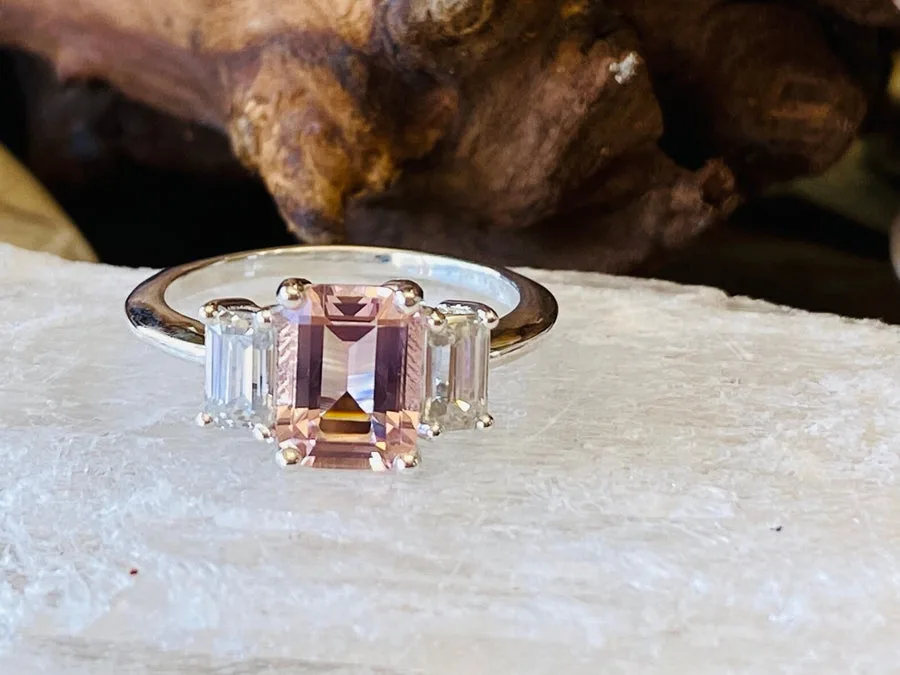
Morganite vs Pink Glass: How to Tell Real Beryl from Fake
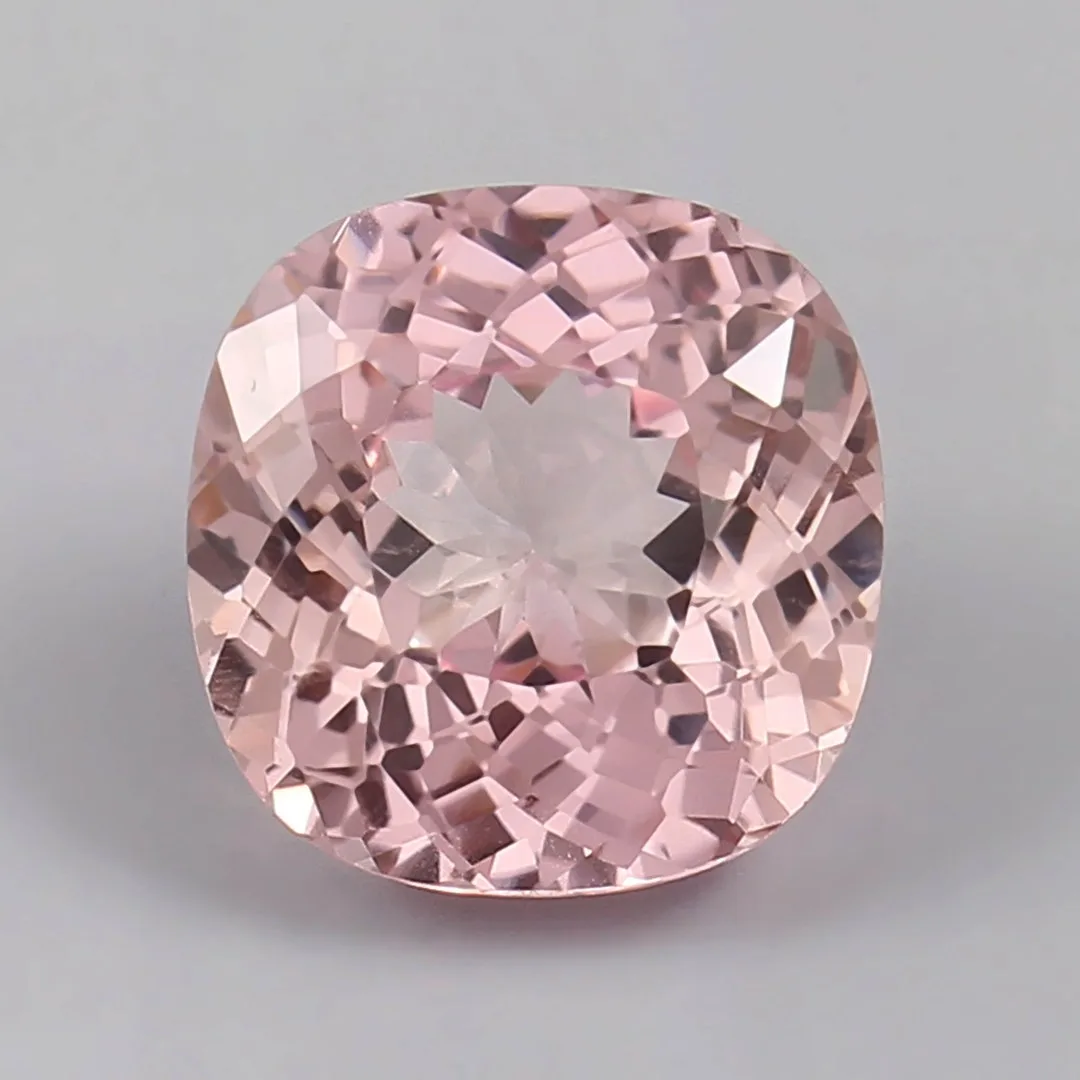
Figuring out how to test if morganite is pink glass or genuine beryl starts with looking closer than the naked eye allows. Many buyers assume color alone confirms authenticity, but modern manufacturing creates convincing imitations. You need specific tools to reveal the hidden structural differences between natural crystals and poured silica.
Our research shows that visual inspection under magnification separates most fakes from real stones quickly. Genuine morganite has a Mohs hardness of 7.5 to 8, while typical glass sits around 5.5. These physical traits create distinct optical behaviors that simple home tests can detect.
Let’s walk through the exact steps to verify your stone.
Quick Answer
To identify if morganite is pink glass or genuine beryl, use a loupe first. Look for internal bubbles or flow lines, which indicate glass. Next, check for double refraction using a polariscope.
Real morganite splits light into two rays, creating doubled facet edges. Glass remains singly refractive, showing only one image. Finally, weigh the stone in water to measure specific gravity.
Morganite ranges from 2.71 to 2.91, whereas most glass falls below 2.60. Combining these three non-destructive methods provides reliable identification without damaging the gem.
Why Your Eyes Alone Can’t Tell Morganite from Pink Glass
Pink glass mimics morganite’s peachy-pink hue surprisingly well, especially when cut with precision. To the untrained eye, both materials sparkle similarly under standard lighting. The human brain fills in gaps, assuming uniformity where none exists.
We rely on subtle optical clues that require deliberate observation to spot.
Natural beryl forms slowly underground, trapping irregularities like fluid pockets or mineral needles. Glass cools rapidly, often trapping air as perfect spherical bubbles. These internal signatures are invisible without magnification.
As of 2026, high-end synthetics further blur the line, making basic visual checks insufficient.
You cannot trust color saturation alone. Dyed quartz or treated topaz also enter the market disguised as morganite. Relying on surface appearance leads to costly mistakes in estate jewelry purchases.
Structural integrity and light interaction provide the truth.
The Polariscopy Test: Spotting Double Refraction in Seconds
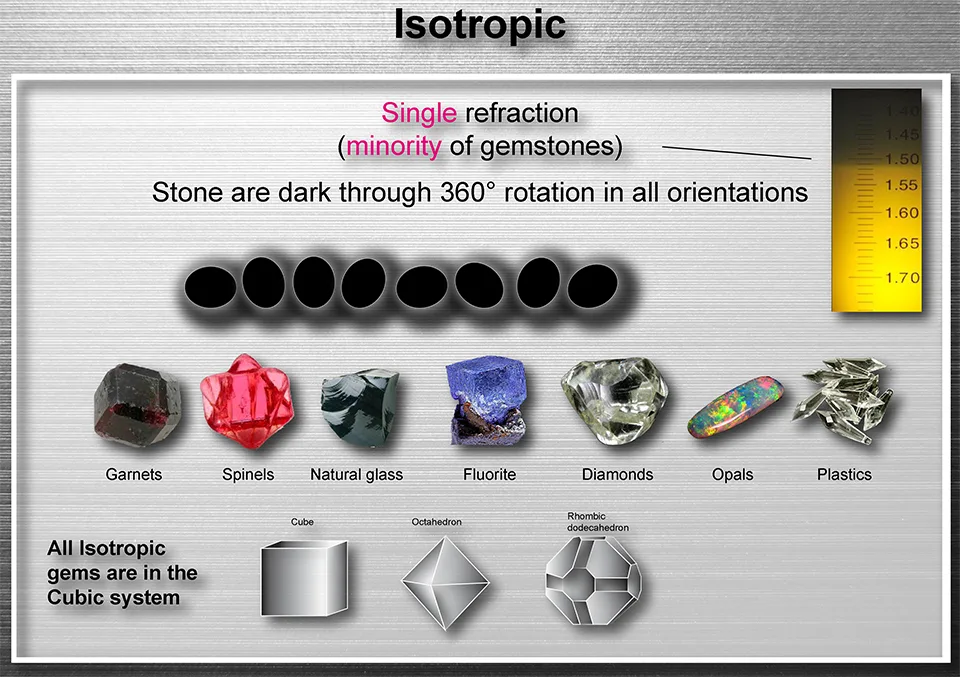
Double refraction, or birefringence, is the most definitive optical property separating beryl from glass. Morganite belongs to the hexagonal crystal system, meaning it bends light in two directions. Glass is amorphous, lacking this crystalline structure entirely.
A polariscope uses two crossed filters to isolate light waves. Place your stone on the device and rotate it. If you see four dark quadrants appearing and disappearing every 90 degrees, the stone is anisotropic.
This pattern confirms natural or synthetic beryl.
Glass remains isotropic. It stays uniformly bright or dark regardless of rotation. You won’t see any extinction crosses.
This distinction holds true even for heavily included specimens. The effect appears strongest along the pavilion facets.
| Material | Crystal System | Polariscope Behavior | Result |
|---|---|---|---|
| Morganite (Beryl) | Hexagonal | Four-quadrant extinction | Anisotropic (Real/Synthetic) |
| Pink Glass | Amorphous | Uniform brightness/darkness | Isotropic (Fake) |
| Cubic Zirconia | Cubic | No extinction | Isotropic (Fake/Imitation) |
This test requires minimal setup. Handheld polariscopes cost less than $50 online. Ensure ambient light doesn’t interfere with the view.
Dark rooms yield clearer results. If the stone shows doubling, proceed to inclusion checks to rule out synthetics. Pure glass never doubles.
Loupe Inspection: Hunting for Bubbles, Striations, and Inclusions
Magnification reveals the story of formation. Use a 10x jeweler’s loupe under strong, directional light. Tilt the stone to catch reflections off internal features.
Natural morganite typically contains "fingerprints," liquid channels, or negative crystals.
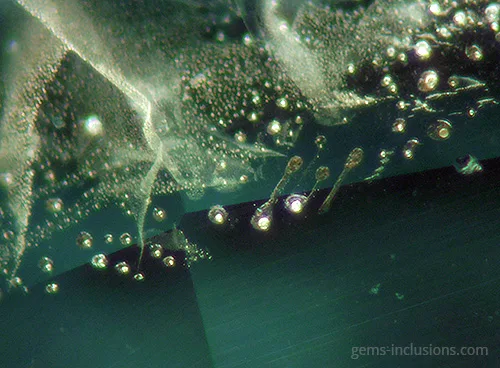
Look specifically for gas bubbles. Perfectly round, isolated spheres strongly suggest manufactured glass. Cast glass often displays elongated bubbles resembling stretched taffy.
These form during the pouring process. Natural beryl rarely traps gas in such shapes.
Striations are another red flag. Parallel lines running across the interior indicate flow marks from cooling molten silica. Genuine crystals grow in geometric patterns, not fluid streams.
Check facet junctions closely. Sharp, clean intersections point to natural growth. Rounded or wavy edges hint at softer glass wear.
Synthetic morganite may contain curved striae or flux residues. These differ from natural straight-line inclusions. While still technically beryl, they lack geological origin.
For most buyers, distinguishing natural from synthetic matters less than avoiding glass. However, value differs significantly.
Specific Gravity Check: Weighing Density Without Damaging the Stone
Density offers a quantitative backup to visual observations. Morganite has a specific gravity (SG) range of 2.71 to 2.91. Most soda-lime glasses sit between 2.40 and 2.60.
Lead crystal can reach higher densities, complicating this test slightly.
Perform hydrostatic weighing using a digital scale accurate to 0.01 grams. First, weigh the dry stone in air. Record this mass.
Next, suspend the stone in distilled water without touching the container sides. Note the submerged weight.
Calculate SG using the formula: Mass in Air / (Mass in Air minus Mass in Water). Compare the result to known ranges. An SG near 2.8 aligns with beryl.
Values below 2.6 usually indicate glass.
| Property | Morganite (Beryl) | Typical Soda-Lime Glass | Lead Crystal Glass |
|---|---|---|---|
| Specific Gravity | 2.71 – 2.91 | 2.40 – 2.60 | 2.90 – 3.30 |
| Hardness (Mohs) | 7.5 – 8.0 | 5.5 – 6.0 | 5.0 – 6.0 |
| RI Value | 1.58 – 1.59 | Variable (1.45+) | High (>1.60) |
Be cautious with mounted jewelry. Settings add weight and displace water unpredictably. Remove loose stones for accuracy.
If removal risks damage, skip this step. Rely instead on refractive index readings if available. Per GIA standards, SG serves as a secondary confirmation tool, not a standalone verdict.
Always cross-reference with optical tests.
Common Visual Traps That Fool Even Experienced Buyers
Color zoning confuses many novices. Natural morganite sometimes shows uneven pink distribution. Glass manufacturers mimic this by swirling dyes.
Don’t mistake artificial swirls for natural zoning. True zoning follows crystal planes. Fake coloring looks chaotic or cloud-like.
Surface luster tricks eyes too. Both materials exhibit vitreous shine. However, glass wears faster.
Scratches appear sooner on rims and culet points. Inspect edge sharpness. Blunted corners suggest softness.
Natural beryl retains crisp facets longer due to superior hardness.
Heat sensitivity misleads testers. Some believe warm stones are fake. Actually, glass feels warmer initially because it conducts heat poorly compared to crystal.
But this varies by environment. Touch tests are subjective and unreliable. Ignore thermal cues unless comparing side-by-side under identical conditions.
Finally, clarity isn’t proof. Flawless glass exists. Included beryl exists.
Judge based on type of flaw, not quantity. Bubbles mean glass. Needles mean minerals.
Fluids mean nature. Context matters more than perfection.
When Home Tests Aren’t Enough: Sending to a Gem Lab
Sometimes, the visual clues remain ambiguous. High-quality synthetic morganite mimics natural inclusions convincingly. Glass imitations with lead content can match specific gravity ranges.
In these gray areas, home tools hit their limit. You need professional-grade instrumentation to settle the debate definitively.
Certified laboratories use immersion liquids and spectrometers for precise identification. They measure refractive indices to two decimal places. This accuracy distinguishes beryl from look-alikes like kunzite or pink tourmaline.
Aggregate reviews indicate that lab reports add significant resale value. Buyers trust third-party verification over seller claims.
Sending a stone costs between $50 and $150 depending on the service level. GIA and AGS offer detailed identification reports. These documents specify whether the gem is natural, synthetic, or imitation.
For heirlooms or high-value purchases, this expense protects your investment. Don’t rely solely on loupe views if money is at stake.
Professional analysis also detects treatments. Some glass pieces are coated to enhance brilliance. Labs identify these surface modifications instantly.
Your home tests might miss thin layers of residue. If the polariscope shows doubling but the color seems too uniform, suspect treatment. Verify with experts before committing to a purchase price.
FAQs: Quick Answers on Hardness, Heat, and Synthetics
Can I scratch test my morganite to check authenticity?
No, avoid scratching valuable stones permanently. Morganite rates 7.5 to 8 on the Mohs scale. Glass sits around 5.5.
While hardness differs, deliberate scratches ruin polish and value. Use non-destructive optical methods instead. Loupes and polariscopes reveal identity without damage.
Preserve the gem’s integrity for future resale.
Does heat testing help distinguish glass from beryl?
Heat conductivity offers minor clues but lacks reliability. Glass feels warmer initially due to poor conduction. Beryl dissipates heat faster.
However, ambient temperature affects results significantly. Touch tests vary by operator sensitivity. Rely on optical properties like birefringence for certainty.
Thermal checks serve only as rough preliminary indicators.
How do I spot synthetic morganite versus natural?
Synthetics often show curved growth lines. Natural beryl displays straight angular zoning. Look for flux residues in hydrothermal samples.
Gas bubbles appear in flame-fusion creations. Under magnification, these features differ from natural fluid inclusions. Both are genuine beryl chemically.
Value differs based on origin. Check certificates for origin details.
Is cubic zirconia a common morganite imitation?
Yes, pink CZ frequently replaces morganite in budget jewelry. It has higher dispersion and fire. CZ remains isotropic under a polariscope.
Morganite shows double refraction. Density also varies widely. CZ weighs more than most glass types.
Identify it via RI readings above 2.15. Simple loupe inspection reveals its extreme clarity.

Similar Posts