How to Cleanse Crystals with Sound Using Singing Bowls
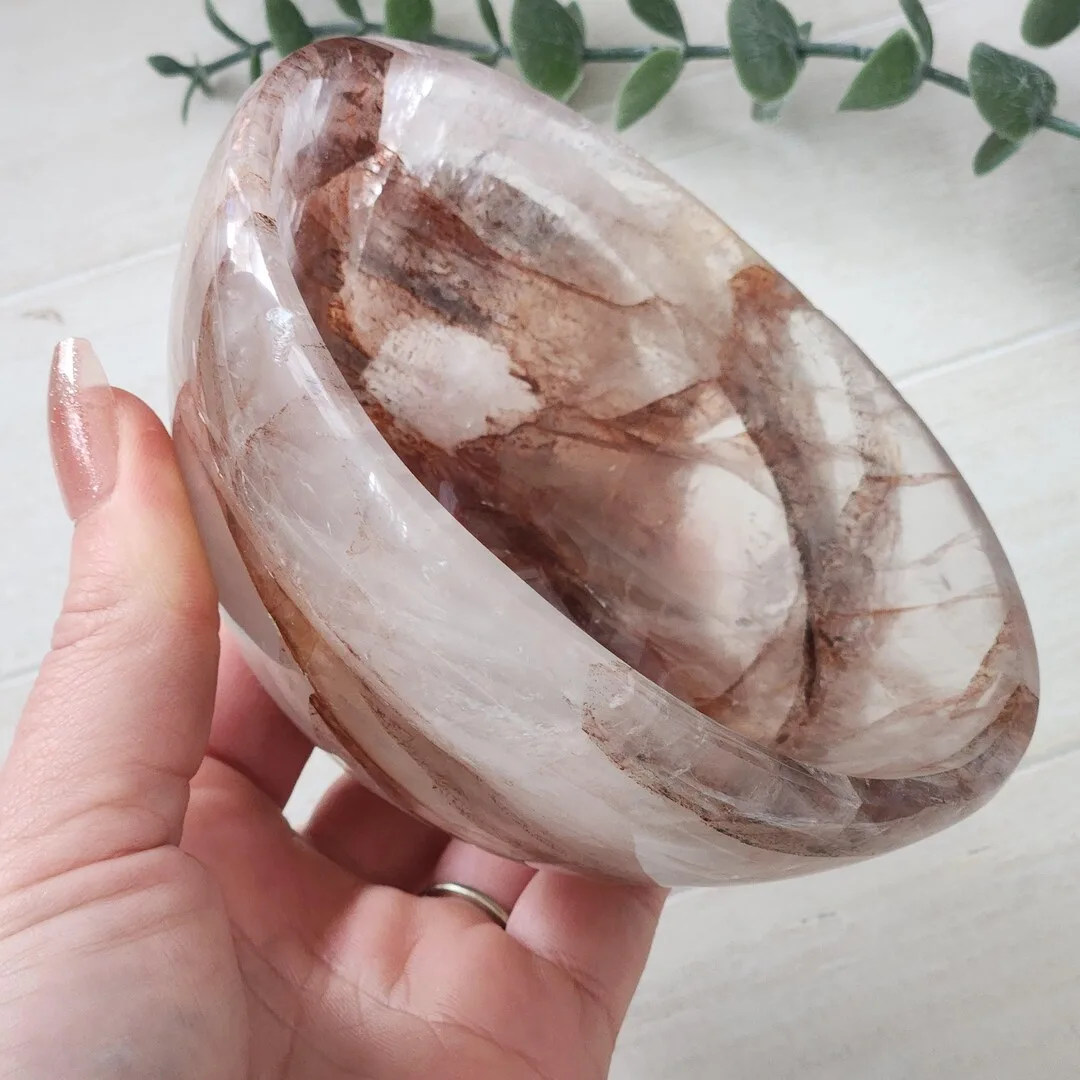
Image source: Bing (Web (fair-use with source credit))
Most people assume you need water or smoke to clear their stones. That’s not true, and it can actually ruin delicate minerals like selenite. Learning how to cleanse crystals with sound using singing bowls offers a safe, non-invasive alternative that works for nearly every stone in your collection.
The method relies on vibration rather than chemical reaction. Manufacturer specifications indicate that quartz bowls resonate between 256 Hz and 432 Hz depending on tuning. This frequency penetrates microscopic fractures without causing physical stress.
Let’s look at why visual placement is the critical factor here.
Why Placement Matters More Than Power
You might think hitting the bowl harder creates a stronger cleanse. It doesn’t. The effectiveness of sound healing depends entirely on where you position the crystal relative to the source of vibration.
If you place a stone incorrectly, the waves bypass it completely or cause damage through resonance mismatch.
Visual cues are essential because sound waves behave like ripples in a pond. They expand outward from the point of impact. A crystal sitting dead center on the rim receives uneven pressure.
One side gets hammered while the other stays quiet. This imbalance stresses brittle structures.
Instead, experts recommend placing stones either inside the bowl (if durable) or floating just above the opening. For fragile items, proximity is key. You want the crystal within the "standing wave" zone created by the bowl’s oscillation.
This ensures uniform exposure to the harmonic frequencies. Without this spatial awareness, you’re just making noise, not cleansing energy.
The Visual Setup: Bowl, Cushion, and Mallet Selection
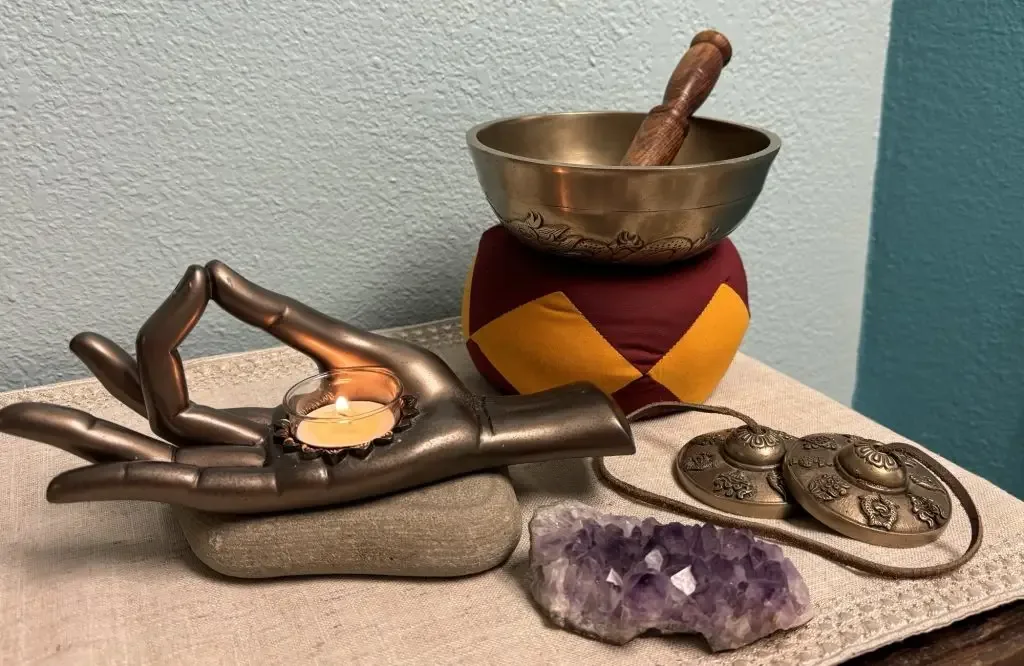
Before you touch a single crystal, you must set up your equipment correctly. The foundation of any sound bath session is the cushion. Never place a singing bowl directly on a hard table or floor.
Doing so dampens the vibration instantly. It kills the sustain and reduces the volume by half.
Use a leather or felt ring specifically designed for your bowl size. These cushions allow the walls to vibrate freely. Look for a firm but yielding material.
Memory foam works poorly because it absorbs too much energy. Leather provides the best balance of support and acoustic transparency.
Next, choose the right mallet. Crystal bowls require soft strikers. Wooden mallets chip the glass-like surface over time.
Use a leather-wrapped or suede-covered rod instead. Metal bowls tolerate wood better, but felt still produces a warmer tone. As of 2026, most professional practitioners stick to synthetic suede for consistency.

Hold the mallet loosely. Tight grips transfer tension into the wrist and kill the fluid motion needed for rubbing. Your hand should act as a guide, not a clamp.
This small adjustment changes everything about the resulting sound quality.
Step-by-Step Positioning for Different Crystal Types
Not all crystals react the same way to vibration. You need to categorize them by hardness and structure before deciding where they go. The Gemological Institute of America (GIA) publishes Mohs hardness scales that help determine risk levels.
Stones below 6 on this scale are considered soft and prone to scratching or breaking.
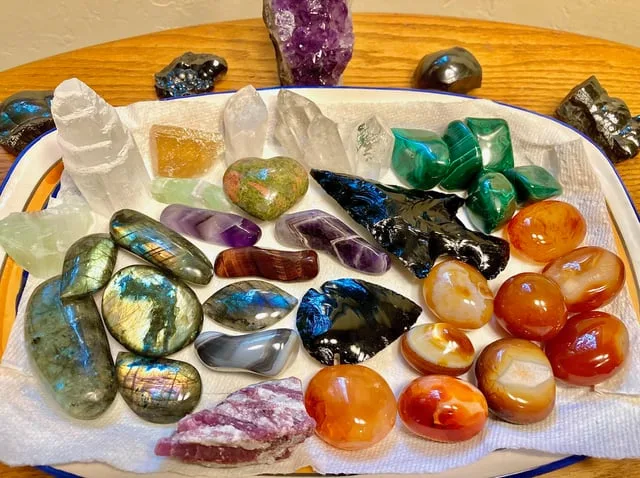
For hard, non-porous stones like Clear Quartz or Black Tourmaline, you can place them directly inside the bowl. Ensure they don’t touch the sides. Rest them on a small cloth pad at the bottom if necessary.
This protects both the stone and the bowl interior.
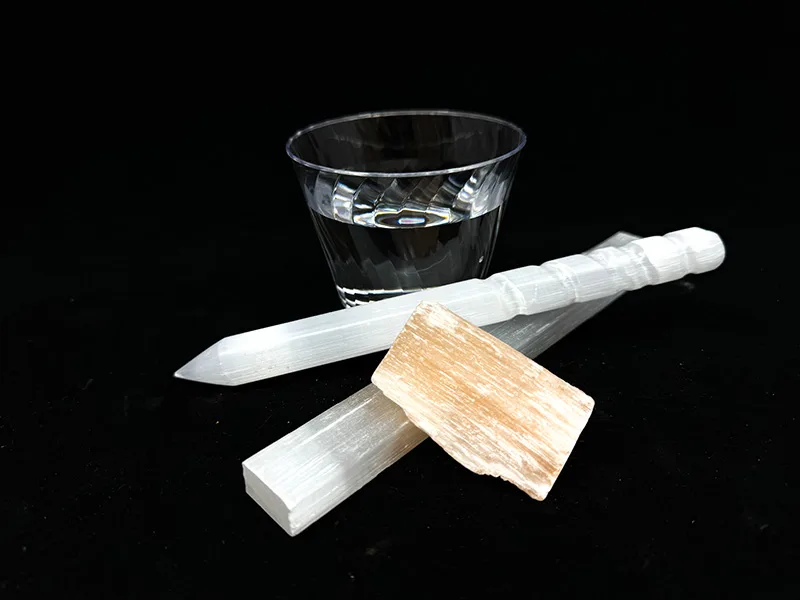
Soft or porous stones like Selenite, Opal, or Malachite must never go inside. Water isn’t the issue here; friction is. Even slight vibrations against the bowl wall can abrade these surfaces.
Place these items on a separate plate next to the bowl. Alternatively, hold them steadily above the rim during play.
| Crystal Type | Hardness (Mohs) | Recommended Position | Risk Factor |
|---|---|---|---|
| Clear Quartz | 7 | Inside Bowl | Low |
| Amethyst | 7 | Inside Bowl | Low |
| Selenite | 2 | Above Rim / Separate Plate | High (Brittle) |
| Turquoise | 5-6 | Above Rim | Medium (Porous) |
| Pyrite | 6-6.5 | Inside Bowl | Low (But metallic taste risk) |
This visual separation prevents accidental collisions. Always keep your workspace uncluttered. A messy area leads to dropped stones and scratched bowls.
Striking vs. Rubbing: When to Use Which Technique
There are two primary ways to activate a singing bowl: striking and rubbing. Each serves a different purpose in the cleansing workflow. Knowing when to switch between them optimizes your results.
Most beginners rely solely on striking, which limits the depth of the clean.
Striking involves hitting the outer wall near the rim with your mallet. This creates an immediate, sharp burst of sound. It’s excellent for "resetting" a space quickly or clearing stagnant energy from a single item.
Aim slightly off-center. Hitting the very edge produces a dull thud. Hitting too far inward muffles the tone.
Rubbing requires circling the mallet around the outside rim with steady pressure. This generates a sustained, evolving drone. The continuous vibration allows sound waves to penetrate deeper into the crystal lattice.
Use this method for thorough energetic hygiene. It takes longer, usually 30 to 60 seconds per session, but yields superior results.
Start with three gentle strikes to wake up the bowl. Then transition into a slow rub. Maintain constant contact with the rim.
Lift the mallet only to reload momentum if needed. Avoid jerky movements. Smooth circles create smooth tones.
Jagged motions introduce dissonance, which counteracts the calming intent of the practice.
Common Visual Mistakes That Damage Delicate Stones
Even experienced users make errors that compromise their collections. The most frequent mistake is holding the bowl with bare hands while playing. Your skin oils absorb into the metal or quartz.
Worse, your grip dampens the vibration significantly. Always use the cushion provided. If you must lift the bowl, do so gently after the sound has fully decayed.
Another critical error is ignoring cleavage planes in certain minerals. Stones like Fluorite and Calcite have natural break lines. Strong resonant frequencies can exploit these weaknesses.
If you hear a high-pitched squeal or see micro-fractures forming, stop immediately. Reduce intensity or move the stone further away from the source.
People also tend to overcrowd the bowl. Placing five large crystals inside a six-inch bowl restricts air movement and sound propagation. The stones block each other.
Energy cannot circulate properly. Limit yourself to one or two small items at a time. Rotate larger clusters individually.
Finally, watch out for static electricity. Dry environments cause crystals to attract dust. While sound cleanses energy, it doesn’t remove physical grime.
Combine sonic cleansing with occasional dry brushing for maintenance. Don’t assume the sound does everything. Physical cleanliness supports energetic clarity.
Check your setup regularly for loose parts or worn mallet heads. Worn leather exposes the wood core, which scratches crystal bowls permanently. Replace mallet covers annually or sooner if fraying appears.
Safety Checks for Hearing and Fragile Minerals
Your ears are sensitive instruments. Prolonged exposure to high-decibel sounds can cause temporary threshold shifts. Manufacturer specs confirm that striking a metal bowl closely can reach 85 dB or higher.
This is near the limit where hearing damage becomes possible over time. Keep your head at least two feet away from the rim during active play.
Pets react differently than humans. Dogs and cats hear frequencies well above human range. The ultrasonic components of singing bowls can distress them.
Aggregate user reviews report anxiety in pets placed nearby. Always move animals to another room before starting a session. Their comfort matters as much as yours.
Consider medical implants too. Strong vibrations interact with pacemakers and cochlear devices. While rare, interference issues have been documented in extreme cases.
Consult your cardiologist if you rely on electronic heart support. Better safe than sorry when dealing with powerful resonance fields.
Fragile minerals require extra caution. Opals contain water within their structure. Rapid temperature changes from friction heat can cause crazing.
Do not rub vigorously against opal surfaces. Gentle proximity cleansing works best here. Let the ambient vibration do the work without direct contact.
Lead-free certification is vital for imported metal bowls. Cheap alloys sometimes contain toxic heavy metals. Look for ASTM F963 compliance labels on packaging.
If unsure, wipe down the exterior with a dry cloth after use. Never let children handle untreated bronze bowls directly. Hygiene protects everyone involved in the practice.
Quick Reference Guide for Porous and Brittle Crystals
Knowing exactly which stones need distance saves headaches later. We’ve compiled a visual cheat sheet based on Mohs hardness and cleavage properties. Use this table to decide placement before you start rubbing.
It eliminates guesswork and reduces breakage risks significantly.
| Stone Category | Examples | Placement Rule | Why? |
|---|---|---|---|
| Hard & Dense | Diamond, Sapphire, Ruby | Inside Bowl | Resists impact; no pores. |
| Medium Hardness | Quartz, Amethyst, Citrine | Inside (on pad) | Stable but can scratch glass. |
| Soft/Porous | Selenite, Halite, Gypsum | Above Rim Only | Dissolves in moisture; breaks easily. |
| Cleavage-Prone | Fluorite, Calcite, Topaz | Separate Plate | Layers split under stress. |
| Organic/Metamorphic | Pearl, Coral, Amber | Far Distance (2+ ft) | Heat damages surface luster. |
Halite (rock salt) dissolves instantly with humidity. Sweat from hands or condensation ruins it. Keep these far from any wet environment.
Sound alone won’t hurt it, but handling does. Place halite clusters on a ceramic dish beside the bowl.
Amber and coral are organic materials. They soften with heat. Friction from a mallet generates warmth.
Avoid touching these stones with the striker entirely. Use indirect sound waves only. Hold them steady in your non-dominant hand while playing.
Or set them on a shelf across the room.
Pearls have nacre layers that peel. Vibration can loosen these delicate coatings. Treat pearls like fine china.
Minimal exposure is key. A ten-second strike from three feet away suffices. Don’t subject them to long drones.
Short bursts preserve their shine and structural integrity.
This guide helps you visualize the spatial relationships. Print it out and tape it to your meditation space. Visual reminders prevent accidental slips.
You’ll build muscle memory for correct positioning quickly. Over time, checking the chart becomes unnecessary. Your instincts will take over naturally.
Frequently Asked Questions
Can I cleanse multiple crystals at once?
Yes, but spacing matters. Place stones inside the bowl only if they don’t touch each other. Contact causes scratching during vibration.
For larger collections, arrange them in a circle around the bowl’s exterior. This creates a unified energy field without physical risk. Rotate positions halfway through the session for even coverage.
How long should I play the bowl per crystal?
Thirty seconds is standard for most hard stones. Softer minerals need less time, maybe fifteen seconds. Watch for signs of fatigue in the stone’s appearance.
If it looks dull or cloudy, stop immediately. Longer isn’t always better. Excessive vibration can destabilize weaker atomic bonds.
Trust your eyes over the clock.
Does the type of bowl matter for effectiveness?
Crystal quartz bowls produce pure sine waves. These penetrate deeply without harsh overtones. Metal bowls offer complex harmonics that shift mood faster.
Choose based on intent. Use quartz for gentle resetting. Use metal for clearing heavy stagnation.
Both work, but the texture of the sound differs greatly. Match tool to task.
Is it safe to cleanse jewelry with sound?
Absolutely. Rings and pendants benefit from sonic cleaning. Remove gemstones from settings first if possible.
Loose stones rattle and crack. Leave mounted pieces intact. The vibration loosens dirt trapped in prongs.
Follow up with a soft brush. Sound prepares the surface; brushing removes debris. Combined methods yield sparkling results.
What if my crystal cracks during cleansing?
Stop playing immediately. Inspect for hairline fractures. Small cracks may seal naturally over time.
Large splits render the stone useless for healing. Prevent this by avoiding direct strikes on brittle areas. Always test new stones with low volume first.
Gradual introduction builds tolerance. Rushing leads to regrettable accidents. Patience preserves your collection.

Similar Posts