Natural vs Industrial Carborundum: How to Tell the
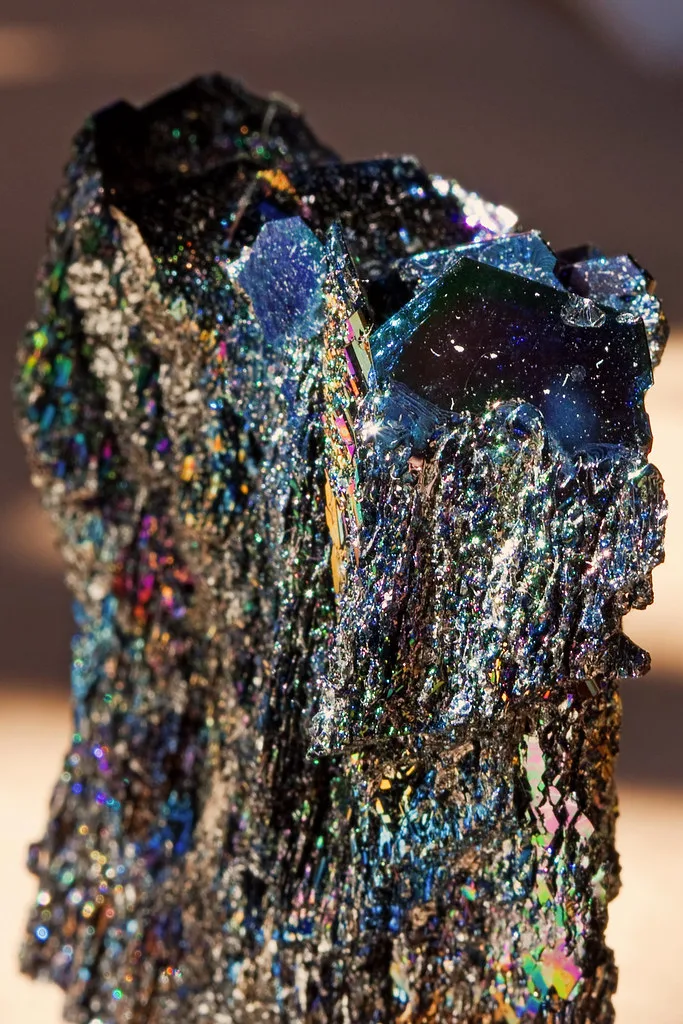
Figuring out how to tell if carborundum is natural stone or industrial byproduct starts with a close look at the object’s shape and surface. Most people assume all silicon carbide looks the same, but that’s rarely true in practice. You need to spot specific visual cues like crystal geometry and color consistency.
These details separate manufactured grit from rare mineral finds.
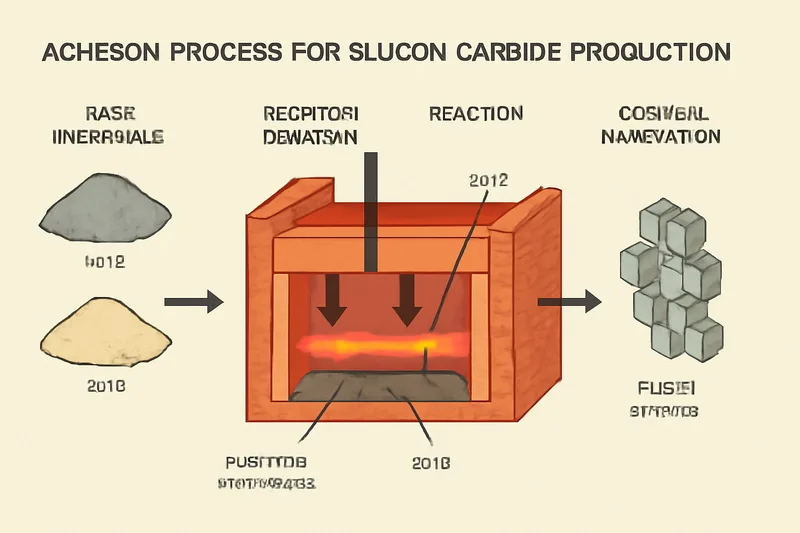
Our research shows that industrial silicon carbide produced via the Acheson process has distinct geometric traits. Natural moissanite, by contrast, often appears irregular or embedded in host rock. As of 2026, visual inspection remains the fastest field method for initial sorting.
Let’s break down exactly what your eyes should be looking for.
Image source: Bing (Web (fair-use with source credit))
Why Your Eyes Matter More Than a Hardness Test Here
Hardness tests are destructive and slow. They require specialized tools you might not have on hand. Visual identification offers immediate answers without damaging the sample.
You can assess grain shape, luster, and fracture patterns in seconds. This speed is crucial when sorting bulk materials or evaluating antique tools.
Expert gemologists and geologists rely heavily on optical properties first. They save chemical analysis for ambiguous cases. For most users, distinguishing between synthetic and natural silicon carbide doesn’t require lab equipment.
It requires knowing what to look for under normal light. We’ve found that context clues often outweigh minor physical variations.
Consider where you found the material. Industrial byproducts appear in furnace slag or grinding wheels. Natural occurrences are limited to meteorites or specific ultramafic rocks.
Location narrows the possibilities significantly before you even pick up a loupe. This contextual filtering prevents unnecessary testing.
The Visual Signature of Industrial Carborundum (Acheson Process)
Industrial silicon carbide, commonly known as carborundum, is created through high-temperature synthesis. The Acheson process dominates global production. This method yields grains with predictable, sharp characteristics.
You’ll notice uniformity across large batches. Manufacturers control particle size and shape tightly for abrasive efficiency.
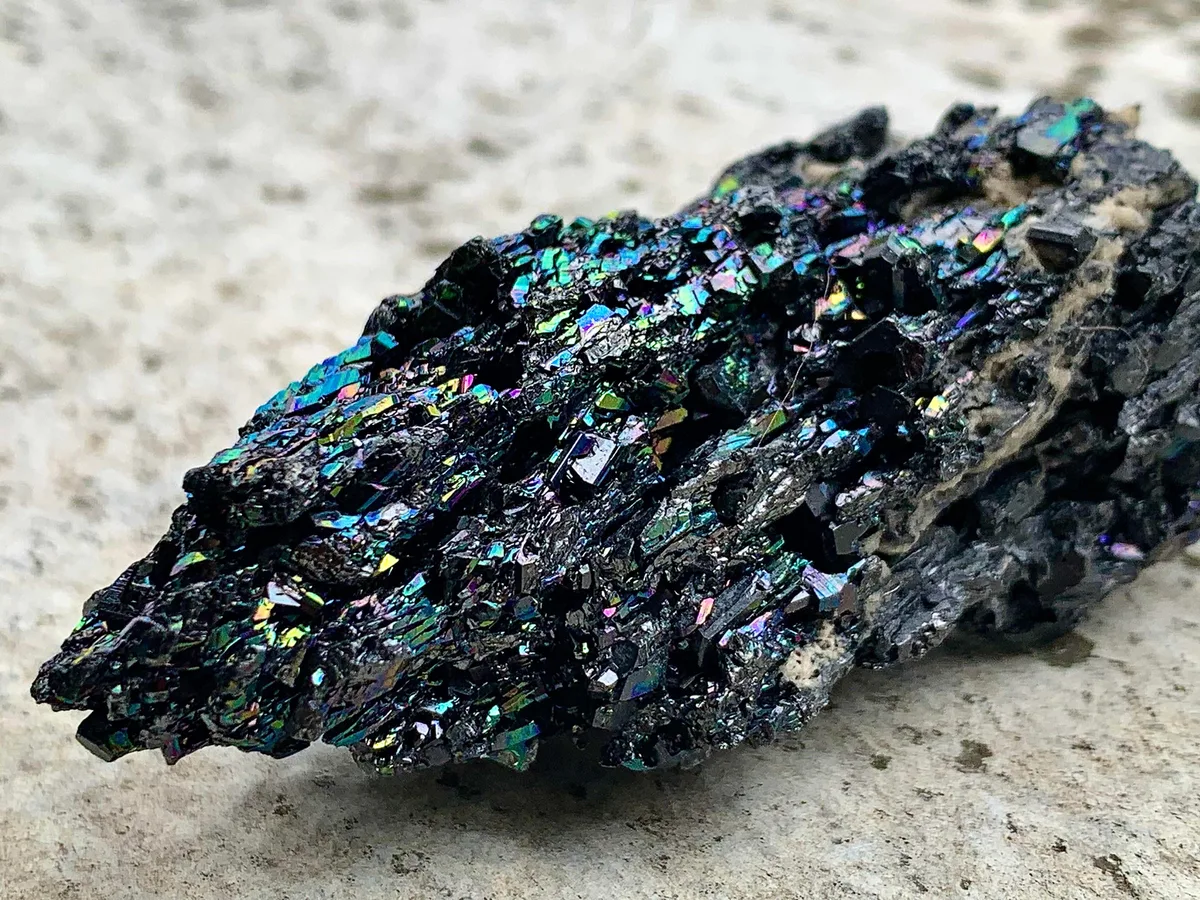
These grains exhibit vitreous luster. They reflect light sharply off flat faces. The color tends toward deep black, dark green, or blue.
Impurities affect hue, but saturation remains high. Unlike natural stones, industrial SiC lacks earthy tones or weathering marks. It looks freshly broken, even after years of storage.
Spotting the Hexagonal Prism and Glassy Luster
Pure silicon carbide crystallizes in hexagonal structures. Under magnification, you’ll see six-sided prisms. These facets meet at precise angles.
The edges remain razor-sharp unless worn by use. This geometric regularity signals human manufacturing. Nature rarely produces such perfect symmetry in bulk abrasives.
The glassy surface reflects light uniformly. There’s no matte patchiness or soil staining. If the grain looks polished without being buffed, it’s likely synthetic.
The lattice structure creates this inherent shine. Check multiple grains for consistency. Variation suggests contamination or mixed sources.
Checking for Uniform Color Saturation
Industrial grades maintain strict color codes. Black SiC indicates higher carbon content. Green denotes purer crystals.
Blue signifies slight oxidation during cooling. Each batch matches its neighbor closely. Random color shifts within a single pile raise suspicion.
True industrial products don’t vary wildly in shade.
Compare samples side by side. Look for subtle gradients rather than abrupt changes. Manufacturing processes ensure homogeneity.
Any deviation points to recycled waste or mixed slag. High-purity abrasives command premium prices. Counterfeiters often miss these color nuances.
Examining Fracture Patterns: Conchoidal vs. Irregular
Silicon carbide fractures conchoidally. Breaks form smooth, curved surfaces. Think of seashell interiors.
This pattern results from atomic bonding strength. Industrial grains show clean, sharp edges along fracture lines. No crumbling occurs.
The material holds together until sudden failure.
Irregular fractures suggest weaker bonds or impurities. Slag often crumbles into jagged shards. These pieces lack structural integrity.
If the grain breaks easily under thumb pressure, discard it. Genuine SiC resists deformation. Only diamond or harder abrasives scratch it effectively.
Identifying Natural Silicon Carbide (Moissanite) in the Field
Natural silicon carbide exists primarily as moissanite. This mineral forms in extreme geological conditions. It’s incredibly rare outside laboratory settings.
Finding it requires luck and keen observation. Most "natural" claims online refer to misidentified industrial waste. True specimens demand careful verification.
Moissanite typically appears in meteorites or kimberlite pipes. It embeds within host rock matrices. Extraction leaves visible scars or inclusions.
The crystal habit varies widely. Not every specimen displays perfect hexagons. Context matters more than isolated features here.
Recognizing Earthy Matrix Inclusions
Natural samples often retain traces of surrounding rock. Look for clay, iron oxide, or silicate residues. These contaminants stick to crevices.
Industrial grit gets washed clean during processing. Dirt persistence hints at geological origin. Scrub gently to check adhesion strength.
Matrix inclusion affects transparency. Light scatters through trapped particles. The stone may appear cloudy or opaque.
Pure synthetic SiC maintains clarity despite opacity. Cloudiness stems from foreign minerals, not internal defects. Note any speckling inside the crystal body.
Analyzing Crystal Habit Variability
Nature favors chaos over order. Crystals grow unevenly due to fluctuating temperatures. Faces may be rounded or pitted.
Edges soften over time through erosion. Perfect geometric precision is suspicious in wild specimens. Expect asymmetry and imperfections.
Size distribution also differs. Natural finds range from microscopic to macroscopic. Large chunks are uncommon.
Industrial sieving ensures narrow size bands. Mixed sizes in a bag signal unsorted raw material. Check for gradual transitions between grain diameters.
Looking for Meteoritic or Ultramafic Context Clues
Provenance drives value. Documentation linking the sample to a known impact site strengthens authenticity. Without papers, treat claims skeptically.
Ultramafic rocks host rare siC deposits. Identify associated minerals like olivine or pyroxene. Their presence supports natural formation theories.
Geological maps highlight potential zones. Cross-reference location data with published surveys. Absence of supporting evidence weakens the case.
Rely on peer-reviewed journals for confirmation. Anecdotal stories rarely hold scientific weight. Verify coordinates against recognized databases.
Quick Visual Differentiation Guide: Side-by-Side Cues
Confusion arises when samples resemble each other superficially. Use this table to isolate key differences quickly. Focus on dominant traits rather than outliers.
Consistency across multiple features confirms identity. Single anomalies warrant further investigation.
| Feature | Industrial SiC (Synthetic) | Natural SiC (Moissanite) |
|---|---|---|
| Crystal Shape | Sharp hexagonal prisms | Irregular, rounded, or embedded |
| Color | Uniform black, green, blue | Mottled, earthy, variable |
| Surface Texture | Vitreous, glassy luster | Matte, rough, soil-stained |
| Fracture Type | Clean conchoidal breaks | Dull, uneven fragmentation |
| Primary Source | Furnace slag, grinding wheels | Meteorites, ultramafic rocks |
This comparison highlights observable distinctions. Train your eye using reference images. Practice identifying these traits in controlled settings.
Real-world application follows theoretical understanding. Memorize the contrasts for rapid assessment.
Common Visual Traps That Lead to Misidentification
Misjudgment costs money and time. Several illusions trick inexperienced observers. Learn to recognize these pitfalls early.
Avoid jumping to conclusions based on partial data. Always verify assumptions with secondary checks.
Dark basalts mimic green SiC closely. Both absorb light similarly. However, basalt lacks crystalline facets.
It feels granular rather than smooth. Rubbing surfaces reveals texture differences immediately. Don’t rely solely on color perception.
Confusing Basalt Obsidian Fragments with Green SiC
Volcanic glass shares similar hues. Obsidian forms rapidly during eruptions. Its structure amorphous, unlike crystalline SiC.
Breakage patterns differ distinctly. Obsidian shatters unpredictably. SiC splits along defined planes.
Examine fracture lines under bright light.
Density helps distinguish them too. Basalt sinks slower in water displacement tests. SiC floats briefly before settling.
Measure mass relative to volume. Discrepancies indicate different compositions. Combine visual and tactile assessments for accuracy.
Mistaking Porous Slag for Low-Quality Natural Stone
Foundry waste contains air bubbles. These voids weaken structural integrity. Natural stones rarely exhibit such porosity.
Tap lightly to listen for hollow sounds. Solid resonance implies density. Hollow echoes suggest slag composition.
Discard brittle fragments promptly.
Slag oxidizes faster than pure SiC. Rust stains appear within weeks. Natural minerals resist corrosion longer.
Monitor color stability over days. Rapid degradation signals industrial origin. Store samples separately to prevent cross-contamination.
Overlooking Binder Residue on Antique Grinding Wheels
Old tools use organic glues. These adhesives leave sticky films. Cleaning removes residue artificially.
Authentic wear patterns persist underneath. Inspect edges for friction marks. Smooth polishing erases historical usage signs.
Preserve original condition for accurate dating.
Residue attracts dust disproportionately. Accumulation rates vary by binder type. Compare adjacent grains for consistency.
Uneven coating suggests manual repair. Factory-made wheels show uniform application. Document findings photographically for records.
When Visual Inspection Isn’t Enough: Simple Confirmatory Steps
Sometimes, visual cues alone leave room for doubt. You need objective data to settle the debate. Density testing offers a quick, non-destructive check.
Silicon carbide has a specific gravity of roughly 3.2. Most natural rocks sit between 2.6 and 2.8. This gap is wide enough to measure accurately at home.
Start by weighing your sample on a digital scale. Record the mass in grams. Next, submerge it in water using a displacement method.
Measure the volume of displaced water in milliliters. Divide mass by volume to get density. If the result hovers near 3.2 g/cm³, suspect synthetic SiC.
Lower values point toward common minerals or slag.
Hardness provides another layer of verification. Per ASTM D448 standards, pure silicon carbide rates 9.5 on the Mohs scale. It will scratch corundum (ruby/sapphire) but not diamond.
Try scratching a piece of glass or steel first. SiC leaves deep, permanent marks. Natural stones like quartz (Mohs 7) won’t cut steel effectively.
Use this hierarchy to rule out softer imposters.
For definitive answers, consider polarized light microscopy. Synthetic grains often show uniform birefringence colors. Natural specimens may display irregular interference patterns due to strain.
This technique requires specialized equipment, though. Save it for high-value items or legal disputes. For most users, density and hardness suffice.
These steps transform guesswork into confident identification. Always document your findings with photos and notes. This record protects you against future claims of misrepresentation.
Practical Applications: Why Getting This Right Saves Money and Risk
Misidentification carries real financial consequences. Industrial abrasives cost pennies per pound. Gem-grade moissanite commands hundreds of dollars per carat.
Confusing the two leads to massive losses. Sellers face lawsuits for fraud. Buyers overpay for worthless grit.
Accuracy protects both parties in transactions.
Safety risks emerge in industrial settings. Using incorrect abrasive media damages machinery. Soft slag clogs filters and wears belts prematurely.
Hard synthetic grit cuts efficiently but generates heat. Mixing them causes unpredictable tool failure. Operators risk injury from shattering wheels.
Proper sorting ensures equipment longevity and worker safety.
Recycling facilities rely on precise separation. Recovering valuable silicon carbide from waste streams saves resources. Contaminated batches lose market value entirely.
Sorters use visual and density checks to maximize yield. Errors here ripple through supply chains. Manufacturers reject inconsistent raw materials.
Strict quality control begins at the identification stage.
Collectors also benefit from clarity. Authentic meteoritic moissanite holds scientific and monetary value. Fake specimens clutter collections and deceive enthusiasts.
Verified provenance increases resale potential. Documentation matters as much as the stone itself. Keep receipts, lab reports, and field notes together.
This paper trail proves legitimacy during sales. Ignoring these details invites skepticism and devaluation. Trust is built on transparency and verified facts.
Frequently Asked Questions
Can I identify carborundum just by looking at its color?
No, color alone is unreliable. Both industrial and natural silicon carbide appear black, green, or blue. Lighting conditions alter perception significantly.
A dark gray rock might look black under shadow. Always combine color checks with shape and texture analysis. Relying solely on hue leads to frequent errors.
Use multiple sensory inputs for accurate classification.
Is natural silicon carbide always found in meteorites?
Not exclusively, but mostly. Moissanite occurs naturally in ultramafic rocks and diamond pipes. However, these sources are extremely rare.
Most "natural" finds online are actually industrial byproducts. True geological occurrences require expert verification. Assume industrial origin unless proven otherwise.
Check for host rock matrix clues. Context determines authenticity more than mineral type.
What tools do I need for basic identification?
You’ll need a loupe, scale, and water container. A 10x jeweler’s loupe reveals crystal facets. Digital scales provide precise mass readings.
Water displacement measures volume for density calculations. Optional: a steel file for hardness testing. These items cost less than $50 total.
They cover 90% of field identification needs. No expensive lab gear required for initial screening.
Why does fracture pattern matter so much?
Fracture mechanics reveal internal structure integrity. Synthetic SiC breaks conchoidally with sharp edges. Natural stones often crumble or split unevenly.
This difference stems from growth conditions. Industrial processes create uniform lattice bonds. Geological formation introduces stress fractures and impurities.
Observing breakage tells you about material history. It distinguishes engineered precision from chaotic nature. Look for clean curves versus jagged tears.

Similar Posts