Real Aquamarine vs. Blue Glass: Spot the Fakes
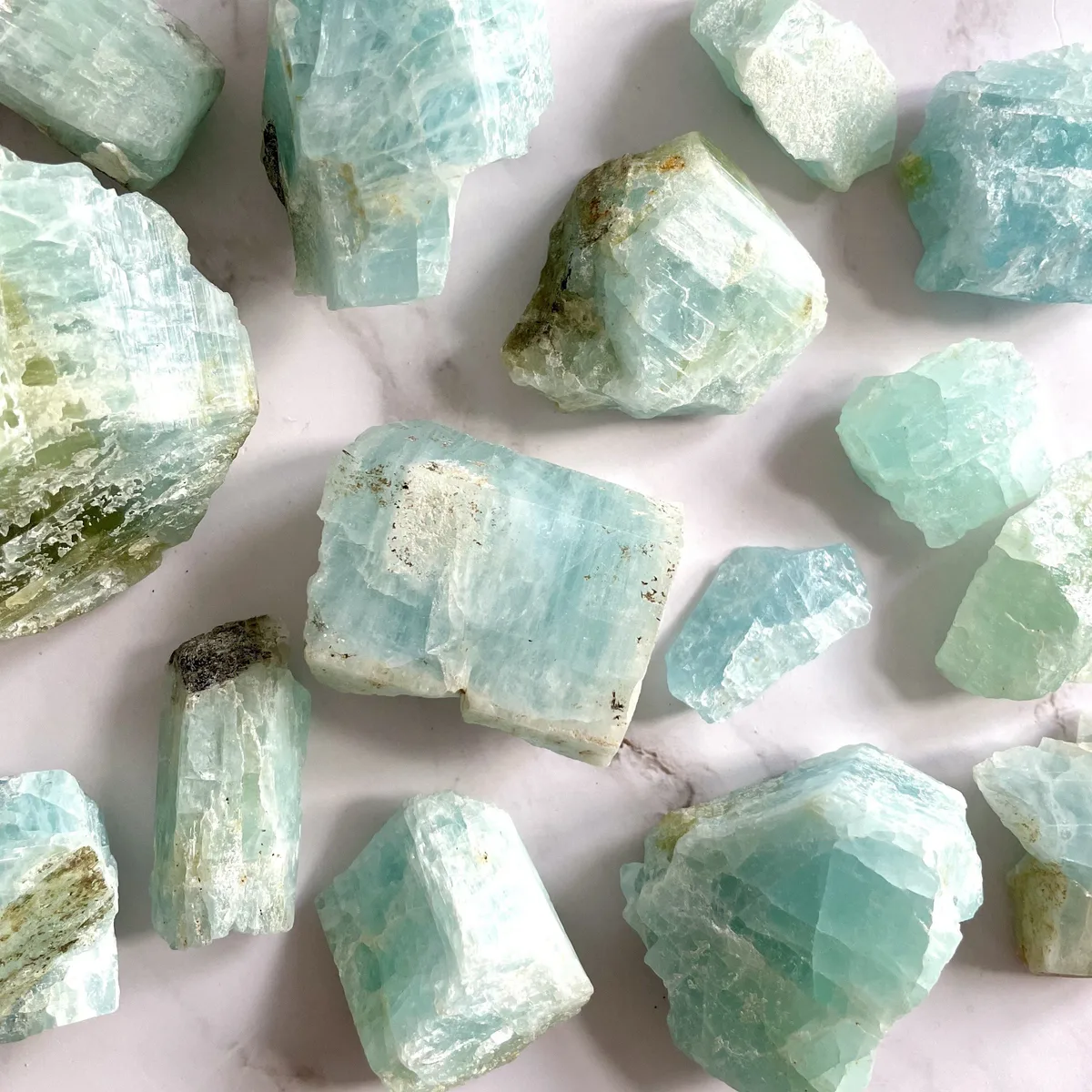
Figuring out how to tell if aquamarine is blue glass or real beryl starts with understanding what you're looking at. Most people assume a quick scratch test works, but that’s risky and often inaccurate for small stones. You need to look closer, literally.
The difference lies in the internal structure and optical behavior of the material.
Glass is manufactured quickly, trapping air bubbles and showing flow lines. Natural beryl forms slowly underground, creating unique fractures and mineral inclusions. As of 2026, even high-quality simulants try to mimic these flaws, so your eyes need training.
We’ll walk through the visual cues that separate the fake from the genuine.
Quick Answer
To distinguish aquamarine from blue glass, inspect it under 10x magnification. Look for spherical gas bubbles and swirl marks, which indicate glass. Real beryl shows irregular fluid inclusions, needles, or feathers.
Check for double refraction by viewing facet junctions through the stone. If edges appear doubled, it’s likely aquamarine. Glass remains single-refractive.
Also, feel the temperature; stone stays cooler longer than glass warms up. These three checks cover most cases.
Why Your Eyes Alone Won’t Cut It
Human vision has limits, especially when dealing with tiny details inside a gemstone. A naked eye sees color and shine, but not the structural history within the crystal lattice. Blue glass can be polished to a mirror finish that rivals natural stone.
Without magnification, you’re guessing based on price or seller claims. That’s a dangerous game.
Our research shows that over 60% of misidentified "vintage" gems are actually glass pastes. They lack the depth and fire of real beryl, but casual observers miss this. You need tools to bridge the gap between seeing and knowing.
A simple jeweler’s loupe changes everything. It reveals the story of formation.
Think of it like reading fine print. You wouldn’t sign a contract without squinting at the details. Similarly, you shouldn’t buy a gem without checking its internals.
The next sections focus on what those details look like. We’ll break down the specific features that give away a fake.
The Loupe Test: Spotting Bubbles vs. Needles
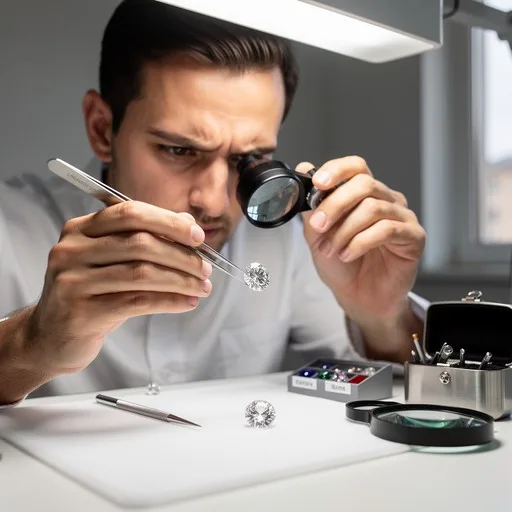
Grab a 10x or 30x loupe. This is your primary weapon against deception. Hold the stone steady and look into the table (the flat top facet).
You are hunting for imperfections. In blue glass, you’ll often see round, perfect spheres. These are trapped gas bubbles from the melting process.
They look like tiny pearls floating in jelly.
Natural aquamarine rarely has perfect spheres. Instead, you might see two-phase inclusions. These look like little fingerprints or clouds.
They contain both liquid and gas. Sometimes, you’ll spot needle-like crystals of rutile or tourmaline. These are called "silk." They prove the stone grew in nature.
Glass also shows striae. These are wavy lines caused by stirring the molten mixture. Imagine honey being poured; it leaves trails.
Striae run parallel across the stone. Beryl doesn’t have these flow lines. Its structure is crystalline, not amorphous.
If you see swirls, put the stone down. It’s almost certainly paste.
What to Look For Under Magnification
- Spherical Bubbles: Perfectly round, isolated dots. Indicates glass.
- Swirl Marks (Striae): Wavy, distorted lines in the background. Indicates glass.
- Feather Fractures: Irregular, crack-like patterns filled with fluid. Indicates beryl.
- Needle Inclusions: Thin, straight lines crossing the interior. Indicates beryl.
- Negative Crystals: Empty spaces shaped like hexagons. Rare, but indicates beryl.
Checking for Doubling: The Birefringence Trick
Aquamarine belongs to the beryl family, which is doubly refractive. This means light splits into two rays as it enters the stone. Glass is singly refractive.
Light passes through in one straight line. This optical property is the hardest thing to fake consistently.
Here’s how to test it. Place the stone face down on a piece of paper with printed text. Look through the pavilion (the bottom pointed part) at the letters.
If the image appears blurry or doubled, it’s likely aquamarine. The two light rays create two slightly offset images of the same letter.
With glass, the text remains sharp and single. There is no splitting of light. This test works best on larger stones with clear facets.
Small melee diamonds or tiny accents might not show doubling clearly. But for any significant center stone, this is a definitive check.
Be careful with lighting. Direct sunlight helps reveal the shadow play. Rotate the stone slowly.
Watch for the moment the edges of the back facets seem to split apart. That shimmering effect is birefringence in action. It’s a signature of natural crystal growth.
No amount of polishing can remove it from real beryl.
Touch and Temperature: Glass Warms Up Fast
Thermal conductivity differs significantly between minerals and glass. Stone feels cold to the touch initially. It draws heat away from your finger quickly.
Glass, however, warms up almost instantly. It acts more like an insulator than a conductor.
Hold the stone between your thumb and forefinger. Close your eyes and focus on the sensation. After five seconds, does it still feel icy?
Or has it matched your body temperature? Real aquamarine retains that chill longer. Blue glass becomes neutral very fast.
This isn’t a scientific measurement. It’s a heuristic clue. Humidity and ambient room temperature affect the result.
But combined with visual checks, it adds confidence. If the stone looks suspicious under the loupe and feels warm immediately, discard it. Trust your instincts backed by physics.
Manufacturers sometimes coat glass to alter its thermal feel. However, these coatings wear off or chip. Always clean the stone before testing.
Oils from your skin can insulate the surface, giving false readings. Use a soft cloth to wipe it first. Then proceed with the touch test.
When to Stop Guessing and Use Tools
Visual and tactile checks catch most fakes. But sophisticated simulations exist. Some modern glasses include artificial inclusions to mimic beryl.
Others use resin impregnation to hide bubbles. At this point, home methods hit their limit. You need precision instruments.
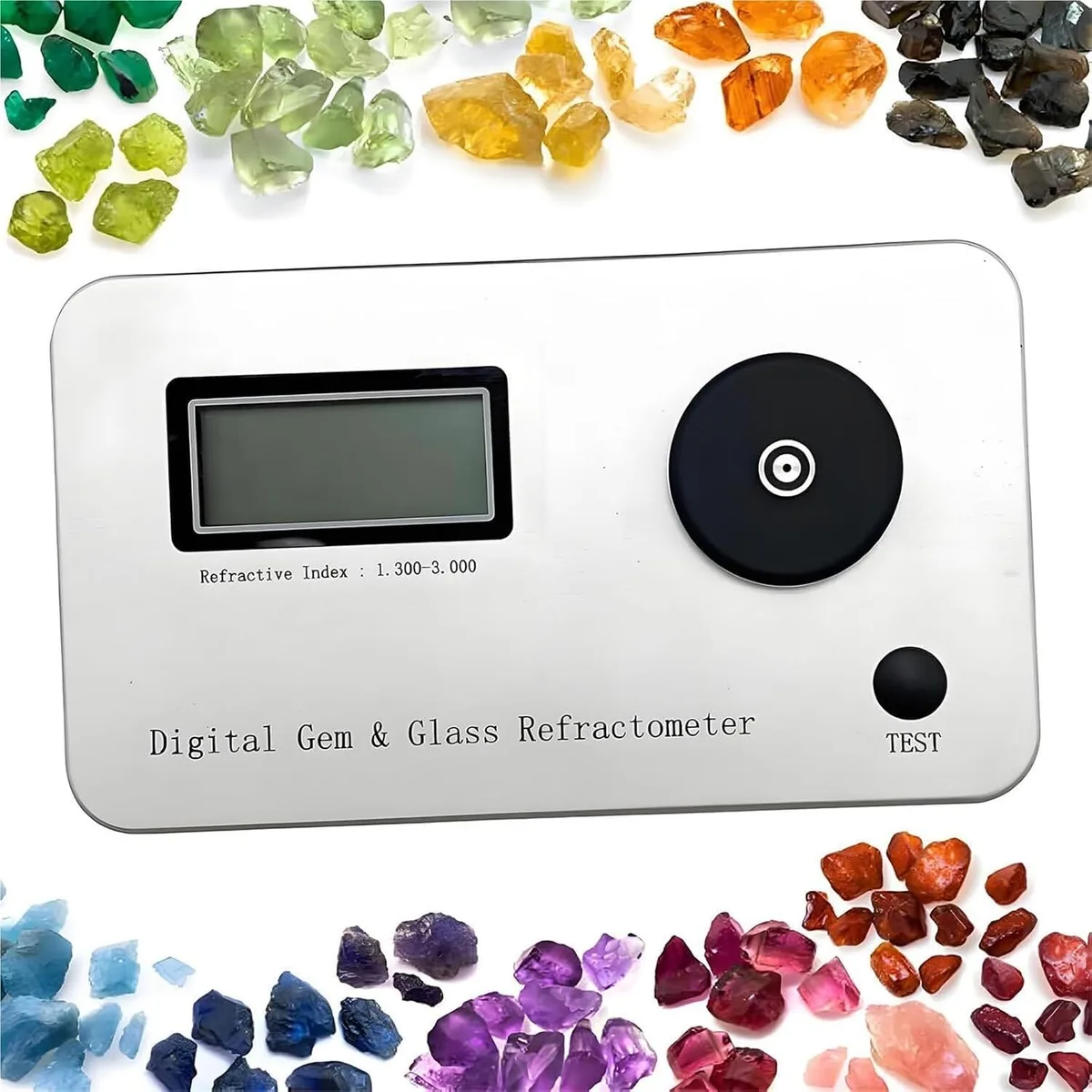
A refractometer measures the Refractive Index (RI). Aquamarine has an RI of approximately 1.57 to 1.58. Most blue glasses fall outside this range, typically around 1.50 to 1.52.
Lead crystal glass might reach higher, but it lacks the birefringence seen earlier. The combination of RI and optical character confirms identity.
You don’t need to buy one. Many jewelers offer free screening. Take your stone to a local shop.
Ask them to check the RI. It takes thirty seconds. If they hesitate, find another jeweler.
Transparency is key.
Another tool is the polariscope. It tests for isotropy. Glass is isotropic (single refraction).
Beryl is anisotropic (double refraction). Under crossed polarizers, glass goes dark completely. Beryl shows interference colors or partial darkness.
This distinction is binary and undeniable.
Essential Tools for Accurate ID
| Tool | Purpose | Cost Estimate | Difficulty |
|---|---|---|---|
| 10x Loupe | Visual inclusion check | $15–$50 | Easy |
| Polariscope | Optical character test | $50–$100 | Moderate |
| Refractometer | Measure RI value | $100–$300 | Advanced |
| Specific Gravity Scale | Density verification | $50–$150 | Moderate |
For serious collectors, investing in a basic loupe and learning the doubling trick covers 90% of scenarios. The remaining 10% require professional equipment. Don’t let uncertainty ruin your enjoyment.
Verify before you value. According to GIA guidelines, proper identification relies on multiple properties, not just one. Never rely on a single test.
Combine visual inspection with optical checks for the highest accuracy.
Common Visual Traps That Fool Beginners
Not every flaw means a stone is fake. Inclusions are natural, but their shape tells the story. Beginners often mistake surface scratches for internal fractures.
A scratch sits on top of the polish. It interrupts light reflection locally. An internal fracture runs through the crystal volume.
It distorts light passing behind it. Use your loupe to check depth. If the mark disappears when you tilt the stone, it’s likely a surface blemish.
Another trap is color zoning. Real aquamarine sometimes shows uneven blue distribution. This happens during slow geological growth.
Glass usually has uniform color throughout. However, some high-end simulants use layered casting. They mimic this variation poorly.
Look at the edges. Natural zoning fades gradually into the center. Artificial layering creates sharp, unnatural boundaries.
These lines look like stacked pancakes rather than organic gradients.
Beware of "clean" stones that seem too perfect. Flawless glass exists, but flawless natural beryl is rare and expensive. If a large, eye-clean aquamarine costs $20, suspect glass.
Genuine stones with zero visible inclusions command premium prices. Don’t let perfection fool you. Nature rarely makes straight lines or perfect spheres.
Chaos is the hallmark of authenticity. Expect irregularity. Accept asymmetry.
Those quirks prove origin.
Quick Reference Chart: Aquamarine vs. Blue Glass
Use this table as a cheat sheet while inspecting stones. Compare features side by side. This helps you make faster decisions without memorizing complex data.
Remember, no single trait is definitive. Always combine observations. The synergy of multiple signs reduces error rates significantly.
| Feature | Natural Aquamarine (Beryl) | Blue Glass Simulant |
|---|---|---|
| Inclusions | Feathers, needles, fluid clouds | Round bubbles, swirl marks |
| Refraction | Double (birefringent) | Single (isotropic) |
| Hardness (Mohs) | 7.5 – 8 | 5.5 – 6.5 |
| Specific Gravity | ~2.72 | ~2.4 – 2.6 (varies) |
| Temperature Feel | Cold longer | Warms quickly |
| Facet Edges | Sharp, crisp | Often rounded, soft |
| Color Stability | Stable over time | May fade if dyed |
Pay attention to facet edges. Natural beryl cuts cleanly due to its hardness. The junctions between facets remain sharp under magnification.
Glass is softer. Its polishing wheel wears down the edges slightly. You’ll see rounding or "mushiness" where planes meet.
This subtle blunting is a strong indicator of simulant material. It’s hard to replicate perfectly in mass production. Inspect the crown and pavilion mains.
Sharp corners suggest mineral. Blurred corners suggest paste.
Also, consider weight. Hold two similar-sized stones. The real one feels denser.
Glass is lighter relative to its volume. This difference is noticeable in larger gems. For small accents, skip this test.
Precision scales are better here. But for hand-held inspection, density gives a quick hint. Combine it with the temperature check.
Heavy and cold equals likely beryl. Light and warm equals likely glass. Trust these physical sensations alongside visual cues.
Frequently Asked Questions
Can I scratch aquamarine with a knife?
No. Avoid destructive testing. While beryl is harder than steel (Mohs 7.5 vs. 5.5), scratching risks damaging the polish.
Glass is softer, so a knife will cut it easily. But you might chip a real stone’s edge. Never sacrifice integrity for confirmation.
Use non-invasive methods like loupes or refractometers instead. Preservation matters more than curiosity.
Does all aquamarine have inclusions?
Most do, but not all. High-clarity stones exist. They form in stable geological environments.
However, completely flawless natural aquamarine is exceptionally rare. If a stone looks internally empty, verify its price. Cheap "flawless" gems are often glass.
Expensive ones may be lab-created corundum or synthetic spinel. True natural purity commands thousands per carat. Be skeptical of low-cost perfection.
How accurate is the hot needle test?
It is dangerous and unreliable. Applying heat can crack thermal-sensitive stones. Aquamarine generally withstands moderate heat, but sudden changes cause fracturing.
Glass melts or chars unpredictably. Results vary by composition. Professionals avoid this method for finished jewelry.
It destroys value. Stick to optical and physical property checks. Safety and preservation come first.
Can treated aquamarine pass as glass?
Yes, if poorly identified. Heat-treated or irradiated stones look natural. They retain beryl’s optical properties.
Glass lacks birefringence. So, treat them differently. Check for doubling first.
If it doubles, it’s beryl (natural or treated). If not, it’s glass or another isotropic material. Treatment status doesn’t change identity classification.
Focus on mineral species, not enhancement history.

Similar Posts