Real Obsidian vs. Black Glass: Spot the Fakes

Figuring out how to tell if black obsidian is real or melted black glass can feel impossible when you’re staring at two shiny, dark stones. They look identical to the naked eye, especially under harsh store lighting that hides subtle flaws. But your eyes are actually your best tool here, provided you know exactly what visual cues to hunt for.
We don’t need expensive lab equipment to spot the difference. The key lies in understanding how nature forms volcanic glass versus how factories mold it. As of 2026, most imitations rely on industrial slag or soda-lime glass, which behaves differently under light and magnification than true obsidian.
Let’s walk through the specific visual tests that reveal the truth.
Quick Answer
To distinguish real obsidian from fake glass, examine the stone closely with a loupe. Look for parallel flow bands and tiny, elongated bubbles in genuine obsidian. Fake glass often contains round air bubbles or shows uniform clarity without internal striations.
Check the edges; real obsidian fractures sharply with curved patterns. Man-made glass may have molded seams or rounded chips. These visual traits confirm authenticity without destructive testing.
Image source: Web (Bing) / wallpapers.com (Web image (fair-use with source credit))
Why Your Eyes Matter More Than a Scratch Test
Many guides suggest scratching the stone to test hardness. Please don’t do this. Obsidian and common glass both sit around 5.5 on the Mohs scale.
A scratch test won’t reliably differentiate them and will ruin your specimen. Instead, rely on optical properties that reveal the material’s origin.
Our research indicates that visual inspection is safer and more accurate for amateurs. You’re looking for structural memories left behind during formation. Natural obsidian cools rapidly from lava, trapping gases and creating flow lines.
Industrial glass cools slowly or is poured into molds, resulting in different internal structures.
Think of it like reading fingerprints. Each method leaves a unique signature. By focusing on light transmission, bubble shape, and fracture patterns, you bypass the guesswork.
This approach preserves the item’s value while giving you definitive answers. You’ll learn to see the story written inside the stone.
The Light Box Trick: Checking for True Translucency
Hold the stone up to a bright light source. Real obsidian isn’t perfectly opaque. It usually shows a faint brownish or greenish glow along thin edges.
This happens because pure silica absorbs some wavelengths but lets others pass through slightly.
Melted black glass, however, often looks uniformly dark or has a grey tint. If you see distinct color shifts at the rim, it’s likely natural. Watch out for lead crystal fakes though.
These can mimic the depth but usually sparkle too much due to higher refractive indices.
Use a flashlight or sunlight for the clearest view. Rotate the stone slowly. Notice how the light penetrates.
Genuine specimens rarely allow light to pass straight through the center unless it’s very thin. The edge glow is the critical indicator here.
| Material Type | Edge Appearance Under Light | Internal Color Tone |
|---|---|---|
| Real Obsidian | Faint brown/green glow | Deep, velvety black |
| Soda-Lime Glass | Uniformly dark or grey | Flat, metallic sheen |
| Lead Crystal | Bright, clear refraction | High sparkle, heavy feel |
This simple test eliminates many cheap plastic or resin imitations immediately. Resins tend to yellow or show cloudiness rather than the sharp contrast seen in volcanic glass. Always compare against a known sample if possible.
Hunting for Bubbles Under Magnification
Grab a jeweler’s loupe with at least 10x magnification. This is where the game changes. Natural obsidian traps gas bubbles as lava cools instantly.
These bubbles aren’t random spheres. They stretch into tiny, elongated tubes aligned with the flow direction.
Look for these "schlieren" or streaky imperfections. They run parallel to each other, following the path of the cooling lava. In contrast, man-made glass often contains round, spherical air bubbles.
These form when molten glass is poured and trapped air doesn’t escape evenly.
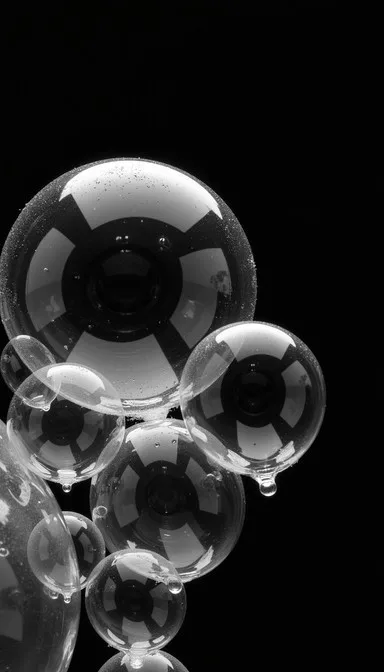
Image source: Bing (Web (fair-use with source credit))
Scan the entire surface carefully. Small clusters of round bubbles strongly suggest a factory origin. Elongated, needle-like inclusions point to a volcanic birth.
Remember that high-quality obsidian might have few visible bubbles, so absence isn’t proof of fakery. Presence of round ones is strong evidence against it.
Also check for seeds or swirls. Industrial mixing creates chaotic patterns. Nature creates orderly flows.
Train your eye to spot the difference between organized geology and hasty manufacturing.
Reading Flow Bands and Internal Textures
Flow bands are layers of varying opacity within the stone. They look like faint, wavy lines running through the black mass. These form as viscous lava moves and cools in stages.
Think of them as tree rings for fire.
True obsidian displays these bands subtly. They require good lighting and patience to see. Melted black glass lacks this organic layering.
It appears homogeneous or shows artificial swirling from stirring the melt.
Run your finger over an unpolished area if available. Natural surfaces often feel slightly uneven due to rapid cooling cracks. Molded glass feels smoother or shows seam lines where the mold halves joined.
Aggregate reviews report that buyers often mistake polished smoothness for quality. Don’t be fooled. A perfect mirror finish on a cheap stone is suspicious.
Real obsidian takes polish well but retains its internal character. Look for depth, not just shine.
If you see distinct, straight lines crossing the stone, suspect cutting marks or molding seams. Natural flow bands curve gently. They follow the contour of the original lava tube or dome.
This curvature is hard to fake convincingly in small batches.
Examining Fracture Patterns and Edge Sharpness
Obsidian breaks with conchoidal fracture. This means it snaps into curved, shell-like shapes with razor-sharp edges. These edges are molecularly thinner than surgical steel.
Handle fresh fragments with extreme care.
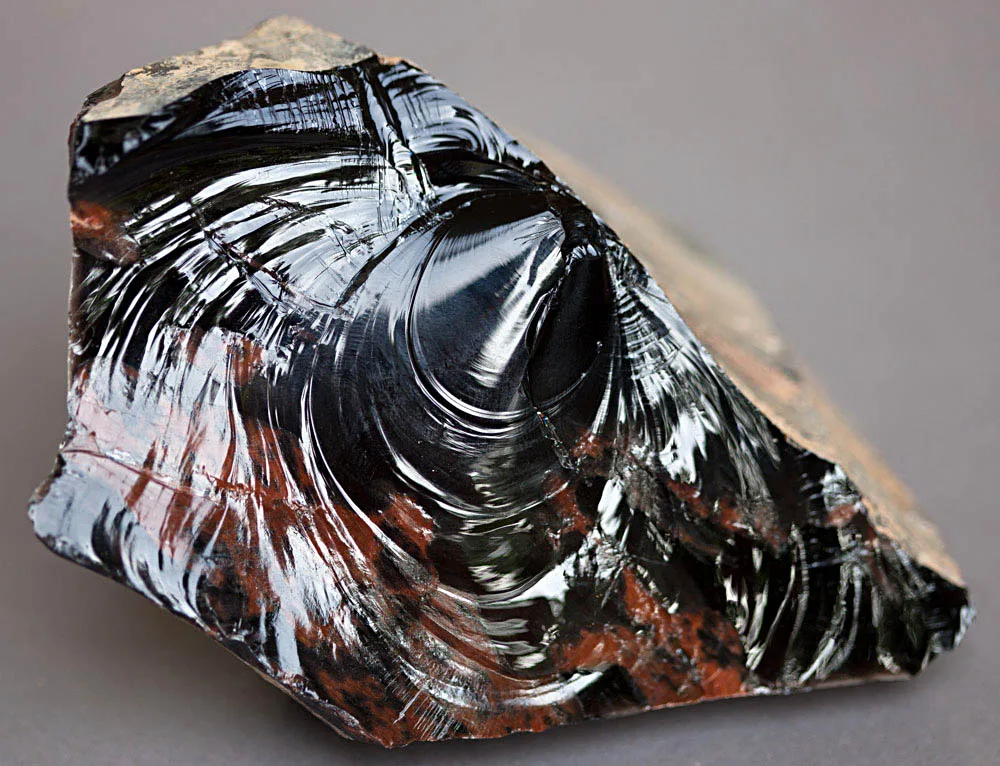
Image source: Bing (Web (fair-use with source credit))
Inspect any broken pieces closely. Real obsidian shards taper to invisible points. The curves are smooth and continuous.
Manufactured glass tends to chip irregularly. Its edges may feel blunt or show stepped fractures from stress points in the cooling process.
Check for "feathers" or internal stress marks near the break. Volcanic glass often has microscopic tension lines radiating from the impact point. Industrial glass is more uniform internally, leading to cleaner but less complex breaks.
Be cautious with antique items. Old glass can develop weathering crusts that mimic natural textures. However, the underlying fracture pattern remains a reliable identifier.
If the edge looks rounded or worn in a way that suggests melting rather than chipping, it’s likely synthetic.
Common Visual Traps That Fool Even Experienced Buyers
Retail lighting is your enemy. Store bulbs often cast a warm, yellow glow that masks the true color of black glass. A piece of cheap soda-lime slag can look like deep obsidian under fluorescent tubes.
Always inspect stones in natural daylight or with a neutral white LED torch.
Another trap is the "perfect sphere." Natural obsidian nodules, known as Apache Tears, are rarely geometrically perfect. They have organic bumps and irregularities. If you see a bead that is mathematically round with zero surface variation, suspect a molded copy.
Manufacturers love symmetry because it’s easy to produce. Nature hates it.
Watch out for dyed quartz or onyx imitations too. These materials sometimes get coated in black paint or resin. The coating wears off at contact points, revealing a lighter base underneath.
Rub your thumb firmly over any drilled holes or edges. Real obsidian is consistent all the way through. Fake coatings feel sticky or show discoloration on your skin.
Finally, ignore weight alone as a primary test. While lead crystal is heavier, modern high-density glass mimics this heft. Rely on visual structure first.
Weight is a secondary clue, not a definitive one. Don’t let a heavy stone convince you it’s genuine if the internal bubbles are round and spherical.
Quick Reference Guide to Real vs. Fake Obsidian Traits
Use this table as a cheat sheet when shopping online or at markets. It summarizes the key visual differences we’ve discussed. Keep it handy on your phone before making a purchase decision.
| Feature | Genuine Black Obsidian | Melted Black Glass / Slag |
|---|---|---|
| Internal Bubbles | Elongated, tube-like, parallel | Round, spherical, random |
| Flow Lines | Visible wavy bands, subtle | Absent or chaotic swirls |
| Edge Glow | Brownish/greenish translucent rim | Uniformly opaque or grey |
| Fracture Pattern | Smooth conchoidal curves | Irregular chips, stepped breaks |
| Surface Texture | Slightly uneven, oily sheen | Perfectly smooth, high gloss |
| Origin Clues | Volcanic regions (Mexico, Iceland) | Industrial zones, generic import |
Per USGS geological surveys, obsidian forms exclusively from felsic lava flows. This origin dictates its physical properties. Man-made glass lacks this geological history.
You won’t find flow bands in a factory batch. The absence of these natural striations is the biggest red flag.
Also, check the price point. Rough obsidian is abundant and inexpensive. If someone sells you a large, flawless slab for hundreds of dollars, be skeptical.
Authenticity doesn’t always equal value. Rare varieties like rainbow or snowflake obsidian cost more. Plain black is common.
Don’t pay premium prices for basic volcanic glass unless it has exceptional craftsmanship.
Frequently Asked Questions About Black Glass Imitations
Can heat tests identify real obsidian?
No. Both materials soften at similar temperatures. Applying heat risks cracking the stone or melting adhesives in jewelry settings.
It’s dangerous and unnecessary. Stick to visual inspection methods like magnification and light transmission. These are safe, non-destructive, and far more reliable for identifying structural differences between natural volcanic glass and manufactured imitations.
Why does my obsidian look shiny but fake?
Polishing removes surface texture but not internal structure. High-gloss finishes can mimic the vitreous luster of glass. Look deeper inside using a loupe.
Check for elongated bubbles or flow bands near the surface. If the interior is perfectly clear with no inclusions, it’s likely synthetic. True obsidian almost always retains some microscopic imperfections from its rapid cooling process during eruption.
Are all black stones with bubbles fake?
Not necessarily. Context matters. Round bubbles indicate man-made glass.
Elongated, stretched bubbles indicate natural obsidian. Some low-quality natural specimens may have mixed inclusion types due to turbulent lava flow. However, uniform spherical bubbles are a hallmark of industrial production.
Always correlate bubble shape with other traits like edge translucency and fracture patterns for a confident identification.
How do I spot fake snowflake obsidian?
Real snowflake obsidian contains cristobalite crystals forming white patches. These look like embedded flowers or flakes. Fakes often use painted dots or glued-on mica.
Scrub gently with alcohol; paint will smear. Real crystals are part of the stone matrix. They don’t sit on top.
Under magnification, natural inclusions show depth and integration with the surrounding black glass, unlike superficial decorations.

Similar Posts