Who Published the Communist Manifesto: Unveiling Its Revolutionary Authors
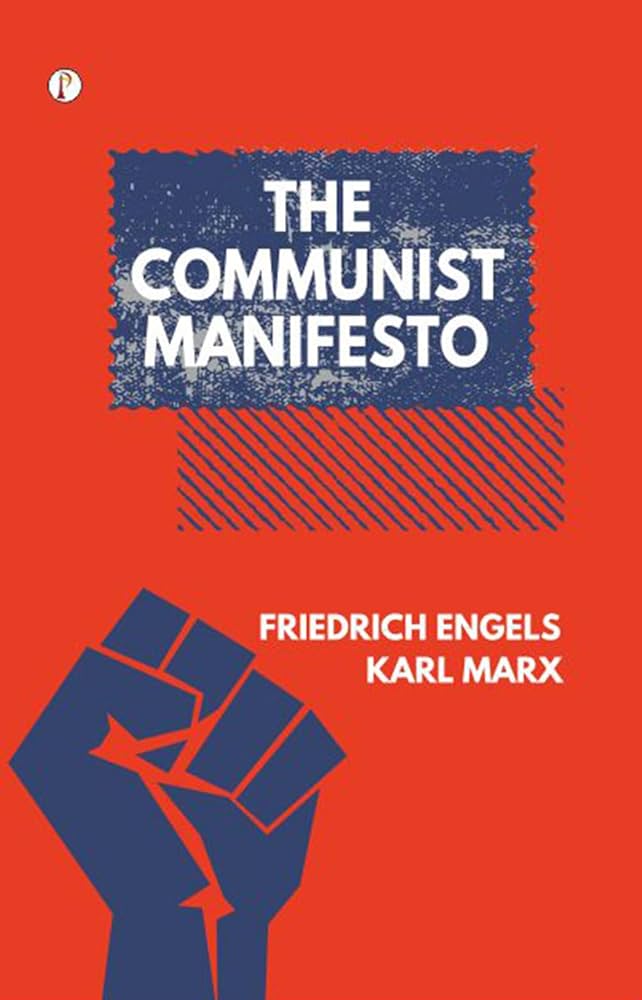
Have you ever wondered who published the Communist Manifesto? Understanding who brought this powerful document into the world can change the way you see history and politics.
This manifesto didn’t just appear out of nowhere—it was carefully crafted and shared by individuals with a clear vision. If you want to uncover the story behind its publication and why it still matters today, keep reading. What you discover might surprise you and give you a fresh perspective on ideas that have shaped nations.

Credit: www.amazon.ca
Historical Context
The Communist Manifesto was published during a time of great change and unrest. Understanding this historical context helps explain why it made such an impact. The 19th century saw major shifts in politics and society. New ideas about equality and labor were spreading fast.
Political Climate Of The 19th Century
Europe was marked by political tension and upheaval. Monarchies faced challenges from growing demands for democracy. Industrialization changed how people worked and lived. Cities grew quickly, and many workers faced harsh conditions. Governments often sided with factory owners, ignoring worker rights. This led to protests and calls for reform.
Rise Of Socialist Movements
Socialist ideas gained popularity among workers and intellectuals. They called for fairer wealth distribution and better labor laws. Groups formed to fight for workers’ rights and social justice. The Communist Manifesto captured these ideas and gave them a clear voice. It inspired many to push for change in society and politics.

Credit: www.amazon.ca
Karl Marx’s Influence
Karl Marx’s influence on the Communist Manifesto is profound and undeniable. His ideas shaped not only the manifesto itself but also the course of political thought worldwide. Understanding Marx’s background and his philosophical contributions helps you grasp why his work still sparks debate today.
Early Life And Education
Karl Marx was born in 1818 in Trier, Prussia. His early years were marked by a strong interest in philosophy and history. He studied law and philosophy at the University of Bonn and later at the University of Berlin, where he connected with young intellectuals questioning traditional ideas.
Marx’s education exposed him to the works of German philosophers like Hegel, which deeply influenced his thinking. Have you ever noticed how your education shapes your worldview? Marx’s academic background laid the foundation for his critical approach to society and economics.
Philosophical Contributions
Marx introduced key concepts such as historical materialism, which explains societal change through economic forces rather than ideas alone. He argued that history is a series of class struggles, primarily between the bourgeoisie and the proletariat. This viewpoint challenges you to reconsider how power and resources are distributed in your own society.
His critique of capitalism highlighted exploitation and alienation, themes that resonate even now. Marx didn’t just theorize; he aimed to inspire action. How does this challenge your perspective on economic systems and social justice?
Friedrich Engels’ Role
Friedrich Engels played a key role in publishing the Communist Manifesto. His partnership with Karl Marx shaped the ideas within this influential work. Engels not only co-authored the Manifesto but also supported Marx financially and intellectually. His contributions helped bring the manifesto to life and reach a wider audience.
Background And Partnership With Marx
Engels met Marx in the early 1840s. They shared similar views on society and economics. Their friendship grew stronger over time. Engels provided Marx with money to focus on writing. Together, they discussed history and class struggles. Their collaboration lasted for decades.
Engels also helped edit Marx’s works. He wrote parts of the Communist Manifesto. Engels’ experience as a businessman gave him practical insights. These insights balanced Marx’s theoretical ideas. Their teamwork made the Manifesto both clear and powerful.
Economic Theories
Engels brought knowledge from his family’s textile business. He understood how workers faced hard conditions. Engels studied capitalism’s effects on labor and production. He agreed with Marx that capitalism creates inequality.
Engels helped explain how money and class shape society. He wrote about the struggle between workers and owners. His ideas supported the call for workers’ rights. The Communist Manifesto reflects many of his economic thoughts.

Credit: books.apple.com
Collaborative Creation
The Communist Manifesto stands as a powerful example of collaborative creation. It was not the work of a single person but the product of a close partnership between two thinkers who shared a vision. Understanding how this collaboration unfolded can inspire how you approach teamwork in your own projects.
The Writing Process
Karl Marx and Friedrich Engels worked closely to write the Communist Manifesto. Marx took the lead on the main draft, while Engels contributed ideas, research, and edits. They exchanged letters and met often to refine their arguments and ensure clarity.
This back-and-forth allowed them to sharpen their points and challenge each other’s views. Their teamwork created a text that was both passionate and precise. Have you ever experienced how discussing your ideas with someone else makes them stronger?
Shared Ideologies
Marx and Engels shared similar views about society, class struggle, and economic systems. This common ground made their collaboration natural and effective. They believed capitalism created inequality and that a revolution was necessary for justice.
Because they thought alike, they could build on each other’s thoughts without conflict. This unity in purpose gave the Manifesto its powerful and consistent message. Consider how having aligned values with your collaborators could improve your projects.
Publication History
The publication history of the Communist Manifesto reveals the origins and rise of this influential text. Written by Karl Marx and Friedrich Engels, it laid the foundation for modern communist thought. Understanding its publication helps us see how its ideas spread worldwide.
Initial Release
The Communist Manifesto was first published in London in 1848. It appeared as a pamphlet titled “Manifesto of the Communist Party.” The work was commissioned by the Communist League, a political group. Marx and Engels wrote it quickly to respond to growing social unrest. The pamphlet was printed in German and distributed mainly in Europe.
Impact And Spread
The manifesto quickly gained attention across Europe. Workers and intellectuals found its message powerful and inspiring. The 1848 revolutions helped spread its ideas. Translations appeared in many languages over the following decades. It influenced political movements and labor organizations worldwide. The text became a cornerstone for socialist and communist parties.
Legacy And Influence
The Communist Manifesto remains one of the most influential political texts ever published. Its legacy stretches far beyond its original 1848 publication. The manifesto shaped debates on class, labor, and economics worldwide. It inspired movements, governments, and thinkers for generations.
The ideas in the manifesto continue to provoke discussion. People study its calls for equality and social change. The work’s impact is visible in politics, education, and culture.
Global Reach
The Communist Manifesto spread quickly across continents. It influenced workers and activists in Europe, Asia, and the Americas. Many revolutions and political parties drew on its themes.
- Socialist and communist parties often base ideas on the manifesto.
- It inspired labor unions to demand better rights.
- Governments in some countries used it as a guide for policy.
The manifesto’s ideas challenged existing social orders. It sparked debates about wealth, power, and fairness worldwide. Even today, its message resonates with diverse groups seeking change.
Modern Interpretations
People interpret the Communist Manifesto in different ways today. Some see it as a call for worker rights and fairness. Others view it as a historical document reflecting 19th-century struggles.
- Scholars analyze its ideas in new social and economic contexts.
- Activists adapt its principles for modern political movements.
- Critics debate its relevance in current capitalist societies.
Its influence on modern thought is clear. The manifesto remains a key text for those studying social justice and economic equality. It encourages ongoing conversation about how societies can improve.
Frequently Asked Questions
Who Published The Communist Manifesto?
The Communist Manifesto was published by Karl Marx and Friedrich Engels in 1848. They co-wrote this influential political pamphlet. It laid the foundation for modern communism and socialism.
When Was The Communist Manifesto First Published?
The Communist Manifesto was first published on February 21, 1848. It appeared in London and quickly spread across Europe. Its ideas sparked major political debates worldwide.
What Was The Purpose Of The Communist Manifesto?
The manifesto aimed to inspire the working class to overthrow capitalism. It called for a classless society where production means are communally owned. It promotes equality and the end of exploitation.
How Did Marx And Engels Collaborate On The Manifesto?
Marx wrote the bulk of the text, while Engels contributed research and editing. Both shared a vision of a communist society. Their partnership combined theory and practical analysis.
Conclusion
Karl Marx and Friedrich Engels wrote the Communist Manifesto. They published it in 1848. The book explains their ideas about society and class struggle. It influenced many political movements around the world. Knowing who published it helps us understand its meaning.
The manifesto remains important today for studying history and politics. Its impact can still be seen in many countries. This work shaped how people think about equality and power. Understanding its origins gives us insight into its message.

Similar Posts