How to Spot Fake Rhodonite: Check the Black Veins
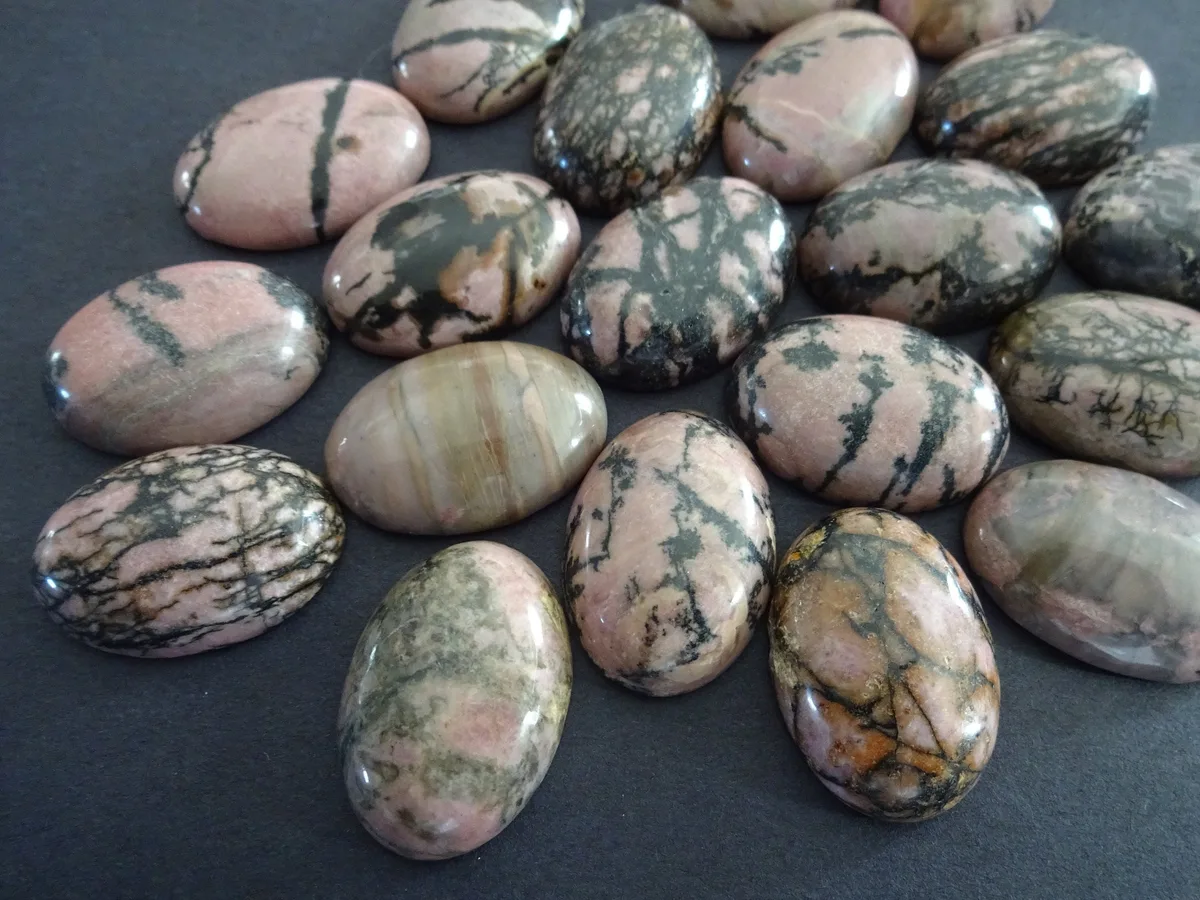
Figuring out how to test if rhodonite is genuine black manganese veins starts with trusting your eyes, not just a hardness pick. Many buyers assume all pink stones with dark lines are authentic, but synthetic glass and dyed jasper flood the market. These fakes often look convincing at first glance, especially under bright store lighting.
Visual inspection remains the most reliable method for quick authentication as of 2026. You’ll need to examine the vein structure closely because natural dendrites form differently than painted or printed patterns. Genuine rhodonite displays complex, branching inclusions that integrate into the stone’s matrix.
Let’s break down exactly what you should be looking for.
Why Your Eyes Matter More Than Any Scratch Test
Scratch tests damage valuable specimens and often yield ambiguous results. Rhodonite sits between 5.5 and 6.5 on the Mohs scale, which overlaps significantly with common glass imitations. A successful scratch doesn’t prove authenticity, while a failed one ruins the piece.
Visual analysis preserves the stone’s integrity and provides immediate clues. The human eye, aided by magnification, detects subtle structural inconsistencies that tools miss. You’re looking for geological logic, not just chemical composition.
Natural formation creates chaos; artificial production creates uniformity. This distinction is critical for accurate identification without risking your investment.
The Anatomy of Genuine Rhodonite: Pink Matrix and Black Dendrites
Real rhodonite features a pink-to-red silicate matrix interspersed with black manganese oxide veins. These veins aren't random scratches. They are dendritic structures formed during crystallization.
Think of them like frost on a window or branches on a winter tree.
The black material is typically braunite or manganosite. It grows along fracture planes within the crystal lattice. This means the veins have depth.
They don't sit flat on the surface. Instead, they appear embedded within the stone. The pink base also varies in tone.
You’ll see gradients from pale salmon to deep rose, never a single flat color.
Step-by-Step Visual Inspection with a 10x Loupe
Start by cleaning the stone thoroughly. Dust and oils obscure fine details. Use mild soap and water, then dry it completely.
Hold a 10x jeweler’s loupe against your eye, not the stone. Bring the specimen close until the image sharpens.
Focus on the intersection where black veins meet the pink matrix. In genuine rhodonite, the boundary is irregular. The black oxide bleeds slightly into the pink areas.
You might see tiny white calcite spots nearby. These are natural companions in the ore body. If the edge looks too crisp or painted-on, suspect a fake.
Look for three-dimensional depth. Rotate the stone under a light source. Real veins cast microscopic shadows or show refraction changes.
Artificial veins often look two-dimensional. They lack internal complexity. Check for bubbles too.
Glass fakes trap air. Mineral rhodonite does not.

Spotting the Fakes: Glass, Resin, and Dyed Jasper
Synthetic rhodonite glass is the most common counterfeit. Manufacturers melt silica with cobalt or manganese colorants. The result is a uniform pink blob with painted black lines.
These lines often follow perfect geometric curves or repeat patterns. Nature rarely repeats itself exactly.
Dyed jasper is another culprit. Cheap red jasper gets soaked in pink dye. The dye concentrates in cracks, creating false "veins." These lines look like lightning bolts rather than organic growth.
They are superficial. Scrubbing with alcohol might reveal the true orange-brown color underneath.
Resin-coated stones feel plasticky. They warm up quickly in your hand. Genuine stone stays cool longer.
Also, resin often has a glossy, wet appearance even when dry. Look for pooling around drill holes in beads. Excess glue indicates a composite or treated item.
| Feature | Genuine Rhodonite | Synthetic Glass | Dyed Jasper |
|---|---|---|---|
| Vein Structure | Branching, dendritic, 3D depth | Flat, painted, uniform width | Crack-filled, linear, superficial |
| Color Base | Varied pink/salmon gradients | Single flat pink tone | Orange-brown hidden by dye |
| Inclusions | White calcite, gray matrix | Air bubbles, swirls | None or artificial debris |
| Temperature | Cool to touch initially | Warms rapidly | Neutral |
Quick Non-Destructive Checks: Weight, Temperature, and UV Light
Weight offers a surprising clue. Rhodonite has a specific gravity of roughly 3.4 to 3.7. Common soda-lime glass sits around 2.5.
Pick up two similarly sized stones. The real mineral feels noticeably denser. It has heft.
Glass feels light and hollow by comparison.
Thermal conductivity helps distinguish plastic resins. Hold the stone against your inner wrist. Genuine rhodonite draws heat away slowly.
It feels cool for several seconds. Plastic or resin coatings warm up almost instantly. This simple tactile test filters out many low-quality composites.
UV light reveals hidden treatments. Shine a longwave ultraviolet torch on the specimen. Natural rhodonite usually shows little to no fluorescence.
However, epoxies used to fill cracks glow bright blue or white. If you see glowing patches, the stone has been stabilized or repaired. This lowers its value significantly.
Always verify findings with Mindat.org database entries for specific localities.
Common Authentication Mistakes That Cost Collectors Money
Many buyers rely too heavily on color alone. They assume any pink stone with black lines is rhodonite. This ignores the prevalence of dyed howlite or magnevite.
These cheaper minerals absorb dye easily. The result mimics the look but lacks structural integrity. You’ll find the color fades in sunlight over time.
Another frequent error involves ignoring surface texture. Genuine rhodonite often has a slightly matte or waxy finish when unpolished. Fakes are frequently glazed to hide imperfections.
If the stone feels unnaturally smooth or slippery, suspect a resin coating. This coating can chip off beads after minimal wear. It ruins the piece’s longevity and value.
Buyers also overlook provenance documentation. Reputable dealers provide origin details, such as Broken Hill or Ural sources. Missing paperwork is a red flag for mass-produced imports.
Without location data, verifying natural formation becomes harder. Always ask for sourcing information before committing to high-value purchases. Trust should never replace verification.
Where to Buy Verified Specimens and Avoid Tourist Traps
Certified gemological labs offer the safest route for expensive pieces. Organizations like the GIA provide detailed reports on treatment status. These documents confirm whether manganese veins are natural or enhanced.
While costly, this insurance protects significant investments. For smaller items, established mineral shows are better than online marketplaces.
Avoid roadside souvenir shops near mining sites. Aggregate reviews indicate these vendors often sell synthetic glass labeled as local finds. The prices seem low, but the quality is nonexistent.
Instead, visit specialized lapidary suppliers who stock raw materials. These sellers understand geological variations and rarely mix fakes into inventory.
Online auctions require extreme caution. Photos can be manipulated to enhance color contrast. Request multiple angles under neutral lighting before bidding.
Look for sellers with long-standing reputations in collector forums. New accounts with perfect feedback scores often signal fabricated history. Patience saves money here.
Stick to platforms that verify seller identity.
Frequently Asked Questions
Can vinegar test rhodonite authenticity?
No. Vinegar reacts with calcium carbonate, not silicates. Rhodonite is manganese silicate.
It will not fizz. However, some associated matrix minerals might react. This makes the test unreliable for pure identification.
Do not use acid on finished jewelry. It damages polish and settings permanently. Visual inspection remains superior for safety and accuracy.
Why do some rhodonite stones have no black veins?
Pure rhodonite crystals exist without manganese oxide inclusions. These are rare and command higher prices. Most commercial specimens include the black dendrites for visual appeal.
A lack of veins doesn’t automatically mean fake. Check the hardness and density instead. Clear, vein-free stones are valid if other properties match.
Consult a gemologist for certification on high-value clears.
How does lighting affect vein visibility?
Bright overhead LEDs wash out subtle color gradients. Natural daylight reveals true tones best. Under warm incandescent light, pink appears more orange.
This can mask artificial dyes. Always inspect stones in varied lighting conditions. Rotate them to catch reflections on the dendrites.
Shadows highlight depth in genuine veins. Poor lighting hides surface-painted flaws effectively. Use a handheld lamp for controlled examination.
Is scratched rhodonite still valuable?
Minor scratches reduce aesthetic value but not material worth. Deep gouges compromise structural integrity. Polishing can remove surface marks.
However, aggressive buffing thins cabochons significantly. Buyers discount damaged goods heavily. For collectors, pristine condition matters most.
Jewelry wear is expected and acceptable. Store loose stones separately to prevent abrasion. Soft cloth pouches protect delicate surfaces from contact with harder minerals.

Similar Posts