Real Selenite vs Gypsum: 7 Easy Tests to Spot Fakes
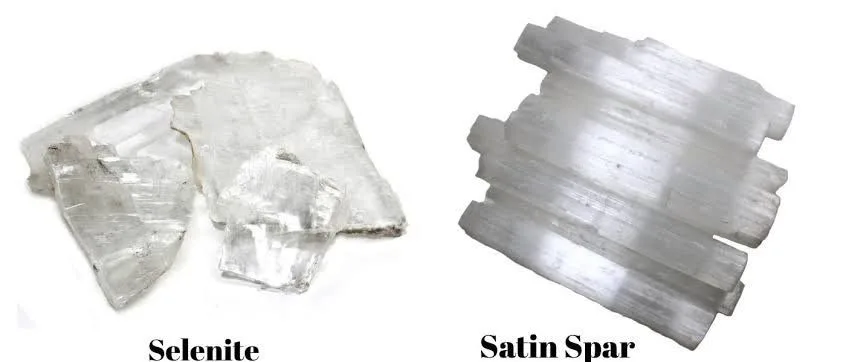
Figuring out how to test if selenite is real or gypsum satin spar can feel tricky because they’re chemically identical. Both are varieties of the mineral gypsum, sharing the same formula: calcium sulfate dihydrate. The difference lies entirely in their physical structure and appearance, not their chemistry.
You’ll need to rely on visual cues rather than lab tests for most identifications. As of 2026, collectors still struggle with mislabeled specimens at rock shows and online markets. We’ve seen sellers pass off common satin spar as premium clear selenite wands.
Let’s break down exactly what your eyes should be looking for to spot the difference instantly.
Quick Answer
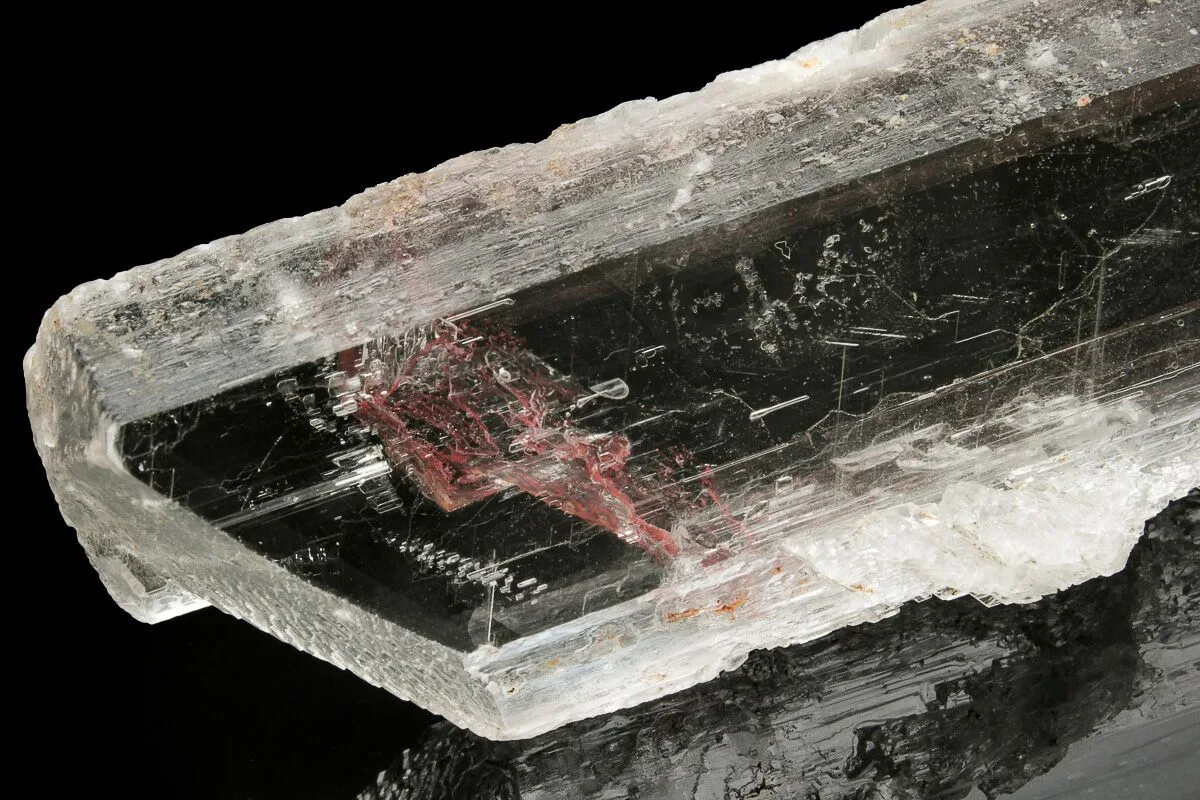
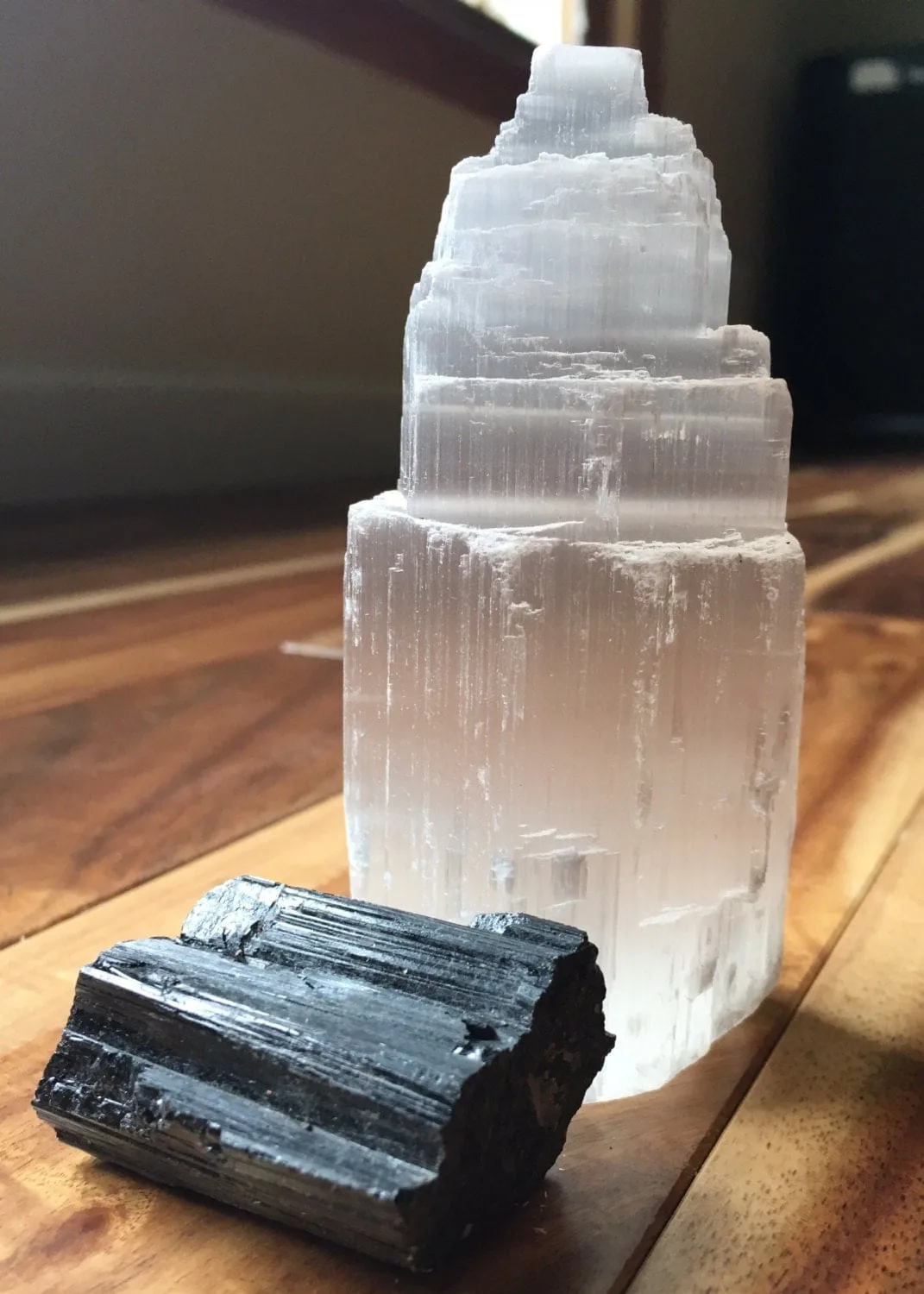
To distinguish selenite from gypsum satin spar, examine the luster and internal structure. Selenite appears transparent with a glassy shine. Satin spar looks opaque or translucent with a silky, fibrous texture.
Rotate the stone under light. If you see parallel fibers creating a cat's-eye effect, it is satin spar. If light passes through clearly without fiber patterns, it is selenite.
Both share a Mohs hardness of 2.
Image source: Bing (Web (fair-use with source credit))
Why Your Eyes Are the Best Tool for Spotting Satin Spar vs. Selenite
Chemical analysis won’t help you here. Since both stones are calcium sulfate dihydrate ($CaSO_4 \cdot 2H_2O$), acid tests or solubility checks yield identical results. You might think you need expensive equipment.
That’s a misconception born from confusion about mineralogy versus gemology.
Your primary tool is observation. The distinction rests on crystal habit. Selenite forms in large, tabular crystals that allow light to pass through.
This creates transparency. Satin spar forms in fine, parallel fibers. These fibers scatter light, creating opacity and a unique sheen.
We recommend using natural daylight or a bright white LED lamp. Shadows hide details. Good lighting reveals the internal architecture.
You don’t need a microscope for most pieces. A jeweler’s loupe helps with smaller fragments, but naked-eye inspection works for typical hand-sized specimens.
Trust your visual assessment over seller claims. Many vendors use terms loosely. They might call a cloudy piece "selenite" when it’s actually low-quality satin spar.
Learning to see the difference protects your wallet. It also prevents disappointment when a "clear" wand turns out to be milky and fibrous.
The Visual Checklist: Luster, Fiber Structure, and Transparency
Start by holding the stone up to a light source. Look for two specific traits: luster type and internal pattern. These are the non-negotiable identifiers.
Luster Analysis
Selenite exhibits a vitreous luster. Think of broken glass or clear quartz. It reflects light sharply and cleanly.
Satin spar displays a pearly or silky luster. The reflection is softer and diffused. It glows rather than sparkles.
Fiber Structure Detection
This is the deal-breaker. Examine the surface closely. Do you see tiny, thread-like lines running parallel to each other?
Those are asbestos-like fibers (though safe in solid form). Their presence confirms satin spar. Selenite lacks these fibers.
Instead, it may show cleavage planes or step-like fractures.
Transparency Levels
True selenite is transparent to semi-transparent. You should be able to read text through a thin slab. Satin spar is typically opaque to translucent.
Light enters but doesn’t pass straight through. It scatters inside the fibrous matrix.
| Feature | Selenite | Gypsum Satin Spar |
|---|---|---|
| Luster | Vitreous (Glassy) | Pearly/Silky |
| Structure | Tabular/Crystalline | Fibrous/Parallel |
| Transparency | Transparent to Semi-Transparent | Opaque to Translucent |
| Optical Effect | None | Chatoyancy (Cat's Eye) |
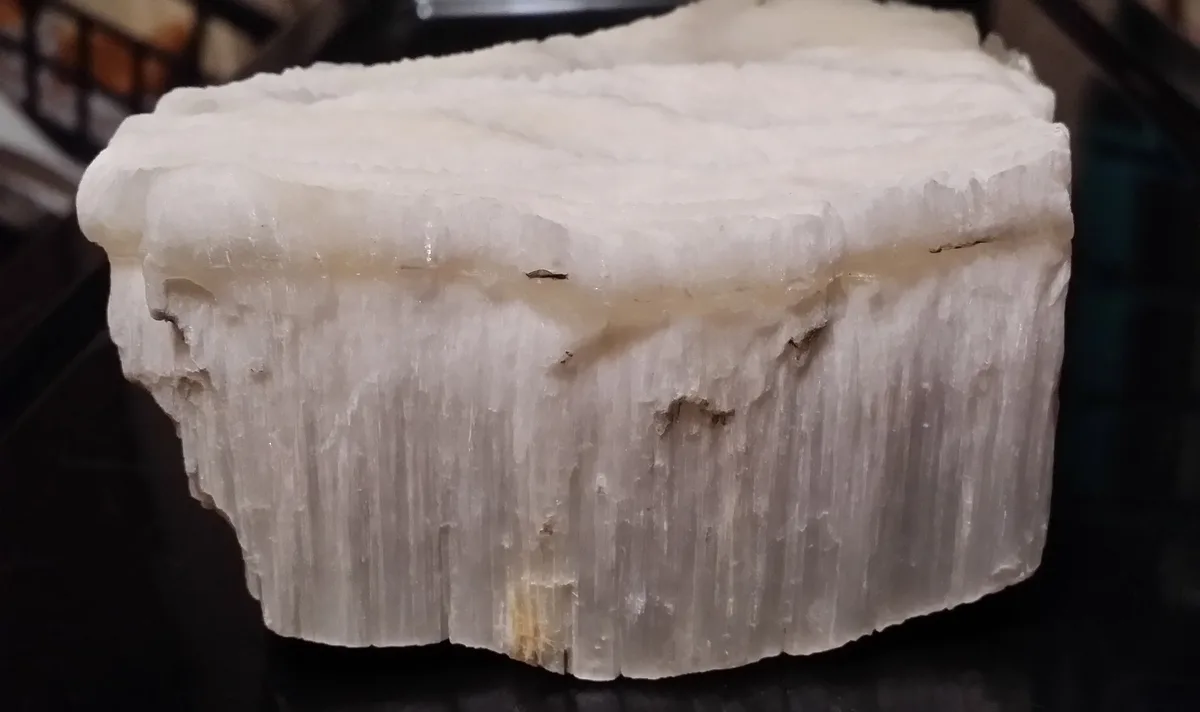
Image source: Web (Bing) / ar.inspiredpencil.com (Web image (fair-use with source credit))
If you rotate a satin spar specimen, watch for chatoyancy. This is the "cat's eye" effect where a band of light moves across the surface. Selenite never shows this movement.
Its clarity remains static regardless of angle.
Step-by-Step Non-Destructive Tests You Can Do at Home
Before risking damage, try these gentle methods. They preserve the specimen’s value while providing clear answers.
1. The Backlight Test
Place the stone against a phone flashlight or window. Shine light through it. Clear transmission indicates selenite.
Diffused glow suggests satin spar. If no light passes through, it’s likely dense alabaster or heavily included gypsum.
2. The Surface Texture Check
Run your fingertip lightly over an unpolished area. Selenite feels smooth and cold, like glass. Satin spar often feels slightly warmer and has a subtle ridged texture from the fibers.
Be careful not to scratch soft areas.
3. The Loupe Inspection
Use a 10x magnifier. Look for needle-like inclusions. Parallel needles confirm satin spar.
Flat, sheet-like layers confirm selenite. Absence of both structures might indicate massive gypsum, which isn't either variety strictly speaking.
4. Weight Comparison
Hold a known quartz piece in one hand and your suspect stone in the other. Quartz has a specific gravity of ~2.65. Gypsum sits around 2.31.
The gypsum will feel noticeably lighter for its size. This heuristic helps rule out denser look-alikes like calcite.
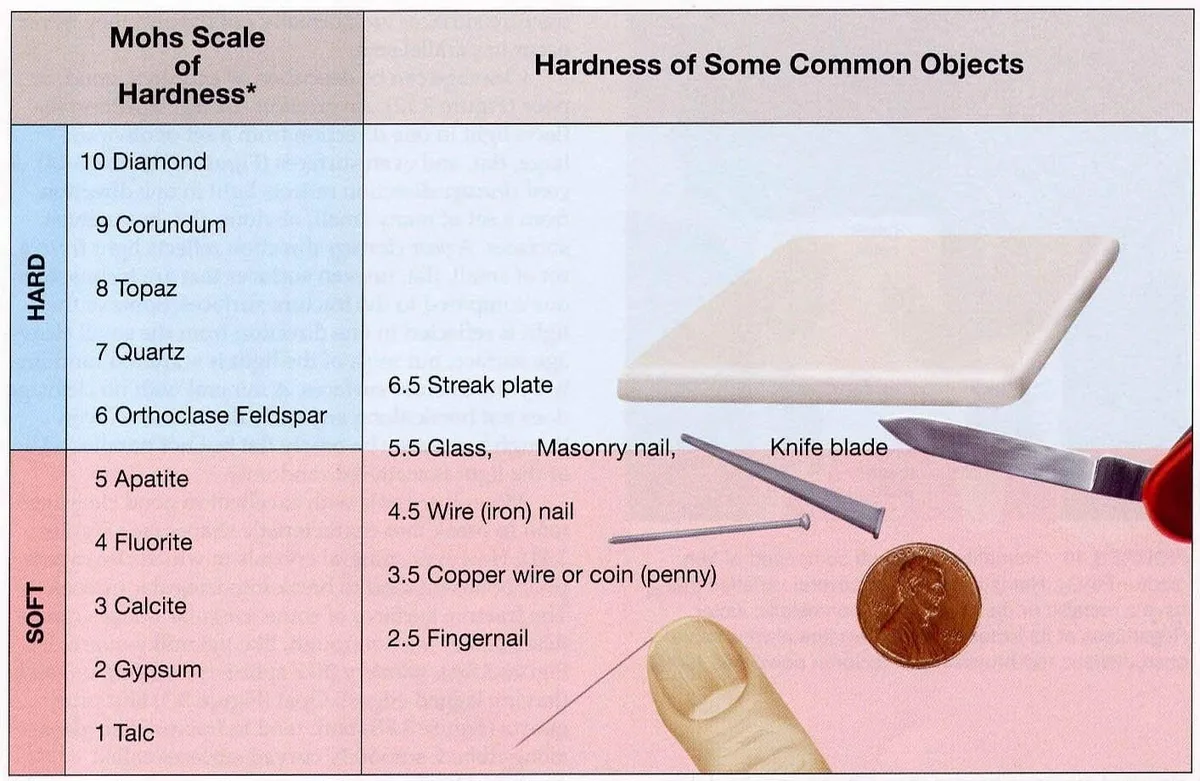
Image source: Web (Bing) / storage.googleapis.com (Web image (fair-use with source credit))
These steps require patience. Rushing leads to errors. Document your findings with photos if you plan to resell.
Evidence supports your description. According to Mindat.org, the leading mineral database, visual habit is the primary differentiator for gypsum varieties in field identification.
When to Use Destructive Methods (And How to Minimize Damage)
Sometimes non-destructive tests leave ambiguity. Mixed habits exist. A piece might have a selenite core with a satin spar coating.
In these cases, you may need to intervene physically. Proceed with caution.
The Scratch Test
Gypsum ranks at 2 on the Mohs scale. Your fingernail is about 2.5. A copper penny is roughly 3.0.
Try scratching an inconspicuous back edge with a steel needle (hardness ~5.5). If it scratches easily, it’s definitely gypsum family. If it resists, it’s not gypsum.
This doesn’t distinguish selenite from satin spar alone, but confirms material class.
The Cleavage Observation
Break a small fragment if necessary. Selenite splits into flat, rectangular sheets along perfect basal cleavage. Satin spar tears apart along fiber lines.
The fracture pattern differs significantly. Selenite shards look like broken windows. Satin spar fragments look like torn silk threads bundled together.
Minimize damage by targeting existing flaws. Never create new breaks on polished faces. Use pliers wrapped in cloth to control force.
Wear safety glasses. Gypsum dust is irritant. Avoid inhaling particles during breaking.
Remember that destructive testing lowers resale value. Only do this if you’re certain the piece is worthless or if scientific certainty outweighs monetary loss. For most collectors, visual ID suffices.
Save destruction for educational purposes only.
Common Visual Traps: Fake Plaster, Resin Coatings, and Mixed Habits
Not everything shiny is natural. Scammers exploit the similarity between gypsum and synthetic materials. Learn to spot fakes before you identify varieties.
Plaster Casts
Synthetic plaster of Paris sets hard and white. It mimics satin spar well. However, plaster bubbles often remain trapped inside.
Look for spherical air pockets. Natural gypsum rarely has round bubbles. Also, plaster dissolves faster in water.
A quick dip test (seconds) can reveal artificial binders.
Resin-Coated Stones
Vendors coat dull satin spar in epoxy resin to mimic high-clarity selenite. Inspect edges carefully. Resin pools in crevices.
It smells chemical when warmed. Under UV light, resin fluoresces differently than pure gypsum. Genuine selenite usually shows weak fluorescence or none.
Strong blue-white glow often signals additives.
Mixed Habit Specimens
Some geodes contain both types. The outer layer might be fibrous satin spar. The inner cavity holds crystalline selenite.
Don’t assume uniformity. Test multiple zones. Label such pieces as "mixed gypsum habit" to stay accurate.
Misrepresenting them as pure selenite causes disputes.
Aggregate reviews indicate that online buyers frequently receive coated items. Always ask sellers for close-up macro shots of raw surfaces. Polished photos hide textures.
Raw views reveal truth. Trust transparency in photography as much as in the stone itself.
Quick Reference Guide: Side-by-Side Feature Comparison
Confusion often stems from inconsistent naming. This table clarifies the distinct visual and physical traits you’ve already learned to spot. Use it as a cheat sheet when standing at a vendor’s booth or reviewing online photos.
| Trait | Selenite (Crystalline) | Satin Spar (Fibrous) |
|---|---|---|
| Primary Visual | Glass-like clarity | Silky, cat’s-eye sheen |
| Internal Structure | Flat cleavage planes | Parallel needle fibers |
| Light Interaction | Transmits light directly | Scatters light softly |
| Surface Feel | Smooth, cool to touch | Slightly textured, warm |
| Common Form | Wands, slabs, towers | Rough chunks, polished balls |
Notice how "wands" typically imply selenite. The long, rectangular shape allows for easy cutting along natural cleavage lines. Satin spar rarely forms in such clean geometric shapes naturally.
It usually grows in irregular masses. If you see a perfectly square wand with a silky interior, suspect a synthetic cast.
We advise checking the edges under magnification. Crystalline selenite shows sharp, angular breaks. Fibrous satin spar displays frayed, thread-like ends.
This micro-detail is hard to fake without obvious tool marks. Authentic specimens will always show these structural signatures.
Remember that polishing changes appearance but not structure. A highly polished satin spar ball can look deceptively like opaque white marble. But rotate it slowly.
The chatoyancy will still flash across the surface. Selenite won’t do this. It remains uniformly clear or cloudy throughout rotation.
Keep this guide handy. It bridges the gap between theory and practice. You’ll find yourself referencing these rows constantly during your first few identifications.
Over time, the distinctions become instinctive. Your eyes will automatically categorize the stone before your brain processes the name.
FAQs: Handling, Cleaning, and Value Differences
Can I clean selenite with water?
No. Both varieties dissolve slightly in water. Soaking them causes erosion and cloudiness.
Dust gently with a dry, soft brush instead. Avoid ultrasonic cleaners entirely. They shatter fragile gypsum structures.
Humidity also damages these stones over time. Store them in low-moisture environments to preserve clarity and luster.
Why is blue selenite more expensive than white?
Color indicates trace impurities, not different chemistry. Natural blue hues come from iron or clay inclusions during formation. These are rarer than pure white deposits.
Synthetic dyes fade quickly. Genuine color persists through the entire crystal. Collectors pay premiums for stable, natural saturation.
Verify authenticity by checking if the color penetrates deep into fractures.
Does hardness differ between selenite and satin spar?
No. Both rate exactly 2 on the Mohs scale. They scratch easily with a fingernail or copper coin.
Hardness tests confirm they are gypsum family members. They do not distinguish between the two habits. Rely on visual texture and fiber alignment for separation.
Physical durability is identical across both varieties. Handle both with equal care to prevent chipping.
How do I store my collection safely?
Separate pieces to prevent scratching. Wrap each item in acid-free tissue paper. Stack heavy slabs vertically rather than horizontally to avoid pressure cracks.
Keep away from direct sunlight which may bleach dyed samples. Maintain consistent temperature and humidity levels. Dry cabinets work best.
Never store near acidic substances or volatile chemicals that react with calcium sulfate.

Similar Posts