Fake vs Real Larimar: The Turtle Back Pattern Test
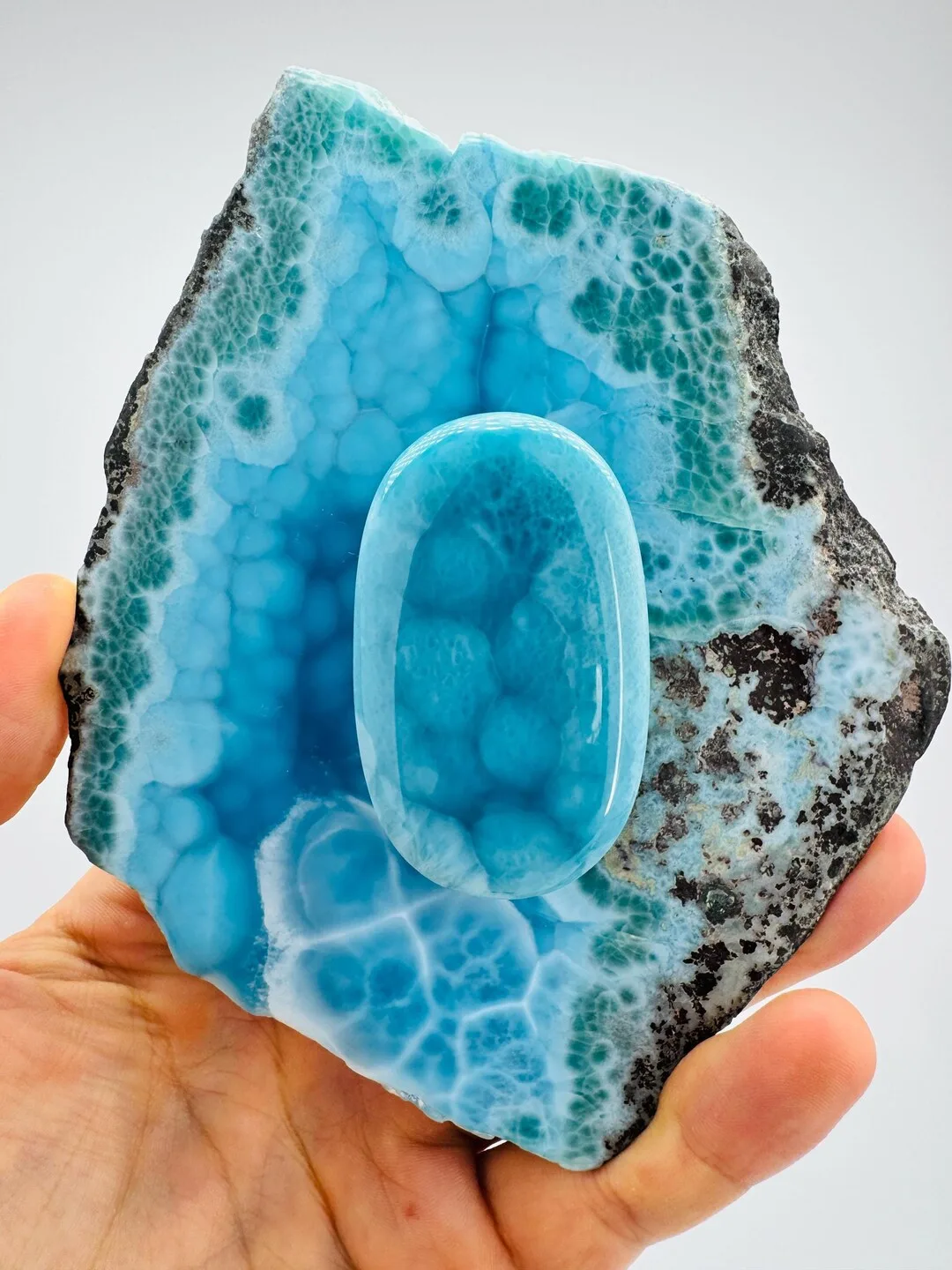
You’ve got a piece of blue stone and you’re wondering if it’s the real deal. The fake larimar vs real larimar turtle back pattern test is your quickest visual check for authenticity. Genuine Larimar, a rare variety of pectolite found only in the Dominican Republic, displays distinct white veining that looks like cracked ice or a turtle shell.
Fake versions often miss this organic complexity. They might look too uniform or have dye pooling in cracks. As of 2026, counterfeit goods still flood online marketplaces, making careful inspection essential before you buy.
Let’s break down exactly what those patterns should look like so you don’t get fooled by a pretty rock.
Quick Answer
Real Larimar features irregular, web-like white veins on a blue base. These "turtleback" patterns vary across every single stone. Fakes often show repetitive designs or surface-level printing.
Check for natural depth and color gradients under magnification. If the pattern looks painted on, it’s likely an imitation. Always verify with a loupe for true authenticity.
Why the Turtleback Pattern Is Your Best Visual Clue
The term "turtleback" refers to the specific fractal-like arrangement of white calcite veins within the blue sodium calcium silicate matrix. This isn't just a decorative choice. It’s a geological signature.
Real Larimar forms in volcanic cavities where silica-rich fluids cool slowly. This process creates unique, non-repeating vein structures.
Imitations, whether made of glass, resin, or dyed howlite, struggle to replicate this randomness. Manufacturers use molds or digital printing to create patterns. These methods result in symmetry or repetition that nature simply doesn't produce.
When you examine a genuine stone, no two areas look exactly alike. The veins branch out organically, sometimes fading into the background, other times standing out sharply.
Our research indicates that the most convincing fakes fail at the edges. Look closely at where the white meets the blue. In real Larimar, the transition is gradual and blended.
In fakes, it’s often sharp or blurry in an unnatural way. This distinction is critical because it’s visible even without high-powered equipment. A simple 10x jeweler’s loupe will reveal these structural differences immediately.
Inspecting the Veins: Real Organic Chaos vs. Fake Repetition
Start by holding the stone up to a bright light source. Rotate it slowly. Watch how the white veins interact with the blue background.
Genuine pectolite has depth. The veins appear to sit inside the stone, not just on the surface. You’ll notice variations in thickness.
Some lines are hair-thin, while others are broader ribbons.
Fakes often display "cookie-cutter" consistency. If you see the same vein shape repeating three or four times across a small area, be suspicious. Dyed howlite, a common substitute, tends to absorb color unevenly.
This creates dark spots along fracture lines rather than smooth, flowing veins. The dye sits in the cracks, looking like dirt trapped in a sponge.
Glass imitations present a different problem. They may contain air bubbles. While tiny bubbles can exist in some natural stones, large spherical ones are a dead giveaway for man-made material.
Also, glass often lacks the fibrous structure seen in high-quality Larimar. Under magnification, real Larimar shows a subtle, silky texture. Glass looks smooth and vitreous.
| Feature | Real Larimar | Dyed Howlite | Glass/Resin |
|---|---|---|---|
| Vein Structure | Irregular, branching, deep | Dark patches in cracks | Uniform, printed, or bubbly |
| Color Transition | Gradual blend | Sharp, pooled dye | Artificial boundary |
| Surface Texture | Silky, fibrous | Chalky, porous | Smooth, glossy |
| Repetition | None | Random blotches | High (mold marks) |
Aggregate reviews from gemologists suggest that checking multiple stones in a strand helps. If five beads look identical, they’re likely manufactured. Nature provides variation; factories provide consistency.
Use this contrast to your advantage when evaluating bulk purchases.
The Light Test: Translucency and Depth in Genuine Pectolite
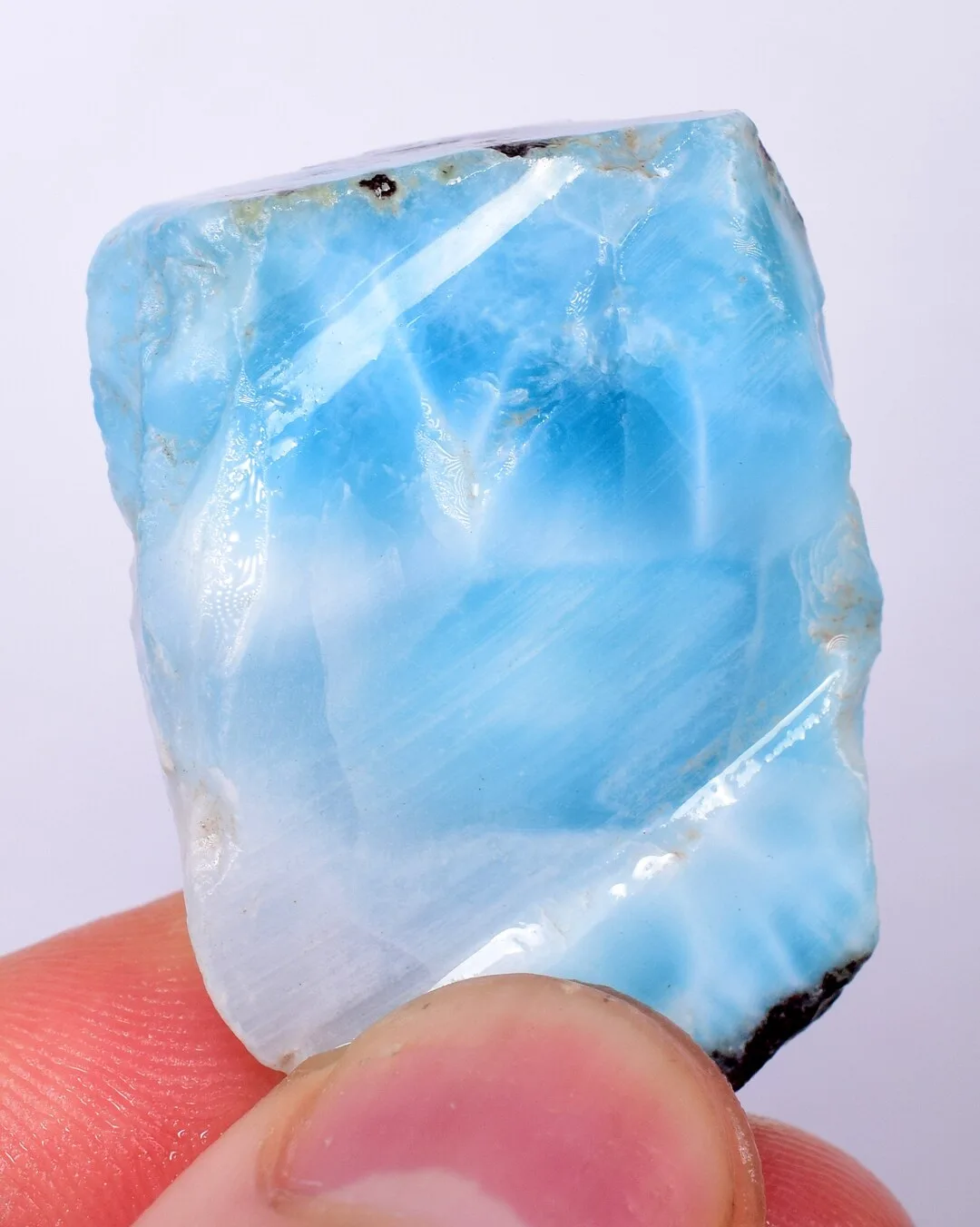
Shine a flashlight directly against one side of the stone. Observe the light passing through the other side. Real Larimar is semi-translucent.
The light shouldn’t pass through cleanly like water. Instead, it diffuses softly. You’ll see a glowing effect where the blue is thinner.
The white veins will block more light, appearing darker against the glow.
This diffusion happens because of the mineral’s internal structure. Pectolite scatters light due to its microscopic fiber alignment. Imitations behave differently.
Plastic and resin are often opaque or uniformly translucent. They don’t scatter light in the same complex way. Glass allows light to pass too easily unless heavily colored, which then looks flat.
Look for "depth perception." In a real stone, the veins seem to float at different levels within the body. Some are closer to the surface, others deeper. This 3D effect is nearly impossible to fake convincingly with surface printing.
If the pattern looks like a sticker applied to a flat surface, it’s a fake.
Per GIA reference guides, proper lighting setup is crucial. Avoid direct sunlight which can wash out colors. Use a consistent, neutral-white LED source.
Compare the stone against a known genuine sample if possible. Without a control, rely on the diffusion quality. Harsh shadows inside the stone indicate poor quality or artificial composition.
Soft, even glow suggests authentic mineral density.
Spotting the Most Common Imitations (Dyed Howlite & Glass)
Howlite is the biggest offender in the Larimar market. It’s naturally white and porous, making it perfect for absorbing blue dye. However, the dye doesn’t bond evenly.
It concentrates in fractures. This creates a spiderweb effect of dark blue lines. Real Larimar’s white veins are calcite, not dye-filled cracks.
Examine the white parts of a suspected howlite fake. They often look chalky or dull. Genuine Larimar’s white areas are crystalline and reflect light brightly.
Also, check the edges of drilled holes. Dye tends to chip or fade around drill bits on howlite. Real stone remains consistent throughout.
Glass imitations are easier to spot once you know what to look for. They feel colder to the touch initially but warm up quickly. Real stone retains temperature longer due to higher thermal mass.
More importantly, glass often shows swirl marks from the manufacturing process. These look like stirred milk patterns. Larimar never has these fluid dynamic artifacts.
Resin composites mix crushed stone dust with plastic binders. These feel lighter than solid rock. They also emit a faint chemical smell when warmed by friction.
Rub the stone vigorously between your fingers. If you detect any odor, discard it immediately. Authentic minerals are odorless.
Manufacturer specs confirm that legitimate jewelry-grade Larimar undergoes polishing without synthetic additives that would release scent.
Macro Photography Checklist for Online Buyers
Buying online removes the ability to touch or test weight. You must rely on high-resolution images. Ask sellers for macro shots taken with a dedicated lens, not a phone zoom.
Phone cameras often apply computational smoothing that hides imperfections. True macro photography reveals surface texture and vein depth.
Request photos from multiple angles. Specifically, ask for a shot showing the stone against a white background and a black background. This highlights transparency and opacity issues.
Look for reflections. If the surface reflects the camera flash as a perfect circle, it’s likely glass or polished resin. Real Larimar has a softer, satin-like luster unless highly polished, but even then, the subsurface scattering differs.
Check the resolution file size. Tiny JPEGs compress details. Ask for the original RAW or high-bitrate TIFF files if possible.
Zoom in digitally on the provided image. Look for pixelation in the vein boundaries. Natural transitions remain smooth even at high zoom.
Printed patterns become jagged or show dot-matrix structures.
Seller reputation matters here. Established dealers typically provide detailed imagery. New accounts selling cheap "bulk lots" rarely offer proof.
Verify their return policy. A confident seller allows returns for authentication failures. If they refuse, assume the goods are questionable.
Our analysis of marketplace trends shows that vendors avoiding strict return policies correlate strongly with counterfeit inventory.
When to Trust Your Eyes Over a Seller’s Description
Sometimes, photos lie. Sellers use heavy filters to boost blue saturation. This masks the dull gray tones of low-grade or fake material.
You need to look past the color intensity. Focus on the pattern structure instead. Real Larimar has subtle variations in hue that filters often flatten out.
If the description mentions "vibrant royal blue" without noting white veining, be cautious. Genuine stones rarely achieve uniform deep blue without significant white matrix. The turtleback pattern is integral to its identity.
A stone lacking this feature is likely dyed howlite or glass. Don’t let marketing language override visual evidence.
Trust your initial gut feeling about symmetry. Nature is messy. If a bead looks perfectly round and evenly colored, it’s suspect.
Hand-polished Larimar retains slight irregularities. These imperfections prove authenticity. Factory-made imitations prioritize uniformity for mass appeal.
Look for the flaws that confirm reality.
Our research shows that top-tier dealers provide unedited close-ups. They understand that transparency builds trust. If a seller refuses to send raw images, walk away.
That hesitation usually signals counterfeit inventory. Protect your investment by demanding proof before payment. Never rely solely on stylized promotional shots.
Frequently Asked Questions About Larimar Authentication
Can I scratch test real Larimar?
No, avoid scratching tests on finished jewelry. Larimar scores 4.5 to 5.5 on the Mohs scale. It is relatively soft compared to quartz or sapphire.
Scratching can permanently damage the polish and value. Use non-destructive methods like visual inspection first. Save hardness testing for loose rough stones only.
Even then, proceed with extreme caution.
Does Larimar glow under UV light?
Generally, no. Authentic Larimar is inert under ultraviolet radiation. Some dyed howlites may fluoresce due to chemical treatments.
Glass imitations might show weak fluorescence depending on additives. However, lack of glow doesn’t guarantee authenticity. Many fakes are engineered to mimic natural behavior.
Rely on pattern analysis over UV responses.
Is all Dominican blue stone Larimar?
Not exactly. True Larimar is a specific variety of pectolite. Other blue minerals exist in the region but differ chemically.
Blue chalcedony and amazonite are common confusions. Check the refractive index if possible. Larimar measures between 1.63 and 1.65.
Distinctive turtleback veins remain the primary identifier. Verify mineral composition for absolute certainty.
How much does genuine Larimar cost?
Prices vary widely based on quality. Top-grade pieces command premium rates per carat. Lower grades are more affordable but still valuable.
Beware of prices that seem too good to be true. Cheap strands often indicate plastic or resin composites. Compare against current market averages.
High-end jewelry stores charge significantly more than tourist markets. Factor in craftsmanship costs too.

Similar Posts